
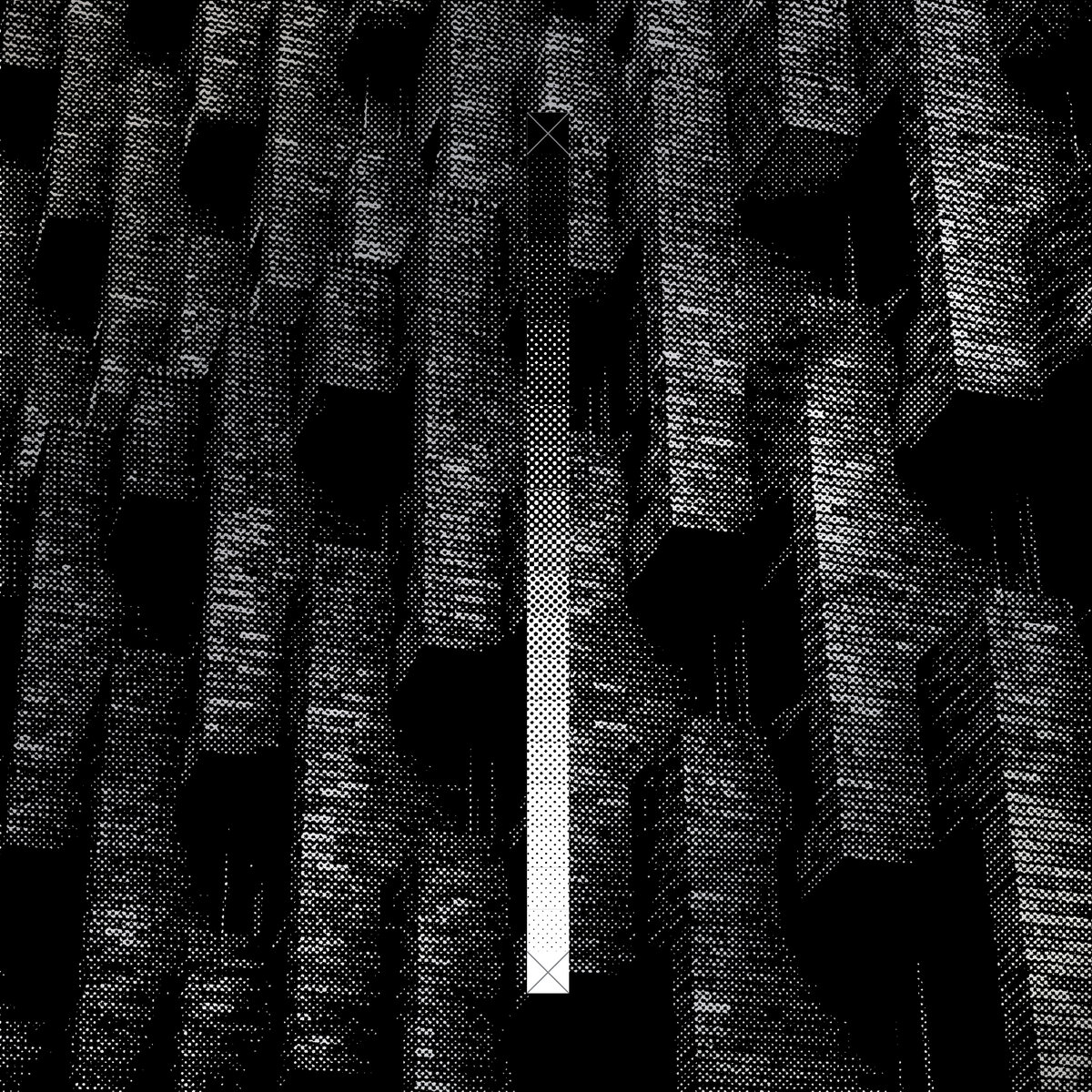
For a band entering its thirteenth album, creative stagnation would be an understandable risk. Yet on ‘In Praise of Shadows’, The Asteroid No. 4 sound invigorated by uncertainty, inspired by darkness not as a symbol of despair but as a space where beauty acquires greater depth and meaning. Drawing conceptual inspiration from Jun’ichirō Tanizaki’s celebrated meditation on light and obscurity, the record explores the hidden dimensions of contemporary existence, searching for traces of grace beneath political unease, social exhaustion, and personal introspection. It is among the most cohesive and thoughtfully realized statements in the group’s extensive catalogue, expanding their established psychedelic vocabulary with goth-inflected atmospherics, electronic coloration, and a newfound willingness to reshape their sonic architecture.
The opening track, “Neptune,” immediately establishes the album’s character. Rather than announcing itself with grand gestures, it drifts into view with a sense of cosmic distance, balancing melancholy and wonder in equal measure. Scott Vitt’s voice carries a reflective weight, while the interplay with Matty Rhodes’ guitar work creates an environment that seems suspended between dream and memory. The song suggests vastness without relying on spectacle, setting the tone for a record fascinated by what remains concealed beneath surfaces. That fascination deepens on “Hieroglyphics,” one of the album’s most compelling pieces. The title itself implies forgotten languages and coded meanings, and the music follows suit. Layers of guitar shimmer around a striking guest vocal appearance from Zoe Mahaney, whose presence introduces an additional emotional dimension. Her contribution enriches the song’s sense of mystery, transforming it into a meditation on communication, distance, and the fragments of meaning people struggle to assemble from incomplete histories.
“Protostar” pushes outward with restless energy. The song occupies a space between emergence and transformation, capturing the feeling of something not yet fully formed but already powerful. Mark Tarlton’s drumming, enhanced by the album’s experimental use of processed percussion, lends the track a subtle propulsion that distinguishes it from earlier Asteroid No. 4 recordings. Rather than abandoning the group’s signature haze, these electronic elements deepen it, creating textures that feel simultaneously organic and synthetic. The record’s darkest emotional territory arrives through “Pitch Black”. Yet despite its title, the song is less concerned with hopelessness than with perception. Here, darkness becomes a condition through which subtler truths become visible. Vitt’s lyrics are especially effective, avoiding easy pessimism in favor of nuanced observation. The arrangement mirrors this complexity, shifting between enveloping atmospheres and moments of startling clarity.
“To The Core” serves as the album’s emotional excavation. Stripping away distractions and ornamentation, it examines what remains when protective layers have been removed. Rhodes contributes some of the album’s most evocative instrumental passages, their parts intertwining with remarkable sensitivity. The result is music that feels searching rather than declarative, committed to asking questions rather than delivering answers. A different energy emerges with “Captivate”. Its melodic immediacy provides one of the album’s most accessible moments without compromising the larger thematic framework. The track demonstrates the band’s enduring gift for constructing memorable hooks that remain embedded within richly textured arrangements. Beneath its surface appeal lies an undercurrent of unease, reinforcing the album’s preoccupation with duality.
The title “Shadowed” might appear to summarize the album’s central concern, but the song approaches that theme from a more intimate perspective. Here the shadows are personal rather than cultural, psychological rather than philosophical. The performance is particularly strong, with Vitt delivering one of his most affecting vocal turns. The band resists melodrama, allowing emotional complexity to emerge through restraint. “Underworld” introduces an intriguing shift in perspective. Its title evokes mythological descent, and the music carries a sense of movement through hidden spaces. The processed drums are especially effective here, creating a rhythmic framework that feels slightly detached from conventional rock structures. This willingness to experiment gives the track a distinctive identity while remaining consistent with the album’s broader atmosphere.
The album reaches its spiritual center with “Prayer,” the longest composition on the record and one of its finest achievements. Written lyrically by Matty Rhodes rather than Vitt, the song offers a different voice while preserving the album’s thematic coherence. Across nearly seven minutes, it contemplates vulnerability, faith, and the possibility of redemption without embracing certainty. The extended running time allows ideas to develop patiently, and the band uses that space wisely. The arrangement grows in emotional intensity through accumulation rather than dramatic escalation, producing a profound sense of reflection. Closing track “Final Waves”, written solely by Mark Tarlton, functions as an elegant coda. At under three minutes, it avoids the temptation of a grand finale. Instead, it leaves the listener with a feeling of gentle departure, as though the album’s currents are receding into the distance. The brevity becomes part of its power, suggesting that some experiences achieve greater resonance when they remain unfinished in the imagination.
Throughout ‘In Praise of Shadows’, the musicians perform with remarkable unity. Vitt’s vocals and rhythm guitar provide an emotional anchor, Rhodes continues to demonstrate why he remains one of the band’s defining creative forces, and enriches every arrangement with carefully chosen textures, Dylan Boelte’s bass lines supply understated strength, and Tarlton’s drumming (along with his engineering, mixing, and mastering work), proves essential to the album’s distinctive identity. Recorded in San Rafael between late 2025 and early 2026, the album possesses an uncommon sense of purpose, as though every creative decision serves a larger vision.
What makes ‘In Praise of Shadows’ so persuasive is its refusal to treat darkness as either menace or romance. Instead, it approaches obscurity as a necessary condition for perception itself. Just as Tanizaki celebrated the subtle beauty revealed away from direct illumination, The Asteroid No. 4 find meaning in uncertainty, ambiguity, and quiet persistence. The result is a record that expands the band’s sonic language while reaffirming their enduring strengths. Rich in atmosphere, intellectually engaging, and emotionally sincere, ‘In Praise of Shadows’ stands among the most accomplished works of their career and demonstrates that artistic evolution remains possible even after more than a dozen albums.
Learn more by visiting Little Cloud Records | Bandcamp | YouTube | Instagram | Facebook