
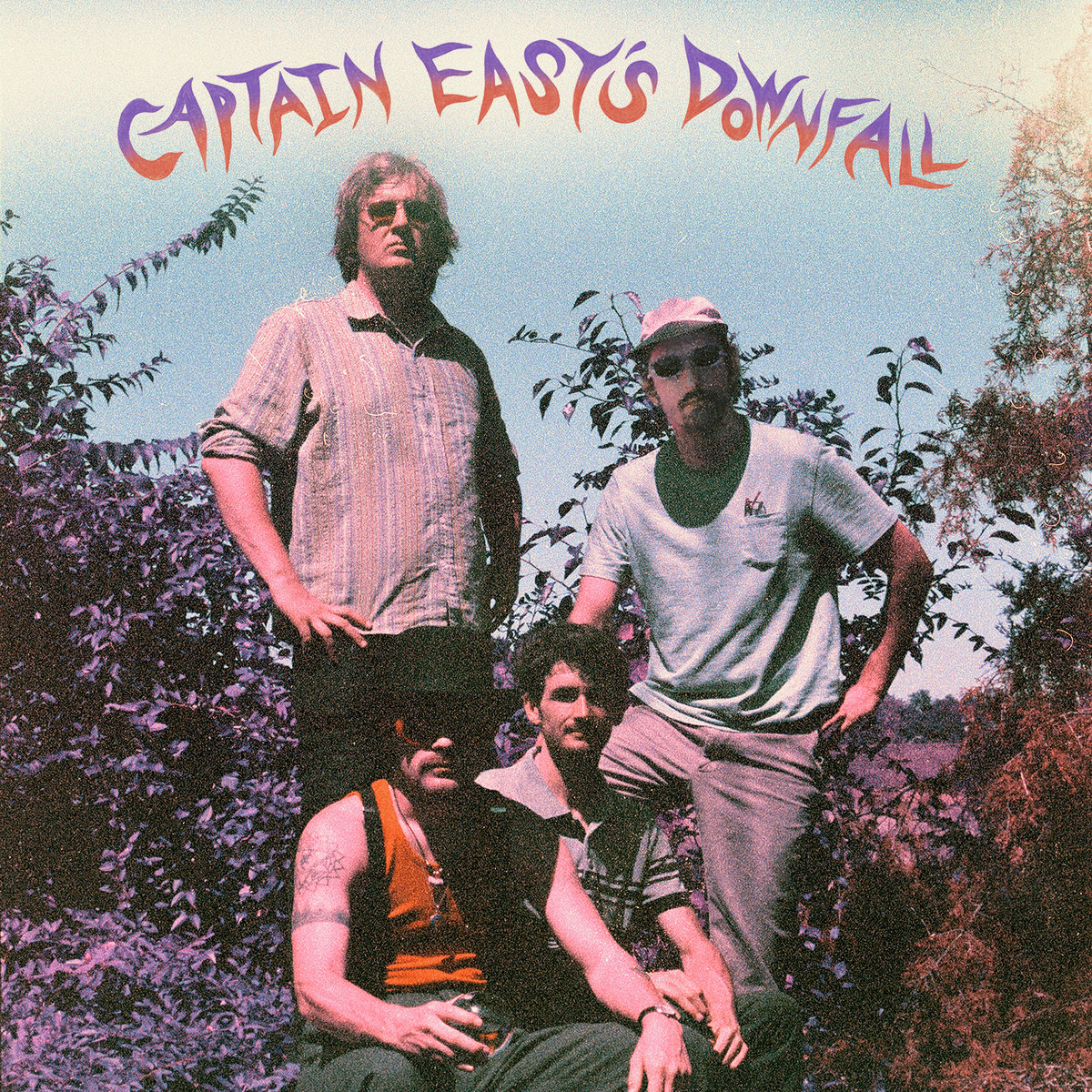
The Cowboys have spent over a decade quietly operating as one of the most unpredictable entities in American rock and roll. Emerging from the underground network of Bloomington, Indiana, vocalist and keyboardist Keith Harman, guitarist Mark McWhirter, bassist Zack Worcel, and drummer Jordan Tarantino have consistently bypassed contemporary trends in favor of an idiosyncratic creative vision. Their release, ‘Captain Easy’s Downfall’, stands as a monument to this uncompromising ethos, delivering nineteen short-form compositions that merge pop sensibilities with a deceptive subversion.
The record functions as a panoramic gallery of midwestern malaise and sharp-witted observational storytelling. Harman’s vocal delivery anchors the record, shifting seamlessly between a casual speak-sing cadence and melodic urgency, while McWhirter’s guitar arrangements provide a rich, harmonic framework that avoids standard genre tropes. Worcel and Tarantino establish a rhythm section that is both remarkably fluid and rhythmically sophisticated, ensuring that even the briefest selections carry substantial musical weight.
The opening salvo arrives swiftly with “The Hate in Your Heart,” a brief manifestation of melodic friction that establishes the record’s cynical yet whimsical perspective. This is immediately contrasted by the brisk, melodic buoyancy of “Little Baby Birds,” showcasing the band’s innate ability to wrap complex emotional anxieties in infectious hooks. The Cowboys excel at this duality, a characteristic that takes center stage on “Donzell’s Crystal Ball,” where Harman’s keyboard accents lend an almost surreal, carnival-like atmosphere to the arrangement.
Throughout the album, the band demonstrates an incredible economy of songwriting, often packing complete narrative arcs into tracks that barely clear the ninety-second mark. “Sugar in the Shoe” and “Fate Worse Than Death” are masterfully brief, relying on sharp instrumental interplay and efficient lyrical phrasing rather than predictable verse-chorus structures. This brevity never translates to a lack of substance; instead, it forces the listener to tune in closely to the subtle nuances of McWhirter’s chord choices and Worcel’s melodic basslines.
Emotional vulnerability arrives in unexpected shapes, notably on “Joey, You Love Too Much,” an affectionate yet slightly mocking portrait of romantic excess. The mid-tempo sway of “Not A Lot Goin’ On” serves as an anthem for small-town stagnation, captured with an authenticity that only a group rooted in the Midwest could muster. The band expands their geographic and sonic boundaries on Pensacola, utilizing a breezy, slightly detached arrangement that evokes a sense of displacement.
As ‘Captain Easy’s Downfall’ enters its middle tier, the band leans heavily into their uncanny ability to juxtapose bright musical backdrops with dark, ironic subject matter. “Red Flag White Flag” offers a brilliant display of harmonic resolution, leading directly into the irreverent and rhythmically complex “Punk House Bidet.” The character study “Michelle Fleischmann” highlights Harman’s strengths as a lyricist, offering a vivid glimpse into a specific persona without ever spilling over into cruel caricature.
The later portion of the album maintains this blistering momentum. “Coming Down With You” recaptures the urgent energy of vintage garage rock, while “Freudian Slip N’ Slide” utilizes clever wordplay and an elastic arrangement that highlights the technical synergy between Tarantino and McWhirter. The fleeting, atmospheric quality of “FM Radio Whispers” provides a momentary palate cleanser before the expansive, dusty Americana imagery of “Where the Buffalo Roam” takes over.
In the final stretch, The Cowboys lean into some of their most adventurous arrangements. “Ever Since the Accident” employs a fractured structure that mirrors its title’s psychological implications. This is followed by the vibrant, cautionary pop of “Bright Colors Indicate Toxicity,” a song that exemplifies the band’s knack for writing hooks that linger long after the music stops. The penultimate track, “Sisters of Correction,” builds a steady wall of harmonic intrigue, setting the stage for the definitive closing statement, “Saturdays.” This final piece winds down the collection with a sense of melancholic resolution, leaving behind the impression of a band operating at the absolute peak of their collective intelligence. ‘Captain Easy’s Downfall’ is a triumph of independent musicianship, a dense, wildly imaginative document that solidifies The Cowboys as true modern originals.
Learn more links: