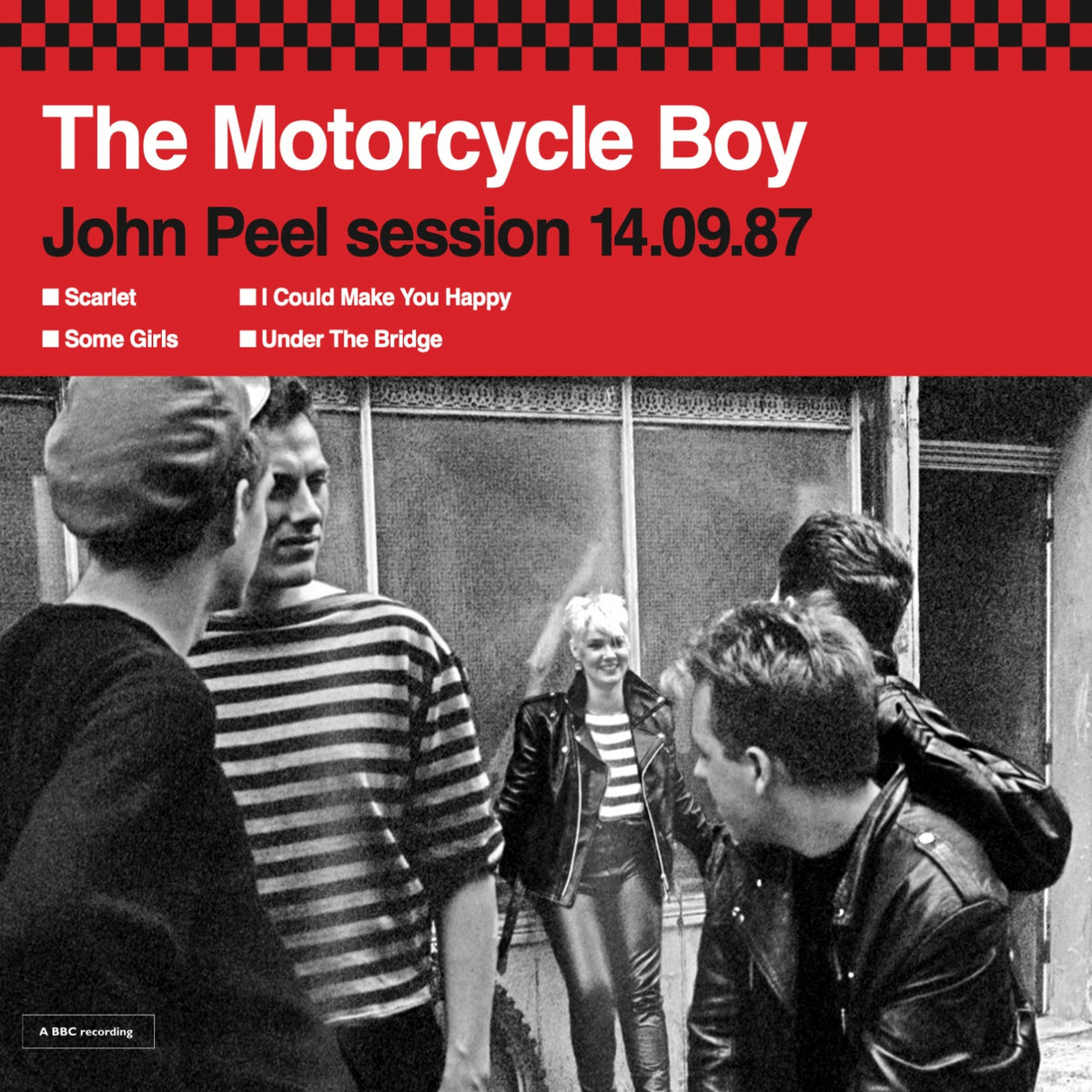
There are certain John Peel sessions that feel less like recordings and more like moments briefly caught in amber; glimpses of bands poised on the edge of something larger that history never quite allowed to unfold. ‘John Peel session 14.09.87’ by The Motorcycle Boy is one such document. Recorded at Maida Vale at the tail end of the 1980s, this session captures a band whose melodic intuition and emotional restraint set them apart from the overcrowded indie landscape of the time, even as they remained frustratingly under-recognized.
The Motorcycle Boy’s sound sits at an intriguing crossroads: jangling guitars shaped by post-punk discipline, pop melodies delivered with quiet conviction, and an underlying sense of melancholy that never tips into self-pity. The performances here feel purposeful and unadorned, as if the band understood that the Peel format demanded clarity above all else. There’s no excess, no grandstanding, just sharply written songs given the space to unfold naturally..
Vocalist Alex Taylor’s presence is central to the session’s impact. His voice carries a calm emotional gravity, never overstated but deeply affecting, anchoring the songs with a conversational intimacy. On tracks like “Scarlet,” his delivery glides above the instrumentation with an almost fragile poise, giving the impression of someone articulating personal truths without dramatization. The effect is disarming, pulling the listener closer rather than overwhelming them.
The tighter, more energetic moments, such as “Some Girls,” highlight the band’s ability to balance propulsion with nuance. The rhythm section locks in with a natural ease, allowing the guitars to shimmer and pulse rather than dominate. There’s a sense of forward motion throughout the session, but it’s never rushed; each song unfolds with a measured confidence that suggests a band deeply comfortable with its identity.
One of the session’s most compelling aspects is its sense of economy. “I Could Make You Happy,” brief yet emotionally loaded, exemplifies The Motorcycle Boy’s gift for distillation. In under two minutes, the song manages to communicate yearning, vulnerability, and melodic satisfaction without a single wasted gesture. It’s the kind of track that lingers long after it ends, raising inevitable questions about why such songwriting didn’t find a broader audience at the time.
“Under The Bridge” in the closing moments of the session slow the pace, revealing a more introspective side of the band. Here, the sparse arrangements and restrained performances underscore the emotional weight of the material. The absence of studio polish works in the band’s favor, allowing subtle imperfections to humanize the recordings and reinforce their sincerity.
Released decades later by Precious Recordings of London, ‘John Peel Session 14.09.87’ doesn’t feel like a nostalgia exercise or a collector’s curio. Instead, it functions as a corrective; an opportunity to reassess The Motorcycle Boy not as a forgotten footnote, but as a band whose melodic sensibility and emotional intelligence remain strikingly relevant. The session captures a fleeting alignment of craft, feeling, and circumstance, reminding us that musical history is often shaped as much by chance as by talent.
This release isn’t about what The Motorcycle Boy failed to become. It’s about what they already were: a band capable of writing concise, affecting songs that trusted subtlety over spectacle. Heard now, this Peel session stands as both a beautiful artifact and a quiet argument for the enduring power of understatement.
Learn more by visiting: Precious Recordings of London | Instagram | Facebook