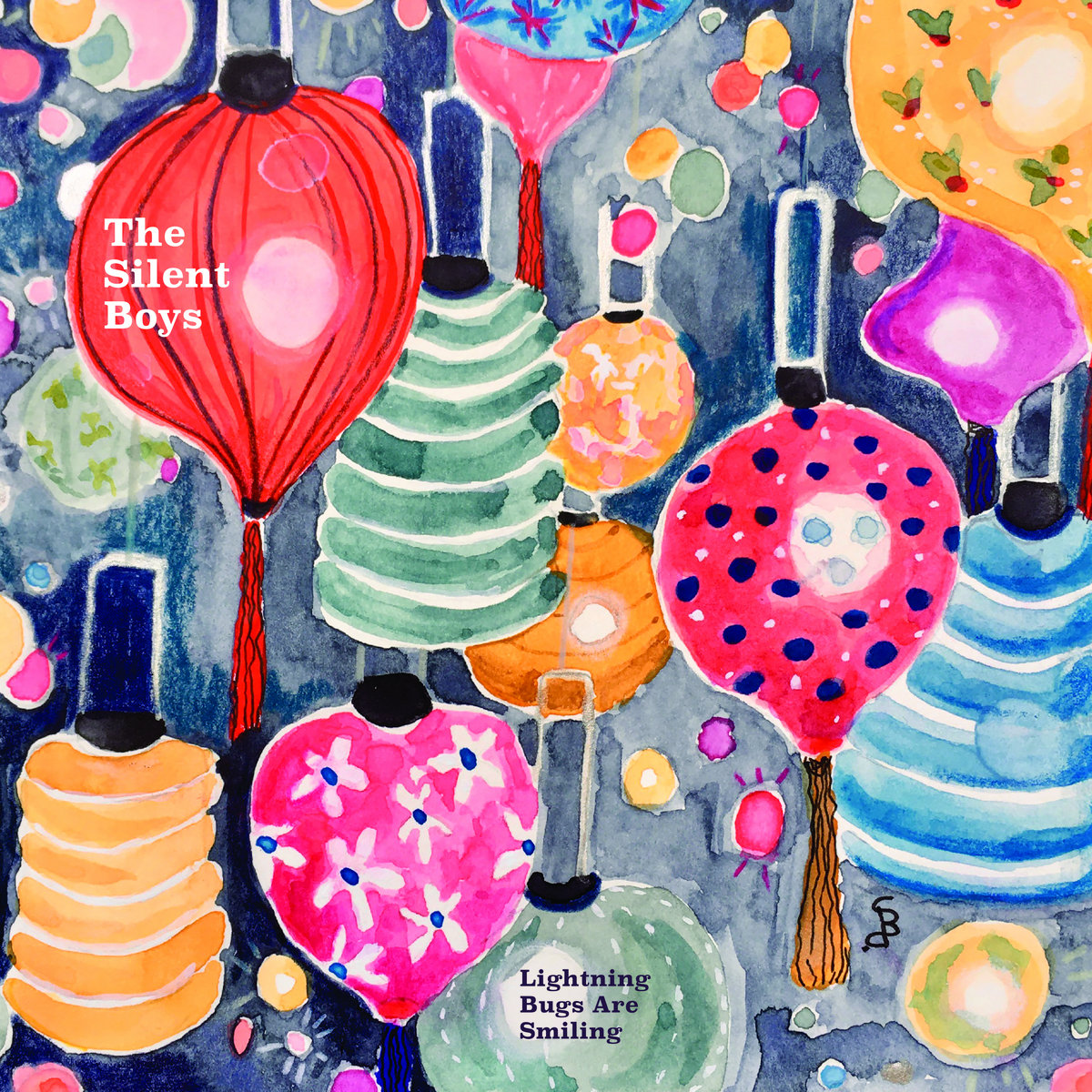
Some bands chase the spotlight. The Silent Boys seem to have spent four decades politely stepping out of it. Wallace Dietz started the group in Richmond, Virginia, in the mid-1980s, drawn to the chiming, post-punk-flavored guitar pop that once filled college radio, and he kept at it until 1991, when a newborn son claimed the rehearsal space and everyone’s careers scattered across the map. Then came the late-’90s indie pop compilations, a flicker of renewed interest, and a reunion in 1999 that has produced a record every few years since. ‘Lightning Bugs Are Smiling,’ is the latest, and it may be the warmest.
Warmth is the right word, and not just as a polite substitute for modest. The songs carry the glow of a back porch at dusk, where the day’s noise has settled and the small lights start blinking in the grass. Dietz writes for himself first, by his own admission an audience of one, and the music has the unguarded ease that tends to follow. Nothing here pleads for attention. A melody drifts in, settles down, and stays.
Much of that comfort comes from a lineup that has clearly learned to read one another’s minds. John Suchocki, an original member, supplies lead guitar in a surf-tinged, jazz-flecked style that curls around Dietz’s vocals like a second voice. His backing harmonies, too, are the sort that only appear to be effortless. Drummer John Morand leans into a drum-machine sensibility, a clipped, danceable pulse that nods to the golden age of 1980s indie pop without turning into a costume. Grant Oliver’s bass moves between a New Order*-style glide and a springier, bouncier pop step, sometimes inside the same song. And for the first time in the band’s history, keyboards appear on every track, courtesy of *Dan-O Deckelman, who also engineered, mixed and produced the record at Sound Of Music Studios in Richmond. His synthesizer washes act as a dimmer switch, softening the edges of every arrangement and tinting the whole record in amber.
“Soul Of The Sea” opens the set at a brisk three minutes and five seconds, co-written by Dietz and Carlie Dietz, whose artwork graces the cover. It is a gentle, brisk welcome, the musical equivalent of a door left ajar. From there the record moves through “Clocks,” a title that fits a band who have watched decades tick past without losing their appetite for a three-minute hook. “The Whistle Blower” brings in a guest, Michael Click, whose actual whistling adds a small, sunny wink to the proceedings. Small detail, big personality. If you’ve ever hummed along to a Housemartins or Orange Juice single, you know how good a sincere whistled melody feels.
“Let’s Pick Up At The Chorus” might be the most wryly self-aware title on the album, a studio-musician joke about skipping the preamble and getting to the part everybody remembers. The band follows its own advice, and “Think Of Me” lingers in a more tender key afterward, Dietz’s voice sitting close to the microphone, the keyboards hovering behind it like a held breath. Then “Jackie Blue” arrives wearing the name of a classic radio staple, although the credits make clear that these are Dietz’s own words and melodies. The borrowed title feels like a deliberate hat tip, the kind of wink a lifelong record collector might offer another one across a crowded room.
“Number 7,” keeps the momentum humming, and “Six Milk Bottles” is the sort of delightfully odd title that signals a songwriter unafraid of the domestic and the strange. Dietz has always favored small objects over large declarations, and an image like a row of empty bottles on a doorstep does more storytelling work than a dozen grand metaphors. “Over The Rainbow” shares its name with one of the most beloved songs ever written, which is a brave thing to do, and the group meets that challenge with their own melodic ideas rather than any imitation. Dan-O Deckelman adds backing vocals on this one, and the extra voice gives the song a quiet, choral lift.
The closing track, “Where Have My Dreams Gone?”, nearly double the length of the album’s opening song, and the extra space matters. After nine compact pop songs, the band finally lets the clock run. A question this big needs room to wander, and the arrangement is patient enough to allow it. The title tilts bittersweet, but nothing about the performance wallows. It sounds like a man in his sixties, maybe, looking back at a lifetime of songs with more affection than regret, and still writing the next one. Anyone who has ever put away an instrument for a decade and then picked it up again will recognize that feeling immediately.
There is a lesson buried in a catalog like this one. Fame is a narrow measure of a musician’s worth, and the world is full of songwriters who simply need to make things. Dietz is one of those people, and so are his bandmates. They’re not out to reinvent jangle pop, which is exactly why it works. What you get is craft, sincerity and a relaxed sense of play, with melodies that sneak up on you and then won’t leave. Ten songs, none of them wearing out its welcome, each with a little surprise tucked in somewhere.
Justin Perkins mastered it at Mystery Room Mastering, giving the whole thing a bright, clean finish that leaves the guitars airy and charming. A younger listener who finds it by accident might get something better still: a reminder that a great pop song doesn’t need a marketing campaign. ‘Lightning Bugs Are Smiling’ is a worthy soundtrack to the sight, modest in scale, generous in spirit, and impossible to dislike.
Learn more links:
Shelflife Records
Too Good To Be True
YouTube
Instagram
Facebook
Twitter