
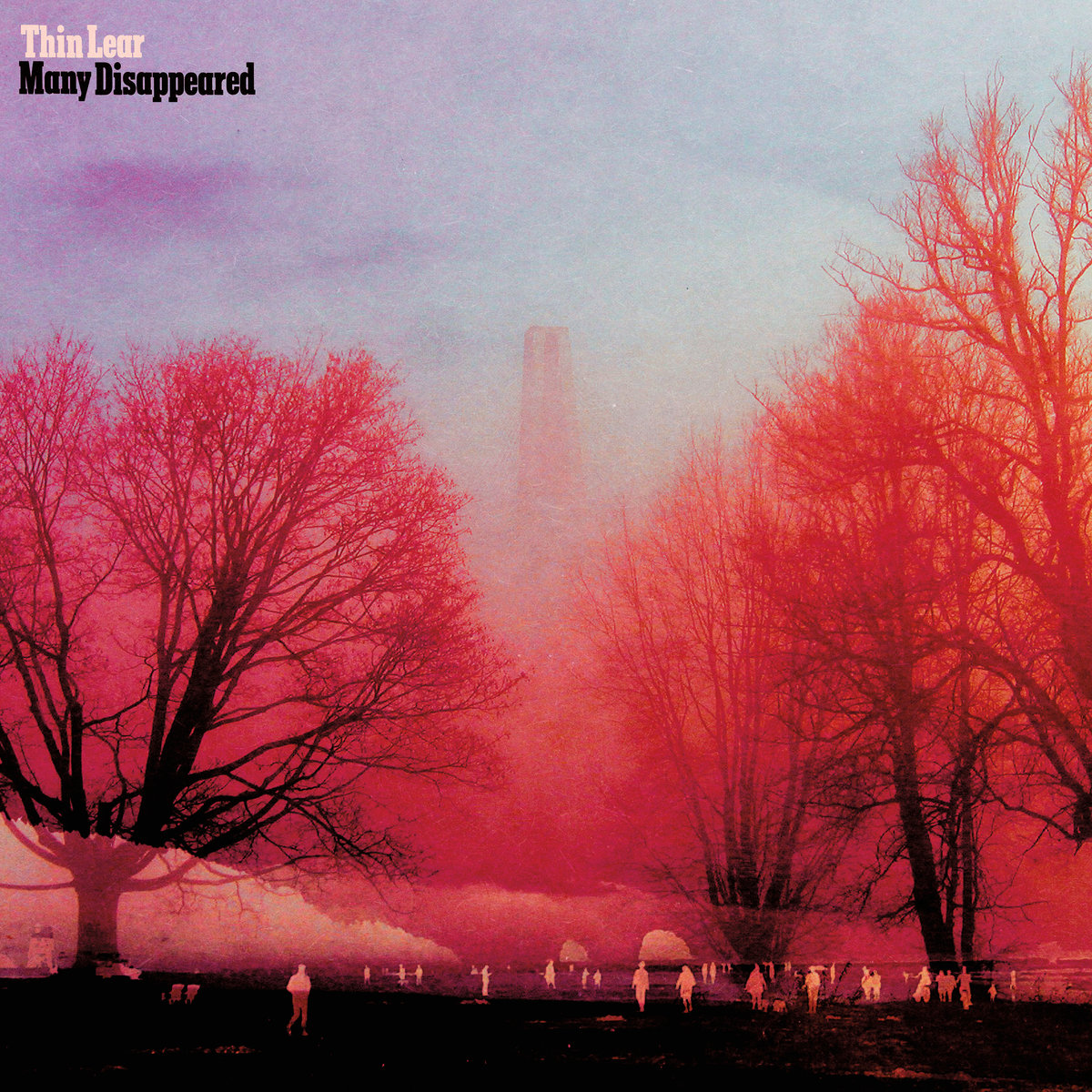
Thin Lear’s ‘Many Disappeared’ arrives with a quiet confidence that belies its emotional scope, a record deeply rooted in memory yet unwilling to romanticize it. Guided by the steady hand of Matt Ross-Spang at Sam Phillips Recording Service, the album channels a distinctly American lineage of songwriting while sidestepping nostalgia’s easy comforts. What Matt Longo has written here is not a backward glance so much as a reckoning; an attempt to name what lingers when people, places, and versions of oneself recede.
“Silver Bridge” opens the album with a restrained sense of unease, its melodic clarity undercut by subtle rhythmic hesitations. Longo’s vocal sits close to the listener, almost conversational, as if testing whether these recollections can bear being spoken aloud. The arrangement, shaped by Ken Coomer’s intuitive drumming and Dave Smith’s grounding bass lines, establishes a language of understatement that the rest of the record refines rather than abandons.
On “Harmony & Gold,” the presence of Rick Steff becomes more pronounced, his piano and organ textures lending the track a fragile luminosity. The song gestures toward reconciliation but never quite claims it, suggesting that harmony, like gold, is something both precious and elusive. That ambiguity threads through “Witness,” where Will Sexton’s guitar work introduces a sharper edge, pushing against the song’s reflective core without overwhelming it.
“A Cherished Man” stands as one of the album’s emotional anchors, its narrative specificity giving weight to the broader themes of absence and remembrance. Longo resists sentimentality, allowing small details to carry the burden of meaning. By the time “Mattoon” arrives, the record has settled into a rhythm of recollection that feels less like storytelling and more like excavation. The song’s pacing, deliberate yet unforced, mirrors the act of returning to a place that no longer fully exists except in memory.
“The Haunt” extends this idea, though not in any literal or spectral sense; instead, it examines how environments imprint themselves on identity. Steff’s Mellotron adds a distant, almost blurred quality, as if the music itself were filtering through time. “Heavy Dreams,” by contrast, compresses its ideas into a shorter runtime, its structure tighter but no less affecting. Coomer’s percussion here is particularly striking, guiding the song forward with a sense of quiet insistence.
“Buddy” introduces a more intimate tone, its brevity working in its favor. The track captures a fleeting connection, rendered with a clarity that avoids overstatement. This economy continues into “The Visit,” where the album’s preoccupation with presence and absence reaches a subtle peak. The song’s arrangement feels deliberately spare, each instrumental choice carefully measured, reinforcing the transient nature of the encounter it depicts.
Closing track “Healing Alone” brings the album to a resolution that refuses easy closure. Longo does not offer answers so much as an acknowledgment of process; the slow, often solitary work of coming to terms with what cannot be recovered. The interplay among the musicians is especially cohesive here, with Sexton’s guitar lines and Steff’s keys intertwining in a way that suggests quiet endurance rather than triumph.
Throughout ‘Many Disappeared’, the contributions of Coomer, Sexton, Steff, and Smith are integral, never ornamental. Their performances are attentive and restrained, creating space for Longo’s songwriting to resonate without unnecessary embellishment. The production by Ross-Spang honors that restraint, capturing the performances with clarity while preserving their immediacy. Kim Rosen’s mastering ensures that the album’s dynamic subtleties remain intact, allowing its quieter moments to carry as much weight as its more pronounced passages.
What stands out most about ‘Many Disappeared’ is its commitment to ambiguity. It resists the urge to tidy up its themes, instead presenting memory as something inherently unstable, shaped as much by what is forgotten as by what is retained. In doing so, Thin Lear has crafted a work that lingers not because it insists upon its importance, but because it trusts the listener to find their own reflections within it.
Find out more by visiting Thin Lear | First City Artists | Bandcamp | Instagram | Facebook