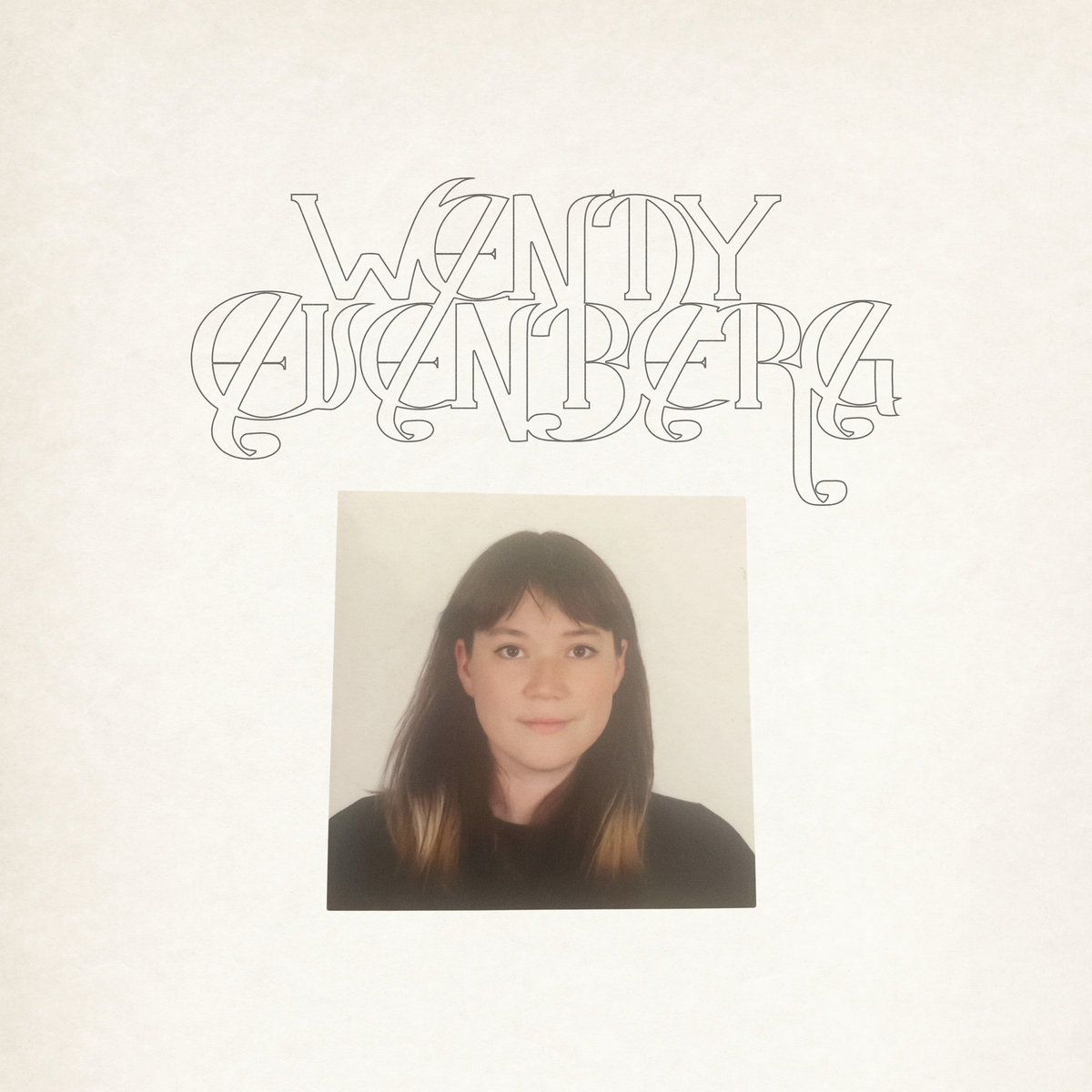
There is a moment, somewhere between confession and construction, where a songwriter stops negotiating with expectation and begins speaking from a place that feels internally authorized. On ‘Wendy Eisenberg’, Wendy Eisenberg arrives at precisely that moment, and the record carries the unmistakable weight of that shift. After years of prolific movement across idioms (improvisation, avant-rock, exploratory jazz), this self-titled statement does not read as a retreat into folk tradition so much as a reconfiguration of it, where songcraft becomes a vessel for a newly clarified sense of self.
The opening track, “Take A Number,” sets the tone with a kind of disarming directness. The guitar does not announce virtuosity, despite Eisenberg’s formidable reputation, but instead establishes a conversational frame. It is an invitation into a world where technical command is subsumed into expression, where the architecture of the song matters more than the display of its materials. That sensibility deepens with “Meaning Business,” whose harmonic expansion feels deliberate and searching, its baroque-pop flourishes shaped in close dialogue with Mari Rubio’s string arrangements and textural sensibilities. Rubio, who also contributes pedal steel and synthesizer, proves central to the album’s sonic identity, giving Eisenberg’s songs a dimensionality that never overwhelms their core intimacy.
“Old Myth Dying” stands as one of the album’s emotional fulcrums, its restless rhythmic undercurrent supported by Trevor Dunn’s bass and Ryan Sawyer’s drums, both of whom play with a sensitivity that privileges motion over insistence. Eisenberg’s vocal delivery here is particularly striking, threading urgency through restraint, as if testing the limits of what can be relinquished and what must be retained. The song does not resolve its central questions; instead, it reframes them as necessary conditions of living.
Memory becomes a living, unstable presence in “Another Lifetime Floats Away,” a composition that unfolds with a narrative patience rare in contemporary songwriting. The arrangement breathes, allowing images to surface and recede without forcing cohesion. Rubio’s strings hover at the edges, while Dunn and Sawyer provide a subtle grounding that never pins the song down. Eisenberg’s voice carries a reflective authority here, not as a narrator of the past but as someone newly aware of their position within it.
“It’s Here” shifts the record’s emotional register toward acceptance, though not without complexity. The song’s structure feels almost circular, as if circling a realization that cannot be fully stated. The interplay between acoustic and electric textures becomes more pronounced, suggesting that clarity does not eliminate ambiguity but coexists with it. That duality finds a more outward expression in “Vanity Paradox,” where Eisenberg examines the instability of self-perception, the arrangement mirroring that instability through subtle shifts in tone and emphasis.
On “Curious Bird” and “The Ultraworld,” the album opens further, allowing a sense of wonder to enter the frame. These tracks feel less anchored to narrative and more attuned to atmosphere, yet they never drift into abstraction. Sawyer’s drumming, in particular, provides a quietly propulsive force, while Dunn’s bass lines offer a melodic counterpoint that enriches the harmonic landscape. Rubio’s contributions continue to blur the line between ornament and foundation, her pedal steel lending a luminous quality that recalls country traditions without replicating them.
“Will You Dare” emerges as one of the record’s most immediate pieces, its melodic clarity paired with a lyrical inquiry that feels both personal and universal. Here, Eisenberg seems most at ease inhabiting the space between vulnerability and resolve, the ensemble coalescing around that balance with remarkable cohesion. The collective presence of Dunn, Sawyer, and Rubio never overshadows Eisenberg’s voice, but instead amplifies its emotional reach.
The closing track, “The Walls,” brings the album to a contemplative pause rather than a definitive conclusion. Arranged in part by Sawyer and Lester St. Louis, it carries a slightly different structural sensibility, one that leans into openness and unresolved space. Eisenberg’s performance here is understated yet deeply affecting, as if acknowledging that the questions raised throughout the record do not require answers so much as sustained attention.
What makes ‘Wendy Eisenberg’ so compelling is not merely its stylistic synthesis, though that is handled with remarkable fluency. It is the sense that these songs have been allowed to arrive on their own terms, shaped by a period of introspection that has clarified rather than simplified Eisenberg’s artistic voice. The production, shared between Eisenberg and Rubio, reflects this ethos: intimate without being insular, expansive without losing focus.
In bringing together a circle of collaborators (Trevor Dunn’s responsive bass work, Ryan Sawyer’s nuanced percussion, Mari Rubio’s multifaceted arrangements), Eisenberg has created a record that feels communal in execution yet singular in vision. It is a work that trusts the listener to engage with its complexities, to sit with its uncertainties, and to recognize that resolution, when it comes, may not resemble closure at all.
Releases April 3, 2026
Learn more by visiting Joyful Noise Recordings | Bandcamp | Facebook | Twitter.