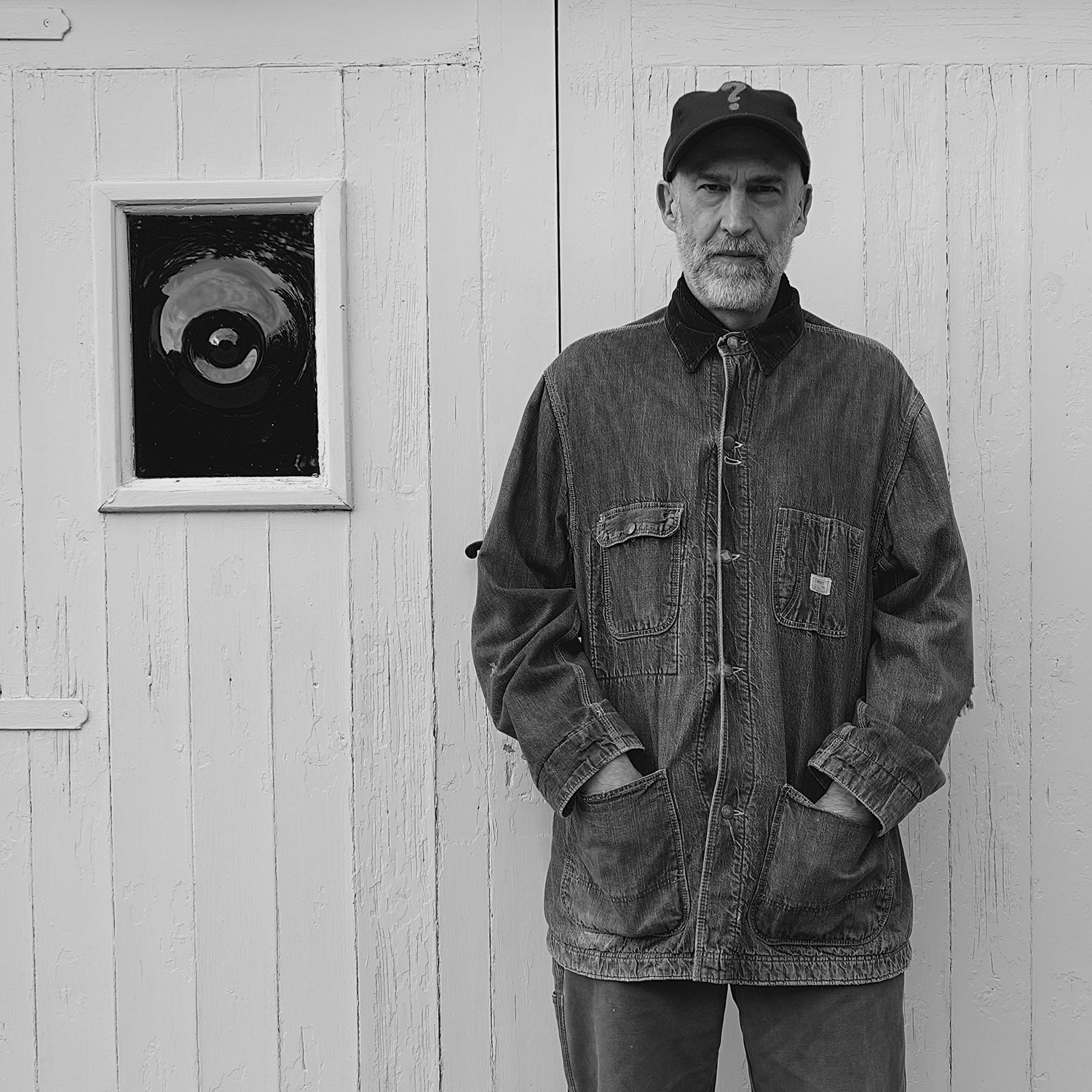
With a new album, What You Said, now out, I caught up with Myles Cochran to talk about his journey, physical and musical, the new album, and what drives his choice to make instrumental music.
Hi Myles, great to talk to you. Can we start with a bit of background? You have said that “roots and country music were in the air when I was growing up, and they still shape my aesthetic…” What other music would you say has influenced your own sound?
Myles: Thanks, Dave. I always appreciate your reviews, so it’s nice to have the conversation.
Here’s a short list of influences in chronological order (it goes way back): I was obsessed with military band music as a kid. My grandfather took me to see the Big Black Watch marching band, and that blew me away. Then classical through Peter and the Wolf and my parents. My parents were also big jazz fans, the quieter stuff – Dave Brubeck, Modern Jazz Quartet, which led into the Stan Getz / Gilberto / Luiz Bonfa stuff and Brazilian music. My folks were also into folk music – Leadbelly. Then I was an obsessive Beatles fan, being the right age as I lived through that. Then Hendrix.
The usual suspects in high school, Led Zeppelin, Stones. Then I discovered Miles through Bitches Brew and went backward in time through his earlier stuff, and further back into early Ellington, Basie, Lester Young, Django Reinhardt, then Monk and Charlie Parker. And into early blues through the Stones – Robert Johnson, Jimmy Reed, Howlin’ Wolf, Muddy Waters. Then into country music through friends in Kentucky who played bluegrass, then Hank Williams, then George Jones. Another friend turned me on to the later Beach Boys stuff – Holland, Surf’s Up – and I went down that rabbit hole. I didn’t get Bob Dylan until fairly late, but once I did, yikes!
After that, it was filling in the gaps and new bands and artists that caught my ear – Soft Machine, Lowell George, Pretenders, Kate Bush. A friend turned me on to Lee Perry, as I was a Bob Marley fan, and I vacuumed that up. I was in NYC in the ‘80’s, so lots of club stuff, and I lived in Harlem for several years when hip-hop was flowering and really exciting, so that was great. Then… just more. Elvis Costello. Talk Talk. Neil Finn. PJ Harvey. Beck. So… it’s a lot. And I’ve always been interested in the history of it – where did stuff come from, what was the context of something I liked. I just love music.
And in a broader sense, what is the musical journey that has brought you to where you are today?
Myles: I think going from being a music fan/lover to creating my own music is the big journey. Particularly in the sense of discovering that what I came up with most naturally didn’t immediately sound like a particular artist I liked, or fit into particular definitions of genre. Louis Cole said in an interview that he was creating his own favorite music, and that resonated – especially as the process of writing, performing, and recording takes so much time that I wind up spending most of my time now listening to my own music.
In physical terms, you have also come a long way, from Kentucky, to New York, to Devon, to London. How do you think those places have shaped what you do?
Myles: Mostly in terms of changing my perspective, learning that people everywhere are both very similar and very different. It’s also highlighted the fact that, wherever I’ve been, I’m very much myself, to accept and nurture that.
Is the making of instrumental music a conscious choice or more a practical one”? Are there any aesthetic advantages to making music devoid of lyrics?
Myles: Writing songs with words vs. instrumental stuff has been a major conundrum. I love great songs and great singers, and vocal harmonies in particular are just so gorgeous. And I love singing myself, but, like a lot of people, I have issues with my voice. And words have always felt very, I don’t know, clumsy in my hands, particularly in comparison to the great lyricists and songwriters. It takes me forever to write lyrics that make me happy, so instrumentals just come more naturally. There are also feelings I have and want to evoke in the listener that really can’t be put into words, but that can be fairly clearly expressed (at least to me) in music without words.
What You Said is your third album under your own name. How do you see the evolution of your sound and message across those, and what would you say are the common threads that bind them together?
Myles: The first album I did as Myles Cochran was Marginal Street in 2000; it was all songs with words and singing. I moved over to the UK in 2001 and lost about ten years due to various factors, moving around a lot, mostly. I’ve always built my own studios, having worked as a recording engineer for years, and I didn’t have that for a long while.
But once I was settled in, starting with recording what became Unsung in 2018, something clicked. I felt like I was better able to get to the sound I’d had in my head for a long time. You Are Here in 2024 and now What You Said are steps along this path. So much of what I do is simply waiting for something cool to happen – I’m not a disciplined Nashville-type songwriter. Then culling through zillions of ideas to find the ones that can bear repetition, and seeing where they go. I do almost everything myself, so getting from the original idea to the finished tune can take a while.
Are there any plans to play these songs live? If so, where are you looking forward to gigging?
I would love to perform this stuff live, and that’s my goal for 2026. I’ve had chronic problems with my left (fretting) hand for most of my life following an injury, so being able to book a gig with the confidence that I’ll be able to play six months from now has been difficult, but it seems to be doing better than it has in a long time, so I’m hopeful.
Trying to figure out how to actually do it is challenging – so much of my stuff has a lot of layers, so there’s the question of how much I do on my own, and who I’d need to help with it – a cellist and a bassist being the bare minimum, with a drummer just after that. Looping would obviously be involved, and the logistics of that are complicated. And having played in bands for years, one of the joys of working alone is that I don’t have to explain stuff, and taking on that challenge is… challenging. But I’ve identified a couple of small venues in London that look interesting, so fingers crossed.
You also play with the marvelous Bróna McVittie. What are the differences between working with her and fronting your own music
Myles: I’ve led bands, and I’ve been a sideman in other people’s bands. They both are fun, and they’re both difficult. If I’m playing in someone else’s band, my job is to make them sound as good as I can. Brona and I worked together for several years; I co-produced two of her albums, so I had a pretty clear idea of what I needed to do – I was sort of in charge of atmosphere, if that makes sense.
And finally, what does the future hold, and perhaps, what would you like it to hold for you?
Myles: Pretty simple – stay healthy, stay focused, keep growing, keep making music. It’s what makes me happy.