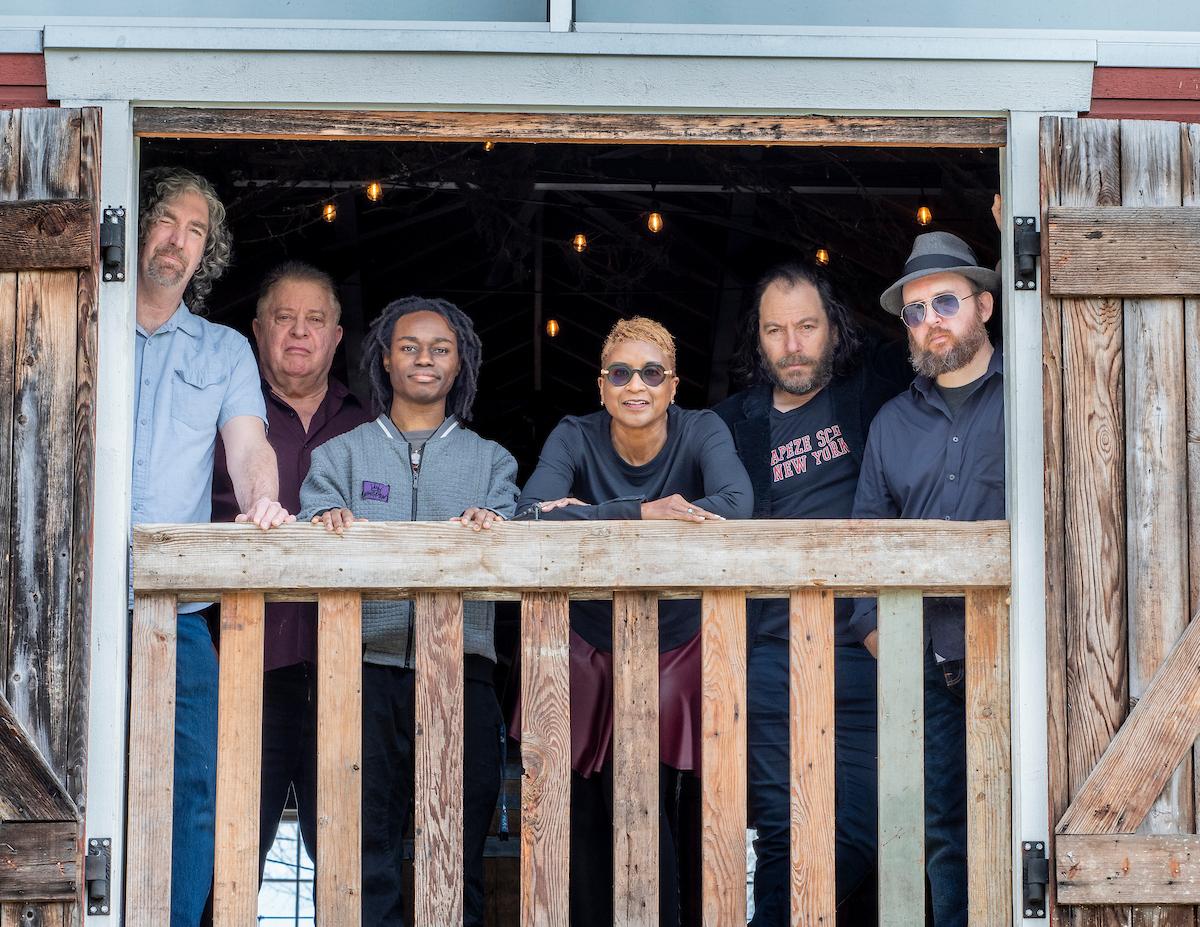
With the latest album, Sumatra about to drop, I sat down with Paula Boggs to talk about artistry and ancestry, roots and soul, where music has taken her and where she hopes it leads next, and everything in between.
Hi Paula, great to be talking to you. Let’s start with a bit of background. How did you get into music, and what has the journey been like that has brought you to where you are today?
My story is a winding road. At six, I started piano lessons, but didn’t like it. By age 10, though, I’d become fixated with guitar. I attended Roman Catholic grammar school when folk mass was emerging. Catholic schools and churches across the United States played Dylan, Simon & Garfunkel, The Byrds, and more. Guitar was central to this music. I begged my parents to give me lessons; they did, and within a brief period, I was also writing music.
Throughout middle school and high school, I identified heavily as a songwriter. We moved to Germany when I was 13, and my mom has a copy of a program showing me, at age 14, playing an original song, “Sparrow Peace” at Stuttgart’s Amerika Haus with American jazz trumpeter Charles Jefferson, who’d become a family friend. Throughout my post-secondary education, I still wrote music and performed it, but year over year, I did increasingly less.
While still Catholic, I performed in folk mass choirs, sometimes writing music for them, but when I left the Church, that outlet was gone, and I thought music creation and performance were in my rear view. Life is full of curves, though. Fifteen years later, the death of a loved one brought me back to music to grieve, and once that happened, very slowly at first, I reached a point of no return that brings me to 2026.
And who else makes up the band? Is it a fixed lineup or a revolving band of music makers?
Paula Boggs Band has both a core and revolving cast of characters. We perform as a trio all the way to a sextet. Darren Loucas is a multi-instrumentalist and evocative vocalist. We sometimes even perform as a duo. He also has his own band, The Jelly Rollers. Everyone in the core has played together for about 8 years, except percussionist Tor Dietrichson and me.
We first met in 2007, so we have played together for 19 years! Tor is well known and celebrated in Seattle. Jake Evans, a second-generation professional musician, is our incredibly talented drummer. He also teaches and plays with other bands. Paul Mathew Moore plays keys and accordion. Paul also sings. His day job is music director for the University of Washington’s dance department.
Beyond Paula Boggs Band, Paul is an amazing composer. Typically, the band toggles between two bass players. Alex Dyring, a Berklee College of Music graduate and second-generation professional musician, is a Seattle native now based in NYC. If we’re beyond Western US or Canada, Alex is usually playing with us. Otherwise, it’s King Dawidalle, a young, talented Seattle-based bass player who’s also a rapper. On the Sumatra album, though, the exceptional David Salonen, who sometimes substitutes for our bass players or Darren Loucas, played all bass and fiddle parts.
You have called your music “Soulgrass.” Can you explain what that term is trying to capture in your music?
Sure! It was a gift as I tried to explain to someone seated next to me on a flight what our music sounded like. That person, a marketing professional, said, “Oh, that sounds like it should be called ‘Soulgrass!” Our sound is a mix of bluegrass, jazz, blues, folk, and soul. We are also storytellers. “Soulgrass” stuck.
And given a unique blend of sounds, what are the musical influences that have inspired you to weave such a gorgeous tapestry of music?
As a songwriter, I’m much influenced by what I was exposed to as a child. My dad was Catholic — folk music, baroque/mediaeval songs, minor chords; and mom is African Methodist Episcopal — gospel hymns and spirituals. Toggling between these extremely different faith traditions, rooted in seismically different musical traditions, became my norm.
When we moved to Europe, I also got immersed in a stew of classical music, jazz, funk, folk (including German and Italian folk music), and Top 40 from US Armed Forces Radio. All those influences still show up in the music I write and we perform.
What are some of the non-musical influences that inspire you?
I’m inspired sometimes by what I read — “Bard of Vietnam,” Track 2 on Sumatra, started with a stranger’s obituary — current events, nature — the opening lyrics of the song Sumatra came to me while walking, the human condition, love, ancestry, and more broadly, history. You’ll find all these themes in our music.
The new album, Sumatra, is out soon. What can listeners expect from that, both musically and also regarding what you are saying lyrically?
We call the album Sumatra in part because of the tremendous diversity and yet harmony of the island it’s named for. Sumatra is also my favorite coffee because of its bold yet low-acidity flavor profile. I hope listeners find Sumatra to be all those things. It is a storytelling album, and most of those stories are very personal.
My hope, though, is that they are universal enough to speak to a broad audience. A dear friend once reminded me, and it’s true of not just music, but all art: once an artist puts her art into the world, it’s no longer hers. It belongs to whoever receives it. My hope for Sumatra is that it’s widely received, and its stories broadly adopted.
Among two traditional tunes you cover on the record, one is an old English folk song from the early 1800s, “The Snow It Melts the Soonest.” What was it that drew you to this song from over 200 years ago?”
Recently, I learned the identity of my British-born slaveowning great-great-grandfather, who owned and impregnated his property, my enslaved great-great-grandmother Phillis. The slaveowner was born in 1816 in Newcastle upon Tyne, England, emigrated to the US at age 20, left New York for Athens, GA, and shortly after got into the slavery business, eventually purchasing Phillis. No one knows who wrote “The Snow It Melts the Soonest,” but it’s believed to come from Newcastle around the time my ancestor was born there.
So far, I have not been able to write an original song about this…it’s been too emotionally fraught. But after listening to hundreds of English folk songs, I found “The Snow It Melts the Soonest.” With a few lyric tweaks it became the voice Phillis never had…a voice of agency and resolve. I will add for a British audience.
In 2024, after recording the song, I visited Newcastle, and with crucial help from archivists at the University of Nottingham, I found the burial grounds of the slave owner’s grandparents, respectively at Nottinghamshire churches in Ordsall and Newark-on-Trent. Both visits were emotional and cathartic. These ancestors, my ancestors, had nothing to do with slavery.
They never set foot in the US. I met church officials at All Hallows’ Anglican Church in Ordsall. They could not have been more welcoming, curious, and kind. My British story no longer begins with slavery’s scourge, and I’m grateful.
Seattle is one of the big music towns. What is it like being a musician there, and where do you fit into its vibrant scene?
I always say “Seattle” is not just a place. It’s also a brand that attracts those who draw outside the lines, who don’t quite fit in, who march to their own drum. That’s true across sectors — from politics, to business, to the arts. Paula Boggs Band is firmly of that tradition and hopes we’re continually making art worthy of “Seattle.”
Are there plans to tour the album? And if so, where are you looking forward to playing, what are some of your favourite towns and venues, and are there any places you really want to tick off your gig wish list?
Definitely! We’re incredibly excited about our album release show at Seattle’s Triple Door MainStage on May 21. Between the March 27 album release and the Triple Door show, we’re doing a mini tour in the San Francisco Bay Area — including our 3rd time playing Sunnyvale, California’s Quarter Note, and we’ve lined up several shows in the Pacific Northwest already. We are awaiting word from key summer festivals and hope to return to Eastern US — where we’ve played Philadelphia’s World Café Live! and Westport, Connecticut’s Levitt Pavilion several times.
We aspire to play many more shows in Canada and hope we can return to the UK. We were an official showcase artist at Ireland’s 2025 Your Roots Are Showing Folk Conference. While in Killarney, we made important connections with venues in Ireland and England, so we’d love to capitalize on that in 2027.
And finally, beyond the album release, what does the future look like for you personally and the band and music in general?
We love performing, and so the band’s future includes playing shows. I’m a songwriter, so I’ll continue to write. Beyond music, I give talks and speeches. I’m also working on a memoir. My spouse and I love traveling to Vancouver Island, British Columbia. It’s close to Seattle, we love its peaceful beauty, its whole vibe really. So, as we try to balance everything else we both have going on, we’d love to spend more time there.