Photos by Corey Poluk
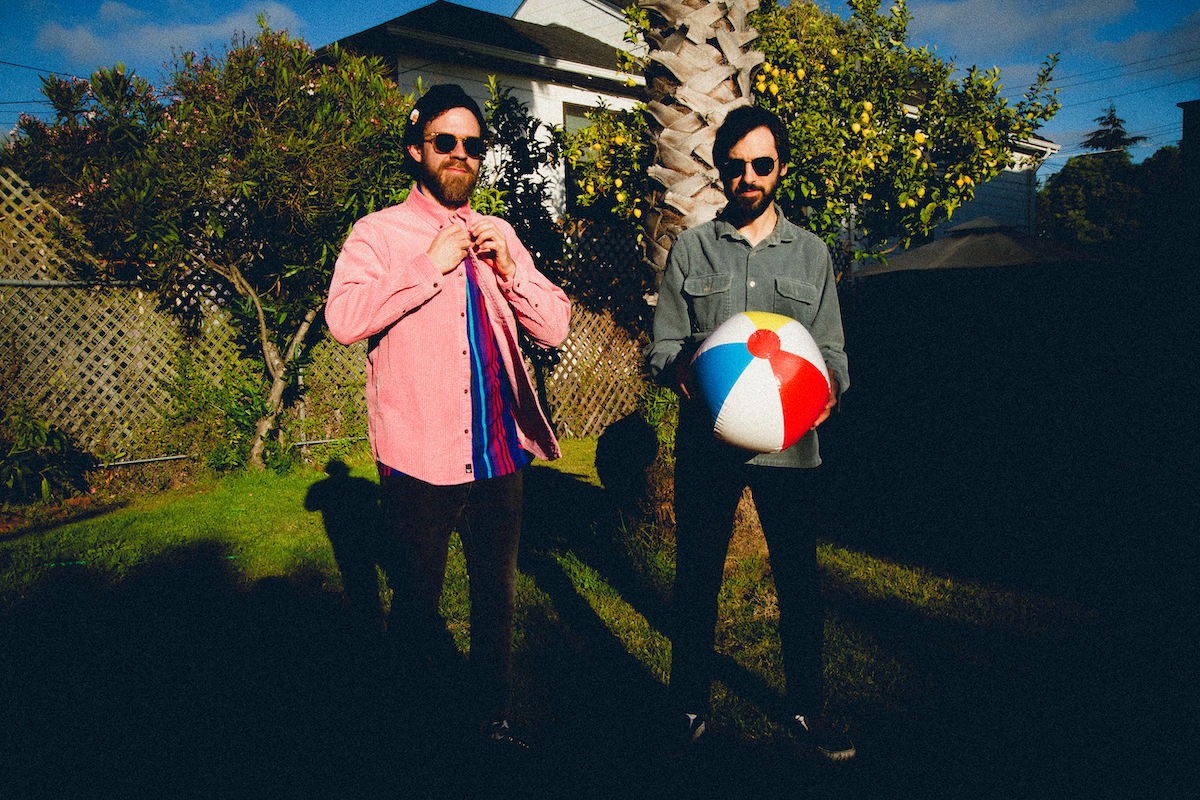
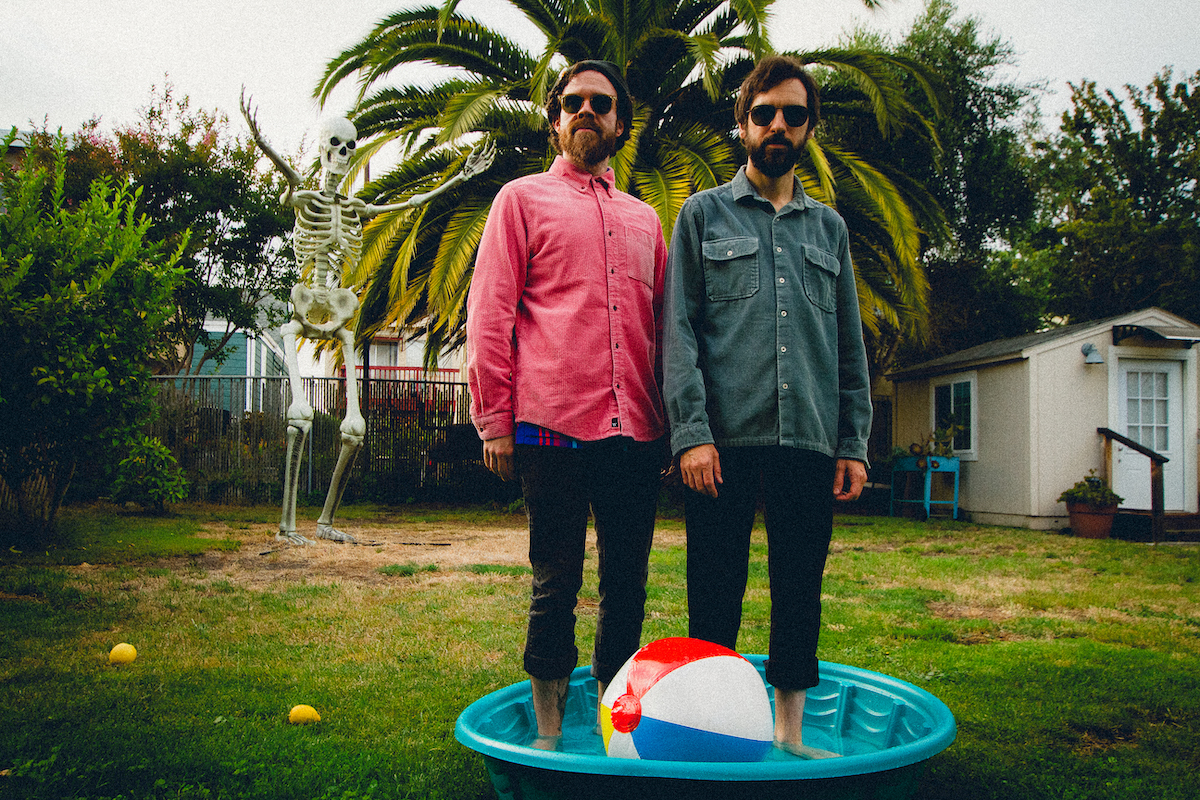
In the ever-evolving world of independent guitar music, few bands manage to fuse historical reverence with modern vitality as seamlessly as Oakland’s The Goods. Their debut full-length, ‘Don’t Spoil The Fun,’ released in late 2025 via Dandy Boy Records, represents a tour de force of melodic construction and emotional depth. While their early work carried a sharp, punk-inflected edge, this new collection finds the trio, frontman Rob Good, bassist Cherron Arens, and guitarist Gabriel Monnot leaning into an expansive and luminous pop sensibility.
Produced by Good in his own Oakland studio, the record moves away from the raw tension of the past toward a wide-screen sonic palette. The arrangements are rich with detail, featuring 12-string guitar patterns that echo the legendary jangle of the mid-sixties, complemented by fluid basslines and soaring vocal layers that prioritize atmosphere over simple volume. This shift has transformed the project from a solo endeavor into a collaborative powerhouse where every note serves a greater architectural purpose.
The album’s emotional core is revealed through its narrative tracks, which balance vibrant energy with vulnerable reflection. The high-velocity opener, “April Fools,” explores the dizzying frustration of being drawn to an unpredictable partner, while the focus track, “Sunday Morning Out of the Blue,” captures the uneasy, clarifying calm that follows a long-drawn-out argument. The band also pays homage to their roots in “Photograph,” a wistful tribute to the shuttered Oakland venue, The Golden Bull, where they played their first show. By the time the album closes with the gentle, protective sigh of “Keep It Safe,” it is clear that The Goods have successfully bridged the gap between classic power-pop lineage and the complex realities of contemporary life.
Thanks as always to Bobby Martinez at Dandy Boy Records and to Rob for his time.
James Broscheid: You admitted to re-tracking nearly the entire record, except for Cherron and Gabe’s parts after taking a break. When you listen to the ‘Don’t Spoil The Fun’ versions vs. the “aggressive” early versions, what was the specific ghost in the machine you were trying to exorcise? Was it a matter of BPM, or was it the “density” of the sound?
Rob Good: It was a matter of density, intensity, and overall philosophy really. It’s funny how long it took us to work our way to something so simple and straightforward. The group started without any particular idea of what the sound should be, and our earliest handful of songs lent themselves to a pretty bombastic presentation. There was a lot of punky energy in there, which was kind of picking up where I left off years ago in previous projects. We had to take a pause after our first stab at making this record and ask, “What are these songs really all about?” and the answer was of course “the melodies!” So, it became an exercise in opening things up sonically – tearing down the wall of sound and rebuilding it around the melodies so that they had room to breathe.
JB: You’ve engineered Joel Cusumano and The 1981. Does wearing the producer hat for other people make you more or less precious about your own mistakes? When you’re behind the board for someone else, do you find yourself thinking, “I should try that on a Goods track,” or do you keep those worlds strictly separate?
RG: More and more, I’m learning not to be precious about anything, to be prepared at any time to abandon an idea that isn’t working and try a novel approach. I love working with Joel and The 1981 not only because they’re close friends, but because it’s so inspiring. I think I take a little something from everyone I work with, I’d be a fool not to!
JB: I read that the instrumental coda at the end of “Keep It Safe” was actually grafted from a completely different song that was cut. That’s a bold architectural move. Do you view your demos as a library of parts rather than fixed songs? How do you know when two disparate pieces of music actually share the same DNA?
RG: Yeah, I think it pays to be flexible in thinking about all the musical bits and bobs floating around in my library of demos. Again, trying not to be precious about anything, being prepared to jettison 90% of the original idea to keep the 10% that’s actually working. In the case of “Keep It Safe,” I got lucky because it happened to be in the same key as the coda. It was heartbreaking to cut that coda from the record, and when “Keep It Safe” presented itself as the obvious closer, I recognized the opportunity to mash the two together.
RG: A Scottish friend of yours told you that if you turned the volume down, you’d be a country band! If you took the songs on ‘Don’t Spoil The Fun’ and stripped them down to just an acoustic guitar and a pedal steel, which track do you think would be the most honest country song? Does that Americana foundation provide the structural integrity that allows the “jangle” to work?
RG: Country is such a specific genre that I don’t think there’s any true “country” at the core of any of the songs, but I do think there’s a distinctly American influence in my musical identity – when I was little my dad sang me Eagles songs as lullabies, and I’m a huge fan of Creedence Clearwater Revival and Tom Petty. So much of that American sound (which I suppose really comes from folk music) is based around simple, universal chord structures and melodies. It becomes a platform upon which you can impose and express your own musical personality, and the variations are endless. “Me and My Ghost” is probably the song that is the most rooted in that world – Gabe certainly recognized it and added some gorgeously twangy guitar leads that really drive that point home.
JB: Speaking of influences, you have cited The Zombies and The Kinks (excellent choices!) as primary influences over true power pop. Both of those bands were masters of melancholy hidden inside upbeat structures. In your writing, are you more interested in the sunny jangle or the shadow that the jangle creates? Why?
RG: I do love that contrast – a little bitterness hidden in the sweetness. I think you need both. I’m drawn to melodies and hooks first and foremost, but with lyrics there’s an opportunity to create contrast that can add so much depth. I’m not a very cerebral lyricist – I kind of feel my way through the writing process and it’s often not until after I step back and read what I’ve written that the meaning of the song reveals itself – but I’ve always been fascinated with lyrics. My earliest musical love was Elton John and as a kid I’d read the lyric sheets along to music and I was enthralled with the pictures that Bernie Taupin’s words painted in my imagination. I love the discovery of singing along to a catchy song and then taking a step back and realizing, “Woah, that’s what they’re singing about?!”
JB: You’ve been in a highly creative period lately with a yet-to-be-released solo album and work with Ryli. After years of not fronting a band, what was the specific creativity lock that broke open? Do you feel like you’re making up for lost time, or have you just finally found the right “sonic language” to speak in?
RG: It was really the boredom and isolation of the pandemic that spurred me to start writing again, and I think I just finally gave myself permission to create without any preconceived notions of what it needed to be, and to enjoy the process. I certainly feel an urgency to create, but I try not to wallow or lament the lost time and just press forward.
JB: You and Joel Cusumano seem to be in a creative feedback loop, playing on each other’s records. How does that communal Bay Area energy prevent you from getting stuck in your own head during those long solo mixing sessions in your studio?
RG: Joel is a brilliant songwriter, both musically and lyrically, and we’ve been in each other’s musical orbits for a long time now, playing in various groups together. We definitely have a kinship and the collaboration feels natural. Our circle of Oakland musicians is small, and we all love to make music without trying “be” anything in particular. I would include Yea-Ming Chen (Ryli / Yea-Ming & The Rumours) and Bobby Martinez (The 1981 / Dandy Boy label head) in that circle as well. We all bounce ideas off of each other and collaborate at various points. Each of our musical perspectives is very different but complementary to one another, so that feedback loop has proven to be consistently inspiring.
JB: You’ve mentioned that the song “Photograph” is a memorial for the Golden Bull, the Oakland venue where The Goods played their first show. As a local musician and engineer, how much does the loss of venues and the shift in the Bay Area scene seep into the “Don’t Spoil The Fun” lyrics? Is the title itself a plea to keep the local culture alive?
RG: The title ‘Don’t Spoil the Fun’ is actually a little playful jab at myself because the record was laborious to make at the start, and for a moment I lost the fun and joy. It wasn’t until we found the fun again that the record finally came together. But the feeling at the core of “Photograph” is that nothing lasts forever, moments of joy are precious and fleeting, and we have to recognize them and appreciate them while they’re happening. I find myself thinking about time and impermanence a lot these days, and that feeling does show up in various forms across the record.
JB: “Aurora” has been described as a song about “staying rooted instead of chasing dreams elsewhere.” In an industry that usually demands “chasing it” in LA or New York, what is it about the Oakland/East Bay “underground” that makes it the right place for you to build a permanent studio and legacy?
RG: I grew up in Livermore, a suburb on the outskirts of the Bay Area. As a fledgling suburban punk kid, most of my favorite bands were from the Bay Area, but Oakland may as well have been LA or New York because it was far enough away that I couldn’t get there. By the time I was old enough to get myself to 924 Gilman Street in Berkeley, it felt like I’d reached the top of the mountain. So, I think the DIY mentality of that punk scene is something I still carry with me, and I’ve been lucky enough to find like-minded friends and artists to collaborate with and draw inspiration from who are also influenced by that distinct East Bay DIY mentality. This place just feels like home.
JB: You’ve described “Sunday Morning Out of the Blue” as the “uneasy calm after a fight.” Pretty heavy for a song with a ’60s mod-garage groove. Most power pop songs focus on the heat of the argument or the bliss of the makeup. Why were you more interested in that middle state; the “worn out and closer” feeling? Is that the “Country Band” influence your friend mentioned coming to the surface?
RG: (Laughs) Maybe it is! I think that the struggle for understanding, that in-between state, is where we exist most of the time in relationships. Plenty of great songs romanticize or mythologize the makeups and breakups, but there’s beauty in the struggle as well.
JB: On the Apologue Podcast, you mentioned that this album felt like “leveling up” your sound. Technically speaking, what was the “boss battle” of this record? Was it a specific gear upgrade in your studio, or was it the mental hurdle of deciding to scrap and re-record everything to find your own style?
RG: I did make some significant upgrades to the studio, and learning what to do on a technical, music engineering level was part of the journey of making this record. But really the primary struggle was a creative one – learning how to let go and be open to discovering the path forward. Not clinging to old ideas of what the music was “supposed to be” and just letting it be what it wants to be. Really the “boss battle” was learning to let go and find joy in the process.
JB: You brought in Bart Thurber (The Neutrals, Cyan Pools) to mix and master. Since you recorded the album in your own studio, what did Bart’s ears catch that your “producer brain” had become blind to after four years of sitting with these tracks? What was the specific “sonic gap” you wanted Bart Thurber to bridge? Was there a particular drum sound or a low-end clarity he brings to The Neutrals records that you wanted for The Goods?
RG: Bart Thurber absolutely rocks. I love the production on the The Neutrals records, but it was actually his work on the Owen Adair Kelley (of Cyan Pools) single “Applehead” that inspired me to work with him. I had engineered the track, but when I heard Bart’s mix I was blown away. He really brought out the width, sparkle, and warmth, which is exactly what I wanted for my own stuff. I could go on and on about everything I love about his work, but, in particular, the way he treats guitars is absolutely stellar, bringing out that sparkle and chime without sounding brittle or tinny.
JB: You mentioned recording an entire other album during the break from finishing ‘Don’t Spoil The Fun’? Is that record a departure from the “Guitar Pop” label? Does it represent the different things you needed to try to clear your head, or is it a secret sequel to this record?
RG: It’s still very much a guitar pop record, but if ‘Don’t Spoil the Fun’ was the product of finding the right formula, this “other album” (which will actually end up being the second Goods record – out this fall!), was an exercise in throwing formulas out the window. As such, it’s somewhat more eclectic than ‘Don’t Spoil the Fun’ because we were experimenting with different sounds and arrangements. At the end of the day, it was obvious that ‘Don’t Spoil the Fun’ should be the first of the two records to come out because it’s a more logical follow-up to our first EP. The next one will sort of pick up where ‘Don’t Spoil the Fun’ leaves off and expand the palette in some interesting and possibly unexpected ways, but it’s still essentially rooted in catchy, immediate pop songs.
JB: With having your own studio allowing you to re-track almost the entire album, what is the core of your signal chain that stays patched in? Do you have a “go-to” vocal chain or a specific mic-pre combo that helps you move quickly when an idea strikes so you don’t get bogged down in technical choices?
RG: I love my Neve preamps, and I have a decent collection of mics and other gadgets. I think it’s helpful to have your go-tos for getting ideas down quickly. I have some Fathead ribbon mics that I really like on drum overheads and guitar cabs, for instance. But it’s also important to change it up every now and again so things don’t get stale. Ideally the gear should aid, not bog down, the creative process. Since my studio only exists to serve myself and a handful of close friends, I have a limited but effective arsenal of toys – just enough to give us a decent palette of options, but not so many that we’re going to spend half the session auditioning different mics and pres without ever getting down to tracking.
JB: You mentioned Tom Petty earlier and growing up on ’70s rock but loving ’90s energy. When tracking ‘Don’t Spoil The Fun,’ were you leaning more on vintage hardware (real tubes and tape saturation) or modern “in-the-box” flexibility? How do you get that “sparkly, melodic” high-end without it sounding brittle?
RG: The analog gear definitely has something to do with it, but like most engineers will tell you, it’s really about getting it right at the source. Dialing in a killer guitar sound on a good tube amp, making sure the drums are well-tuned, and above all capturing a great performance. Everything ends up in Pro Tools, which offers a lot of flexibility as far as easily retracking or punching things, and I have a well-curated suite of plug-ins that are my go-tos, mostly emulations of vintage gear. As for the sparkle, with jangly guitars I feel like you’re always teetering on the edge of too bright. It’s a fine line to walk. Compression helps a lot to tame spikes and get that Byrds-y jangle, and I’m pretty sure Bart uses Pultec-style EQs to enhance that sonic character without getting brittle.
JB: When you recorded Joel Cusumano’s ‘Waxworld,’ you were working with his excellent rough, detached vocal style and post-punk textures. Did capturing his more dissonant, “fiery” sounds influence how you approached the EQ or compression on your own, more melodic tracks?
RG: Joel’s style is so uniquely his own, and he tracks really quickly and definitively. He knows exactly what he wants. I think that is the biggest thing I take away from working with him, more so than anything on the technical side – being direct and focused and unafraid to lean into your own unique qualities.
JB: I have a few of questions in regards to lead single “April Fools.” You have stated that it started as a Donovan style acoustic trifle. When you decided to turn it into a high-energy opener, did you keep any of the original ‘toy’ instruments or acoustic tracks, or did you strip it to the studs? Also, the guitars are incredibly immediate. What was the main guitar and amp pairing for that rhythm track? Was it a classic Rickenbacker jangle, or did you use something with more ’90s crunch to give it that driving energy?
RG: The early version never actually got a proper recording, it was just something I would idly plunk around with on the acoustic guitar from time to time. At one point I played an early demo for Bobby from Dandy Boy and he really responded to it, so I figured it was a good candidate for the full-band treatment. There are a bunch of guitars on that one, acoustic 6-string and 12-string, a Rickenbacker 650c, and a 12-string Stratocaster are the main guitars. For the fuzzed-out bridge in the middle, I can’t recall exactly which guitars we used. It’s possible we busted out the Les Paul Jr. and the Gibson SG for that section, and there are lots of layers with various fuzz pedals being employed, most notably a Big Muff and a Tonebender. All of the electric guitars were tracked through a Vox AC30 from the late 90s that was previously owned by Matt Bullimore of The Mantles and is perpetually on the brink of blowing up!
Find out more by visiting: Dandy Boy Records | The Goods Instagram | Dandy Boy Instagram