

Photo by Paul Cox
In 1989, as the decade’s excesses began to fray at the edges, Lush stood at the center of a different kind of revolution, one built not on spectacle, but on texture, restraint, and emotional precision. As co-founder, guitarist, and vocalist of Lush, Emma Anderson helped shape a sound that felt both diaphanous and unyielding: melodies that shimmered like a glow softened around the edges, anchored by an undercurrent of resolve.
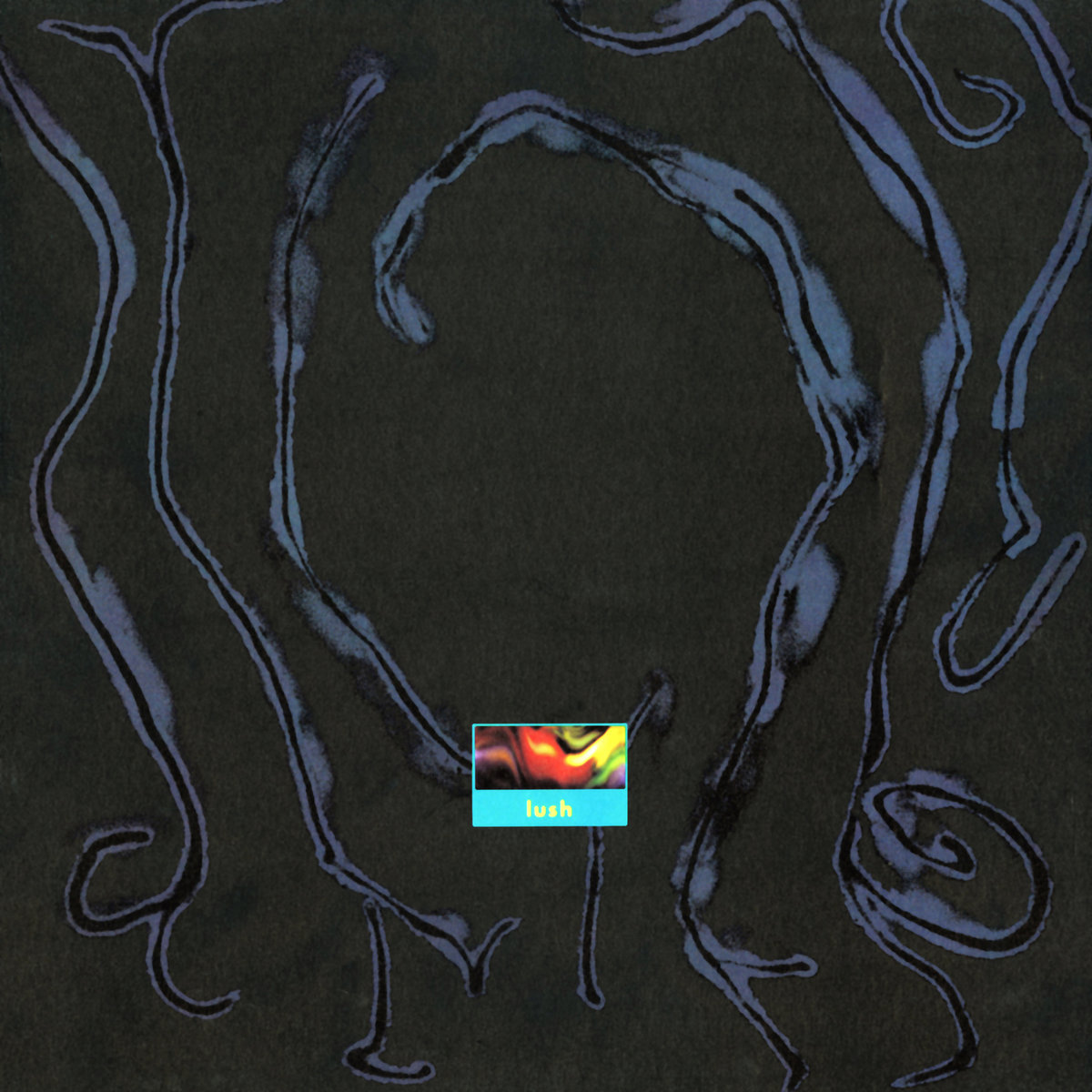
Between 1989 and 1990, Lush emerged from the fertile margins of London’s underground with a clarity of vision that belied their youth. The band’s early recordings gathered on ‘Gala,’ now newly revisited through 4AD, capture a moment when alternative music was recalibrating its emotional vocabulary. Where many of their contemporaries chased abrasion or spectacle, Lush’s writing traced interior landscapes: longing without sentimentality, turbulence rendered in harmony. Her guitar work, intricate yet forceful, created vast atmospheres that felt less like backdrops and more like living environments.
What distinguished Anderson during this formative period was not simply her technical fluency, but her instinct for tension. She understood how sweetness could carry menace, how repetition could induce transcendence, how distortion could function as illumination rather than obscurity. In an era poised between post-punk austerity and the coming swell of shoegaze, she helped carve out a space for Lush that was unmistakably their own; precise in construction, yet emotionally expansive.
The reissue of ‘Gala’ invites a return to that threshold moment. These recordings document a band discovering the full reach of its language, and a songwriter already fluent in contrasts: fragility and force, introspection and surge. For Anderson, 1989 to 1990 was not simply a beginning; it was a declaration of intent. The sound Lush forged then continues to resonate, not as nostalgia, but as proof that atmosphere can be architecture, and that quiet intensity can alter the course of a genre.
My thanks to Erin Christie for arranging this discussion, and to Emma for her time and insight.
James Broscheid: We’re obviously going to talk about the ‘Gala’ reissue, but one thing I wanted to ask first is, when is the next solo album?
Emma Anderson: (Laughs) Not for a while. I’ve been so busy. I’ve got some ideas for it, but I haven’t recorded anything at all. It’s really very, very early stages. So, not for a little while I’m afraid. I’ve just had too much on my plate with working and my daughter.
JB: How old is your daughter?
EA: She’s 15, she’s 16 in January, so she’s got GCSEs (General Certificate of Secondary Education) next year. She’s quite stressed out about that and we’re choosing a level; courses, colleges and stuff like that.
JB: With ‘Gala’ coming out, and correct me if I’m wrong, but it was originally a compilation to introduce Lush to U.S and Japanese markets, right?
EA: Yes, that’s correct.
JB: I loved Jenny’s (Hval) biography that she wrote for the reissue and her reference to ‘Gala’ being like a collage or puzzle.
EA: Yeah, it was brilliant.
JB: Did the band approach ‘Gala’ less as a compilation of old EPs and more as a curated, non-linear statement about what Lush was capable of in 1990?
EA: ‘Gala’ was not our idea, it was very much the record company. The thing is, we released those records in a very atypical way. Most bands put out a single and then an album for their first release. Because of the way we did it, we did a mini-album, an EP, and then a single. Now, that wasn’t planned like that at all. It was partly due to Ivo’s (label owner Ivo Watts-Russell), caution because, it’s quite well documented. I sent him the demo tape we did, which was “Etheriel” and “Second Sight,” and he liked it, but he had someone in his ear, i.e. Howard Gough, saying, “Do not sign this band. I have seen them live and they are dreadful.” So, he listened to Howard, basically, I think. He came to see us play with the Pale Saints and signed the Pale Saints (both laugh)! We weren’t brilliant live, you know, we were very rough and ready, the vocals were very quiet. It was a bit ramshackle. To be honest, there were a lot of bands that were ramshackle around that time in late 80s London, playing in pubs and stuff. It wasn’t completely out of the ordinary. He decided to put us in the studio to do some more demos to help him decide whether to sign us to do a normal album.
He put us in the studio, we didn’t obviously do those two songs as he had those, so we did “Baby Talk,” “Thoughtforms” and “Scarlet”, I think. He loved it so much, he said, “Go back, do the two that were on the original demo and another one (“Bitter” – JB), and we’ll put it out as an as a mini album!” So, that is why that came out like that. He loved the immediacy of it, the rawness of it because those demos were done really quickly. ‘Scar’ (4AD, 1989), was the first three tracks with demos, basically. We did six songs up on this mini album, we didn’t have a lot of songs, so then we wrote a couple more with “De-Luxe,” “Leaves Me Cold,” and “Downer.” So, we did the EP ‘Mad Love’ (4AD, 1990), and then we did “Sweetness And Light” (4AD single, 1990). It was a very unconventional way of doing it. It had a disadvantage in that we put these records out and used up all our songs. People are asking, “Well, where’s the album?” We’ve used them all up (laughs)!
Another band would have made a studio album with all those songs. For the global market, if you like America/Japan, it was decided by Warner Brothers / Reprise, and Ivo to put them together to make this compilation to introduce America, Japan, and Canada (Vertigo) to us. So, that’s why it was like that, but it was not something that was pre-planned by the band, it was just the way it happened. So ‘Spooky’ (1992), was the difficult second album. People thought, “No, ‘Spooky’ is their first album!” Well, not really (both laugh), but hey, it’s what happened. There’s no point in going, “I wish we’ve done it, like this or that.” I think the thing about all three records was they did sound all quite different because you’ve got John Fryer’s production, which is the demos, and then Robin Guthrie and Tim Friese-Greene, which was a completely different way of working again, so it’s an interesting sort of spectrum, shall we say (both laugh).
JB: Were those three different producers a conscious decision in those early, you mentioned Robin Guthrie, Tim Friese-Greene, who I thought did wonderful work with Catherine Wheel, to avoid being pigeonholed into, like a single genre like shoegaze, or anything like that?
EA: At that point, I don’t think the word shoegaze had been muttered yet, in 1989, 90. I think that came a little bit later with Ride and Slowdive and Chapterhouse. I don’t think we were thinking like that at all at that point. The thing is, we were put in the studio with John Fryer to do those demos and we’d met Robin before anyone. I met Robin through working with a guy named Jeff Barrett, who runs Heavenly Recordings now, and in the late 80s, he working in PR and I worked for him. For one, he knew Robin and he said, “Oh, you should send him a tape!” So I did, and I met up with him and Liz (Elizabeth Fraser), actually, in a pub in Kilburn (laughs), and he loved it. Now, him and Ivo were not on the best of terms at that time, but we were quite keen to work with Robin and he was Keen to work with us so we thought we’d really like to do the next record with him. So that was our choice, I think. Then, Tim Friese-Greene. Ivo loved Talk Talk and their album, ‘Spirit Of Eden’ (EMI / Parlophone, 1988), and he thought it would be a really interesting collaboration. Tim was lovely, but very different to Robin and John, you know. So no, to say, “Oh, the band planned this and the band planned that”, there was very little planning on our part. (Laughs) There was very little planning during the whole career of Lush (both laugh). Anyway, we didn’t really sit down and have meetings about things that were going to happen. I mean, Ivo was very much an A&R man with Lush the whole time. He had quite a lot of input into producers and mixes, and he used to do all the track orders on the albums and stuff so no, it wasn’t anything that was premeditated. It just happened.
JB: So, there was no thought process behind working with three different producers for the demo tracks, ‘Scar’, and ‘Mad Love’ or was it a matter of going along with Ivo and see what happens?
EA: Yeah, we went along with Ivo’s advice. Apart from Robin, as I said, John and Tim were Ivo’s suggestions, and we agreed. Jumping ahead, we obviously went with Robin for ‘Spooky’ but then, when we did ‘Split,’ Mike Hedges was very much Ivo’s suggestion. We just went with Ivo’s ideas at that point. I think it worked out.
JB: Yeah, it did!
EA: But there was no, “Hey! Let’s try all these different people!” I do remember, actually, when we were going to record ‘Split,’ Ivo had the idea of going with Bob Mould.
JB: Wow!
EA: I did speak to Bob on the phone, and I love Hüsker Dü and Sugar, but I remember, even at that point, thinking, “Oh God, if we go too far down this road, it will feel like we’re guinea pigs!” Lush produced by Robin Guthrie, Lush produced by Bob … you know? I thought, “Oh my God, can we just try and calm things down a little bit of this slightly expensive approach to producers?” but anyway, we didn’t work with him in the end.
JB: Sounds like, no control at all over production decision?
EA: It wasn’t like we didn’t have any control. I think we just were a bit … not clueless, but we were not A&R people, we didn’t know who would be great to work with. We didn’t have contacts in that sort of world, so we very much relied on Ivo actually. I mean, by the time we did ‘Lovelife’ (4AD / Reprise, 1996), we obviously used our sound man (Pete Bartlett), so that probably was the time where we did kind of rein in a bit. You know, it’s difficult when you’re in a band, and people think you can make these “collective decisions” about things, especially with something like a producer where, obviously, back in those days, you’re talking about producer fees, studio costs, and obviously, a producer would have a lot of say about things, and making records was really quite expensive then. So, the record company did have a big say in who was going to produce your record. It wasn’t up to the band solely. We certainly weren’t experienced enough to produce our own records! Um. So it wasn’t like, we had no control, but Ivo did have a big input on it, which was fine. I do think that the whole ‘Gala’ thing is a bit puzzling for some people because they don’t quite understand why it happened like that. Normally people may sign to a label and make an album, but we did it a different way. It was unconventional, but it was just the way it happened.
JB: Well, you’re talking about a time, especially with English bands, where they would release a single, but it would be a two CD set with several B-sides that could normally comprise an EP. Being a music fan, I would buy them up anyway, but I remember there being some criticism over that. Anyway, about why you’re releasing a single with bonus tracks on two CDs. And you know?
EA: That came later after ‘Gala,’ that wasn’t in that wasn’t. That was more in the mid- 90s, and that was purely a chart thing. It was so fans would buy both formats and the seven inch maybe, so they basically would be buying three versions of the single to get the single into the charts. It was a very cynical move, but you know, we did it with ‘Lovelife.’ God, the amount of B-sides, we had to come up with (both laugh). When we did ‘Gala,’ that wasn’t happening at that point, at all. That was later.
JB: I didn’t think about it until you said it that when ‘Gala’ came out, “shoegaze” as a genre wasn’t even being thrown around yet.
EA: Yeah, I think that was, it was later with bands like Ride and Slowdive and Chapterhouse and Adorable. All these kinds of bands that were a little later. Swervedriver, whoever you know, mostly Creation bands when there seemed to be more of a concentration of them. When we did the stuff on ‘Gala,’ I don’t think the word “shoegaze” had even been coined then. So, this was all pre-whatever you want to call it.
JB: For the 35th anniversary reissue of ‘Gala,’ I do want to ask how this package came together.
EA: Well, all the reissues are from the record company. They’ve been doing it with a lot of the back catalog. Kevin (Vanbergen, producer/sound engineer) has done the Pixies stuff and Belly, I think they’ve done recently and some other things. We obviously put those other ones out two years ago (reissues/remastered versions of ‘Spooky’, ‘Split’ and ‘Lovelife.’ It’s the record company. It’s not the band sitting down and discussing it. I remember when we put the other three out, there were a lot of people on social media going, “What about ‘Gala’? Why is ‘Gala’ not being done?” Which was nice. Eventually, they did it, but I think they wanted to treat ‘Gala’ separately because of its format. The special deluxe edition has broken it down back to the original records which is really nice. They did treat it differently from the other three, which I think was the right thing to do. So, yeah, no, it’s very much a record company decision, but obviously we’re behind it.
JB: How were the album reissues received from a couple years ago?
EA: I saw some reviews which were very positive. But I didn’t apart from that, they are what they are. They were received really well. The funny thing is that when they originally came out in this country, especially ‘Spooky” and ‘Split,’ they weren’t particularly received very well at the time because we were slightly out favor with the press or not quite in step with what was going on. Like when ‘Split’ came out, it was the beginnings of Britpop, and we weren’t quite in sync with that. So, at the time we got a bit of flack for that, but now obviously, they are judged on their own merit without all that noise. So that is quite nice actually.
JB: Do you have any feeling towards revisiting or hearing those early recordings that make up ‘Gala’ and look at them through a modern lens?
EA: If they were recorded now, they would have been done differently, you know? Everything’s now done in Logic on a computer with a lot more software. Back then it was tapes and expensive studios. They weren’t all expensive, but they would be done differently now. Things like, ‘Scar,’ I know we didn’t use a click track for Chris’s (Acland) drums, I’m pretty sure we didn’t. It was just mic him up and off he went (laughs)!
‘Scar’ was done really quite quickly because they were demos. Robin was obviously completely different when we did ‘Spooky’, he quantized Chris’s drums, but I don’t think he did for ‘Mad Love’ though he did use a click. Robin works in a very specific way, so if we did them now, he would probably still work like he did before (laughs). I don’t know because I haven’t worked with Robin in a long time. I remember when we mixed “Sweetness And Light,” it took a long time. The whole process from beginning to end for “Sweetness And Light” and the two B-sides took six weeks. Three songs.
JB: Wow!
EA: I know it was excessive. You wouldn’t get that now (both laugh).
JB: That was Robin or Tim?
EA: “Sweetness And Light” was Tim. He just worked in a very specific way. He paid attention to most minute detail. Which was good, but it did take quite a long time (laughs). Ivo was getting a little bit agitated at the amount of money it was costing (more laughter).
JB: Yeah, I bet.
EA: So yeah, all three records were done really differently. I suppose for us, it was quite a learning curve. A band that had never really been in the studio before at all to start with these completely three different recording processes, but there you go.
JB: For remasters, does the label reach out to you and get your blessing on the remasters? Do you get to hear the remasters before they’re released?
EA: Yeah, I mean, they very much trust Kevin (Vanbergen) to do it. Kevin lives in the same town as me in Hastings, so I know him. I had never met him before the other three were done, but 4AD hired him and I went along to the pub when ‘Split’ was being cut, actually, because the cutting room was about 10 minutes from my house (laughs), which was quite funny. He’s very nice man, so we sort of became friends. Then he was brought in for this one again. He is a very, very good mastering/cutting engineer and a lot of it is mastering for digital and streaming services. Especially re-cutting them for the vinyl reissues. I think that’s quite a good thing to do in the 21st century. I seem to remember ‘Scar’ on vinyl didn’t sound that brilliant. It wasn’t done brilliantly at the time, so the remaster was a good thing to do.
JB: Did the remastering process reveal anything about the original sound and energy of Lush back then?
EA: I just think it just sounds a bit better, you know? I don’t think it’s like, “Oh my God, listen to that! I hadn’t heard that before or ever!” (both laugh), you know? It hasn’t really revealed anything massive. I think it’s just made it sound a bit better and it’s brought these recordings into the technological world of streaming to introduce new people to Lush’s music using different machines. What he does, is he masters off the tapes. So they got all the tapes out of the store (storage) and he masters off that. He’s not mastering off the old CDs. I think he had to for one song. It might have been the Robin Guthrie (version of) ‘Scarlet.’ I think he had to do off CD because they couldn’t find the tape, but for the rest he does go back to the original tape. He tries to keep everything the same as much as possible. Like the gaps between the songs and the fades if they’ve been faded in the mastering because that sometimes happens. So, um, he’s pretty good. He’s very good at mastering back catalog stuff. When I sat in the cutting room with him, he sits they’re talking all this technological stuff, and I’m like, “I don’t know what you’re talking about! (Both laugh) “I’m sure it’s all going to be great!” But no, it hasn’t really revealed anything to me, it just sounds better. The artwork’s been brought up to date as well by Chris Bigg and that came out really nice. Yeah, it’s just repackaging it for 2025, 35 years after it came out.
JB: I know, can you believe it?
EA: I do think it stood the test of time. And I think shoegazing, we are going to use that word, has stood the test of time. There are not many records from that era being remastered and released. A few, but I think a lot of them aren’t. It’s really nice that people want to hear this and own it. They’ve bought it once before (both laugh).
JB: You mentioned it being 35 years, which is hard to believe? (Emma laughs) What does ‘Gala’ feel like for you now compared to when it was originally released when the band was pretty much in its early development?
EA: Personally, it was probably my favorite period in Lush actually.
JB: Really?
EA: Yeah. Well, as you just said, we were developing, but it was also before the pressure started, I think. I was still at college when we were making those records. I remember, especially when we made ‘Mad Love,’ I was juggling college and being in a band.
JB: Wow!
EA: The other three had left because I’d taken a year out to work for Jeff Barrett, that was it. Even though I’d started my college courses the same time as the other three, I was at a different college, Jeff offered me this job and I thought I really had to do it because he worked at Creation Records. He did all of Creation’s press and PR, but he also did Factory Records. I thought, “I can’t not do this! This is just a brilliant opportunity.” At college they said, “Okay, you could take a year off if you want.” When I went back, the other three had finished, but I really did want to finish my course. I thought I’ve done two years, I really should finish my degree or whatever. When we were touring ‘Mad Love,’ I remember writing some essays in the back of the tour van (both laugh), juggling it all. It was quite a mad time, I think what I mean by that was, we were getting to be a “professional” band, it was what we did for our jobs. At that point, we were still kind of really from feeling our way around it, and in a way, it was quite nice because it was all quite innocent. I suppose that’s why, when you were asking about whether we chose the producers, we didn’t have a clue! We were very, very young and pretty naive before, all that America pressure. Things did change when we had to start trying to break America and all that. I look back at that ‘Gala’ era with a lot of fondness because we were a really young band, and it was like, “Oh my God, we just signed to 4AD!” It was all exciting and new and shiny and a bit daunting.
JB: Great label!
EA: Yes! It was a, “I can’t believe this happening” sort of thing. Also, for me I think the songs themselves were fresh sounding and full of optimism (both laugh). It was my favorite time to be in the band.
JB: And two years after that, the band is touring Lollapalooza.
EA: Yeah, I enjoyed Lollapalooza. But yeah, there was more pressure then with heavy touring and more expectations. I think even the British music scene around that sort of late 80s early 90s period was a little bit easier as well. As I said, it was before the shoegaze thing and before Britpop. It wasn’t genre-less, but it was a little bit less pressurized and bitchy. I think a lot of indie mentality from the 80s was still there. When the 90s came, the majors started sniffing around a lot more and having a lot more say in things and when money is involved the stakes are a bit higher and it got a bit more glamorous. Even if you look at the photos of us from the ‘Gala’ era where we all just looked like indie kids with jumpers on. No makeup artists.
JB: You looked like an underground band.
EA: Yeah. No Sheila Rock (American photographer) photographs and stuff, which was very different for us.
JB: Speaking of polished, when ‘Lovelife’ was released it was described as Britpop.
EA: Well, I do think that the production on that album is very, very different to the other Lush records, you know? I think it’s very basic. It’s my least favorite record. That’s not a secret (both laugh). I just said, I thought ‘Gala’ stood the test of time. I don’t think that one (‘Lovelife’) has as much actually, but that’s my personal opinion. It’s funny talking about all this stuff so many years later because I have to really cast my mind back to how I felt and what was going on. ‘Gala’ was … that period was very exciting. I have good memories of it.
JB: Then go tour America!
EA: (Laughs) Yeah, and we did. We did a small tour and then we went to Japan, we did a co-headline tour with Ride to promote ‘Gala’ and they were promoting ‘Nowhere’ (Creation Records, 1990).
JB: That’d be so great.
EA: Yeah. That was in ’91 and it was good fun.
JB: I just love the fact that most of those bands from the UK are back and putting out great releases. Chapterhouse is going to be coming over here this year. They did a short U.S. tour and I caught them at the Troubadour in West Hollywood and they were phenomenal.
EA: That was quite a long time ago, wasn’t it?
JB: It was in 2010. They played with Ulrich Schnauss and The Meeting Places.
EA: I think they played the ICA in London (2009 – JB). I didn’t go. And then they stopped, and everyone else came back! (Both laugh) Yeah, they’re playing in the UK next year. I’ll definitely try and go to that.
JB: Lush is the only band I’ve never seen.
EA: Well, you’re never going to see them! (Uproarious laughter).
JB: I know.
EA: I’m sorry about that. That’s a bummer.
JB: That’s why I led off asking about the next Emma solo album!
EA: Well, there will be another Emma one eventually. I’m not a full-time musician do you know what I mean? It’s not like back in the day when you made a record, you toured it and then you made another record. It’s a lot more circumstantial now, but I definitely want to do another one. It’s in the very, very, very early stages. I do have some ideas. It’s just bringing them to fruition.
JB: Especially with getting your daughter situated.
EA: Yeah, I mean, it’s not like I’m changing nappies or something, but it’s quite a lot to juggle. We’ll get there. We’ll get there.
JB: I have to bring up the ABBA cover that’s on ‘Gala.’
EA: Oh yeah!
JB: “Hey Hey Helen.”
EA: I think it was my idea that one because I remember I was a massive ABBA fan when I was eight, or whatever and I used to love that song, which is on their first album (self-titled, Epic / Atlantic, 1975). I thought it would be quite easy as well, you know, a lot of ABBA songs are very intricate. So I do seem to remember it was my idea, but I can’t remember why we did it. It wasn’t like it was for a charity record or anything. I really can’t remember the reason we did it. It might have been for ‘Gala.’ I think “Scarlet” was done for ‘Gala’ because we did that with Robin. I think “Thoughtforms” and “Scarlet” on ‘Scar” were the two songs which Ivo thought could possibly be made a bit shinier; a slightly higher production value shall we say. I think “Scarlet” was done for ‘Scar,’ and maybe “Hey Hey Helen” was as well. As I said, we weren’t very prolific. I remember, at the time, even thinking, “Okay, we’re putting all these songs out on these EPS and mini albums … we’re not the Pixies!” ‘Come On Pilgrim’ (4AD, 1987), that was their first record, wasn’t it?
JB: Yes.
EA: I think it was a mini album, and then they put out ‘Surfer Rosa’ (4AD, 1988), but they were really prolific. I thought, “Oh, I hope they don’t think we’re gonna churn out all these songs like the Pixies!” (Both laugh) Anyway, it might have been done for ‘Gala’ but we didn’t do many covers. Actually, I think we did when we had to do it for formatting. We started doing more covers because we needed the tracks. But yeah, I was a massive Abba fan when I was a child.
JB: I still like them.
EA: Yeah, I still haven’t seen that ABBA Voyage in London. It’s that holographic thing, that has been going for a few a couple years now. I do want to see it, but I need to find someone to go with me because my daughter is not interested.
JB: Oh, really?
EA: No! It’s so annoying. I should tell her she doesn’t have the choice and drag her with me.
JB: I’m in the same boat with my son. You want to let them explore what he wants, but I fail to make the connection with some of the stuff he listens to.
EA: I know. You have to let them do their thing.
JB: Was it difficult to put an ABBA song through the sonic lens of Lush or was it pretty easy?
EA: No. Honestly, I remember working out the chords with Robin. As I said earlier, he works in a very certain way. He didn’t use amps or pedals. I don’t know if he does now, but it was all put through the outboard gear and then through the effects unit in his panel.
It was all done like that, so we would just play the beginning and twiddled a few knobs to make it sound Robin Guthrie-ish (laughs). I think that was done quite quickly, actually. It was a bit of fun, that one. We did something that didn’t appear on ‘Gala’ and that was “Chirpy Chirpy Cheep Cheep.” Do you know who that is?
JB: Yep. (composed by Lally Stott, 1970 and made popular by Middle of the Road in 1971).
EA: Yeah, we did that for a charity album (the anti-poll tax compilation ‘Alvin Lives (In Leeds’, Midnight Music, 1990). And that may have been around the same time we did “Hey Hey Helen” because Robin did that as well. Are they British? It was quite a big hit here in the 70s. It was British. It wasn’t American, was it?
JB: No, Scottish.
EA: It was just the sort of naff pop song that everybody heard. I just remember it from when I was about five years old. It was very childish. I think that’s probably why I remember, because it’s like a sort of nursery rhyme or something. I do remember Ivo being horrified that we did that. Saying something like, “I’m glad it’s not coming out on 4AD.” (James laughs) Yeah, it’s a bit of fun. (Emma sings “Where’s your mama gone …”). It is an odd song. It’s really, really strange. Which is maybe another reason we were drawn to it (both laugh).
JB: I wanted to ask about tracks like “Breeze” and “Sunbathing,” and you mentioning it being your favorite time in Lush. With the band finding its way back then and your early guitar playing and songwriting style, how do you feel you’ve evolved from those early years as the band moved through the 90s albums and 2016’s ‘Blind Spot’ EP (Edamame)?
EA: Do you know what I think about the way I write songs is it probably hasn’t changed very much. Even now, I’m talking about ideas for a new record of mine. I pretty much write exactly the same way as I did back in 1989 (laughs). I just come up with little ideas and tape them … I put them on voice notes on my phone. Then I sort of pull them together, taking bits and things that fit together with the little melodies in my head. I don’t think I’ve developed much at all (laughs), but you know, if it ain’t broke, don’t fix it.
JB: Right.
EA: It’s just the way I work. I think I’m able to think of melodies more without playing the guitar now. That’s the only thing I’d say. I used to have to kind of play the guitar to come up with a melody. Wait, that’s not true at all. When I came up with “De-Luxe,” I was on the tube coming back from college and I remember this little tune coming to my head (starts humming the melody), and I thought, “That’s really good!” I didn’t have a iPhone then (James laughs), I had to remember it so I kept singing it and singing it. I got off the tube, walked back to the flat I was living in at the time and taped it. So now, I did come up with some songs without a guitar now that I’m talking about it. Something about “Sweetness And Light” was very much a strummy, and meandering song. I haven’t really changed very much actually. I do what I do and don’t really know how to explain it (laughs).
JB: I think Jenny’s essay leaned on it a little bit, the term shoegaze and where Lush, kind of fit in before, during and after first run of the genre in the 90s. Given that the genre has experienced several revivals since the 90s, and probably none bigger than now, at least over here, but it seems to be running rampant now (Emma agrees). How do you feel about that term shoegaze? ‘Gala,’ like you mentioned, doesn’t fit because it came in before the term was even used though Lush is a name synonymous with most references to the genre now.
EA: The thing is, personally, I was quite influenced by the Cocteau Twins and My Bloody Valentine. I was also influenced by other things, other bands, not like the Cocteau Twins and My Bloody Valentine, but I can see why we were brought into that. I think it was also in the production. It was, “Turn the guitars up, put the vocals down,” you know? We were not confident vocally. There are other bands around like The Sundays and The Sugarcubes with very, very confident and competent vocalists. We were a bit, “Oh no, can we just turn it down a bit, please?” and that all sort of fed into this loud guitars, quiet vocals thing. When the term shoegaze was thought up, and it was Andy Ross (1956 – 2022) from Food Records, who said it (and that was Blur’s record label), it somehow got into the press. It was a term of ridicule for bands looking at their shoes and effects pedals, and then it stuck. But at the time, it was not a complementary term at all. It wasn’t an insult, but it was sort of taking the piss.
Then, you know, obviously, the NME (New Musical Express) had that ‘Memoirs of a Shoegazing Gentleman’ (David Quantick’s spoof column from October 1991 to February 1992 under the pseudonym, “Lord Tarquin.” It is now a 2014 book published by Sonic Cathedral – JB). There was this whole thing that everyone who’s in a shoegaze band is from some rich family, and they all went to these posh schools, and they all know each other, and they all hang out talking Latin (both laugh). I mean, it was funny, and I really liked it, but the whole scene was slightly ridiculed and not taken seriously. It’s funny, Slowdive were the ones who were the whipping boys of the whole scene. They were the ones they got pieces written about them that were quite derogatory at times and now, they are the biggest band of the genre (laughs)!
JB: Deservedly so.
EA: They’ve emerged as the victors of the whole thing. They’re playing massive gigs, and millions of streams …
JB: I am very happy for them.
EA: Yeah! I’ve seen them a couple of times, and their show is just amazing. I think what they’ve managed to do is take it to another level, actually, because it’s a real aural and visual, a sensual kind of assault. It’s brilliant.
JB: I agree.
EA: It’s funny, because back in the 90s, they were described as “posh kids” and they weren’t posh at all. It’s ridiculous. I think what it was is that the Manchester thing was going on around the same time and they were saying, “They’re from a council estate (equivalent of public housing in the U.S.), in Hulme,” or whatever you know. Then you’ve got these kids from Oxford and Reading and they’re called Rachel and Ashley (both laugh). The Press wanted to completely pit each scene on the opposite ends of the spectrum, like Manchester was the “working class”, and posh kids from the poem counties living it large. It was just the way the music press worked then. It was ridiculous. We don’t have them anymore, which may be a good thing. It is quite validating actually that it’s come around. Those bands actually were quite good, and the music still sounds good!
JB: Absolutely! I wanted to ask you about your song, “Thoughtforms.” Looking back at the ‘Scar’ version versus the sped up ‘Mad Love’ version, what was your feeling on that song’s transformation and, and do you personally have a favorite version of the track between the two?
EA: Yeah, Ivo thought it was a good idea to redo that one because maybe the first version was thought to be a bit too basic. It could have been made a little bit more sparkly. I prefer the second version. I really do. I think Robin brought something to that and as you said, it’s a bit faster. That wasn’t something that we thought up. I seem to remember Robin saying to play it a bit faster than the original. Then the backing vocal at the end, that was his suggestion, the harmony. And it fades, doesn’t it? The Robin one. The other one just ends. I remember writing that song. It was the only song I’ve ever written, where I used a keyboard a bit, because where I was living at the time, the guy I was living with, he wasn’t my boyfriend, he just subletted (laughs), he had a little keyboard, and I remember playing around with that on that song. It’s quite a short little song actually. It hasn’t got on Middle A (bridge section), it’s just these three sections that repeat. I think it was one that I wrote, especially when Robin heard the demos we did with John Fryer. I think that song was one he thought was really good. Now, the second the second version is definitely my favorite one. The first one’s good as well.
JB: Yeah, they’re both quite good. I’m still blown away that you mentioned Bob Mould being considered for producer at one point (Emma laughs). Maybe get him to do your second album?
EA: (Laughs) I do remember, because we did some demos, and Ivo originally talked to him, and he was sent the demos I think at that point. Then we maybe were just going to do an EP with him, but I thought, “No more EPs! I’m going mental!” (Both laugh) The whole production thing was (sighs), bloody Rick Rubin was suggested for ‘Split’ as well at one point. That was our manager (Howard Gough), though.
JB: Rick Rubin? Wow!
EA: Actually, you know what? I’ve learned quite a lot about Rick Rubin since then. Now, I don’t think it’s such a ridiculous idea. I think he was just very associated with certain bands at that time. But you know, again, it was this America, MTV, and we’ve got to get into this whole American thing, and Rick Rubin would somehow make that happen, or whatever. It was like, “Please, everybody calm down for god’s sake!” (Both laugh) Then we did it with Mike Hedges and that was because of The Cure and Siouxsie and the Banshees mainly. And that was Ivo’s idea. The whole production for most of our career was quite like, “Oh, God, who’s going do the next record?” People don’t have that now; they make their own records (both laugh). It’s not this big-name producer thing anymore.
JB: You brought up MTV and that whole racket over here. Of course, Nirvana hits around the same time that Lush was developing as a band. What kind of impact did that have, if any?
EA: I don’t think we were particularly bothered by it at all. Not everybody was listening to Nirvana (laughs). You know, there was a lot of stuff going on anyway. It probably didn’t help something like getting on daytime MTV but then that daytime MTV thing was always a bit … (sighs). We were always on 120 Minutes, and we always did really well on college radio and all that. I was personally fine with that. You know, this whole, you’ve got to break America and sell a million albums for me was a bit scary.
Not a lot of British bands had that pressure, but we did. Though Lollapalooza, that was with Soundgarden, Pearl Jam, so you know we were sort of swept along slightly. We were on the same bill for eight weeks with a couple of these bands. I think the interesting thing about that was we could do that in America. We couldn’t have been on a bill in Britain with Soundgarden, Pearl Jam and Ice Cube. There’s no way we could have done that, but we did do it in America, so that was quite interesting that you could mix genres or however you want to put it, like that in America. So no, I don’t think it really affected us. There were a lot of people who didn’t want to listen to grunge, or could listen to both. This whole sort of idea of one genre completely decimating another one, I don’t think that ever happens really.
JB: It was certainly glorified in the press that way (Emma agrees) at the time (and still). Nirvana destroyed everything.
EA: Well, they obviously didn’t, did they? It’s interesting now, because we don’t really have genres like that anymore, do we? We don’t have a, “This is the big thing now” and then it’s followed by another. It’s all more homogenized. I’m not very up on what 18-year-olds are listening to, but it seems to me we don’t really have these dominating types of groups or bands. It’s all a lot more pick and mix. The difference nowadays is people can listen to stuff they’re curious about. In the 90s, people learned about bands in this country from the music press or maybe John Peel or something. So, I think the press had a lot more sway then, but now people could go on to Spotify or YouTube to hear it.
JB: Do you feel that sonic variety of separate producers actually helped ‘Gala’ stand the test of time? Does the lack of a singular, polished “album sound” make it feel more dynamic to listen to 35 years later?
EA: That is a little difficult to answer. If we had done it the ’normal’ way, i.e. 12 songs all recorded in one session and produced by one person, I would hope it would have still have stood the test of time but it just didn’t turn out that way and it was not be design, it was because of the cautious way 4AD treated us at the beginning (we didn’t sign a long-term contact until after all these records came out). I did actually spend years wishing we had done it the more standard way, but we didn’t and I have now made my peace with it; there is nothing wrong with those records and, yes, they do have a certain quality and charm for having been done in this quite fractured way with all the different production approaches.
JB: You noted that you can now come up with melodies without needing a guitar in hand. Does that freedom change the structure of your solo material? Does it make the songs more vocal-led compared to the riff-heavy origins of early Lush tracks?
EA: When I said that, what I meant was in the past if I came up with a melody, I would have to record myself playing the chords on a guitar along with it to remember it for future use. Now, I can just sing the melody into my iPhone or whatever, and my brain remembers what the chords are without any accompaniment. I actually write in pretty much the same way as I always did, it’s just my brain has changed in some way so I know what I meant when I recorded singing the melody, if that makes sense. I think my songs have always been pretty much vocal led with a couple of exceptions (“Sweetness and Light” maybe being one of those).
JB: Looking back with the wisdom of hindsight, what do you think a Bob Mould-produced Lush record would have sounded like? Do you think it would have pushed you too far toward a harder, American alt-rock sound?
EA: I have no idea really. I mean, the thing I loved about Bob the most was his songcraft and I think that is what he himself got about Lush but I just remember thinking at the time, “Why do we need another ‘Lush produced by…..’ record?” Especially using someone that had such a distinctive sound plus I remember it was going to be a 4-track EP and not an album and it was enough already with the EPs! But he might not have gone ‘in hard’ with the songs with us anyway, who knows? It would have depended on the songs we did. It’s all a little academic.
JB: You described the ‘Gala’ era as an innocent time for the band. Can you pinpoint the specific moment where that innocence broke? Was it perhaps the exhaustion from trying to break America – maybe seeing more of the “business” side of being in a band?
EA: Yes, the pressure to ‘break’ America certainly took its toll (on me anyway). The “business” side – I don’t really remember seeing a huge amount of that. We had managers, accountants and solicitors to deal with a lot of that stuff and the money side of it I had absolutely no involvement in.
JB: Since ‘Gala’ is a mix of Fryer, Guthrie, and Friese-Greene, it offers a unique cross-section of sounds. If you had been forced to choose just one of those three producers to record a proper debut studio album in 1990 (rather than the compilation format), who do you think would have best served the band’s sound at that specific moment and why?
EA: If I had to choose one, then probably Robin but Robin around the time of ‘Mad Love,’ not ‘Spooky’ as the way Robin approached ‘Mad Love’ was a little more spontaneous and organic than how he approached things later on, (e.g. Chris played a real drum kit and not a Symmons kit (electronic) as he did on ‘Spooky’).
But then again, if we had gone in with John Fryer to make a proper studio album instead of demos, which the first three tracks on ‘Scar’ were and the last three tracks were recorded in the same way, then that would have sounded very different. The demos were done very quickly but an album would have had a more considered and structured approach. This is all quite difficult to answer to be honest because, like I said earlier, it is not what we did, if you see what I mean. It’s a little tricky to try and consider “But what if you had done it this way?” when, well, we just didn’t.
JB: You identified the ‘Gala’ era as your favorite because of its innocence before the “majors started sniffing around.” Do you think that shift was inevitable for any band finding success, or was that pressure specifically unique to the UK indie scene transitioning into the commercial machine of Britpop?
EA: When I said ’the majors started sniffing around’, obviously I was not referring to Lush as we were already signed, I was talking about unsigned guitar bands and, I don’t know, but I assume it was particular to the UK and yes, because of Britpop, the charts and the majors wanting to find the next Blur or Oasis. I think this happened from about 1994 onward when the whole landscape did really change and people were becoming more interested in midweek chart positions, Radio 1 playlists and whether a lead singer was a “star” or not than say the way things were done the late 80s/early 90s. So yes, there was a definitely a loss of innocence when market forces and not creativity started dictating the goings on.
JB: You mentioned your daughter isn’t interested in the ABBA Voyage show and is stressed with GCSEs. Does she have any interest in your musical past, or is “Mum being in a cool band” just totally uncool to a 15-year-old?
EA: (Laughs) I think she ’sort of’ thinks it’s cool and some of her friends kind of know who Lush were but we don’t really talk about it much. Yes, there is an element of embarrassment there of course but that’s natural!
JB: Were you encouraged as a youngster to play/pursue music?
EA: No, as a youngster I actually wanted to learn the piano but I wasn’t allowed which sounds odd but I had a strange childhood which is maybe a story for another day!
Find out more by visiting: 4AD or Bandcamp