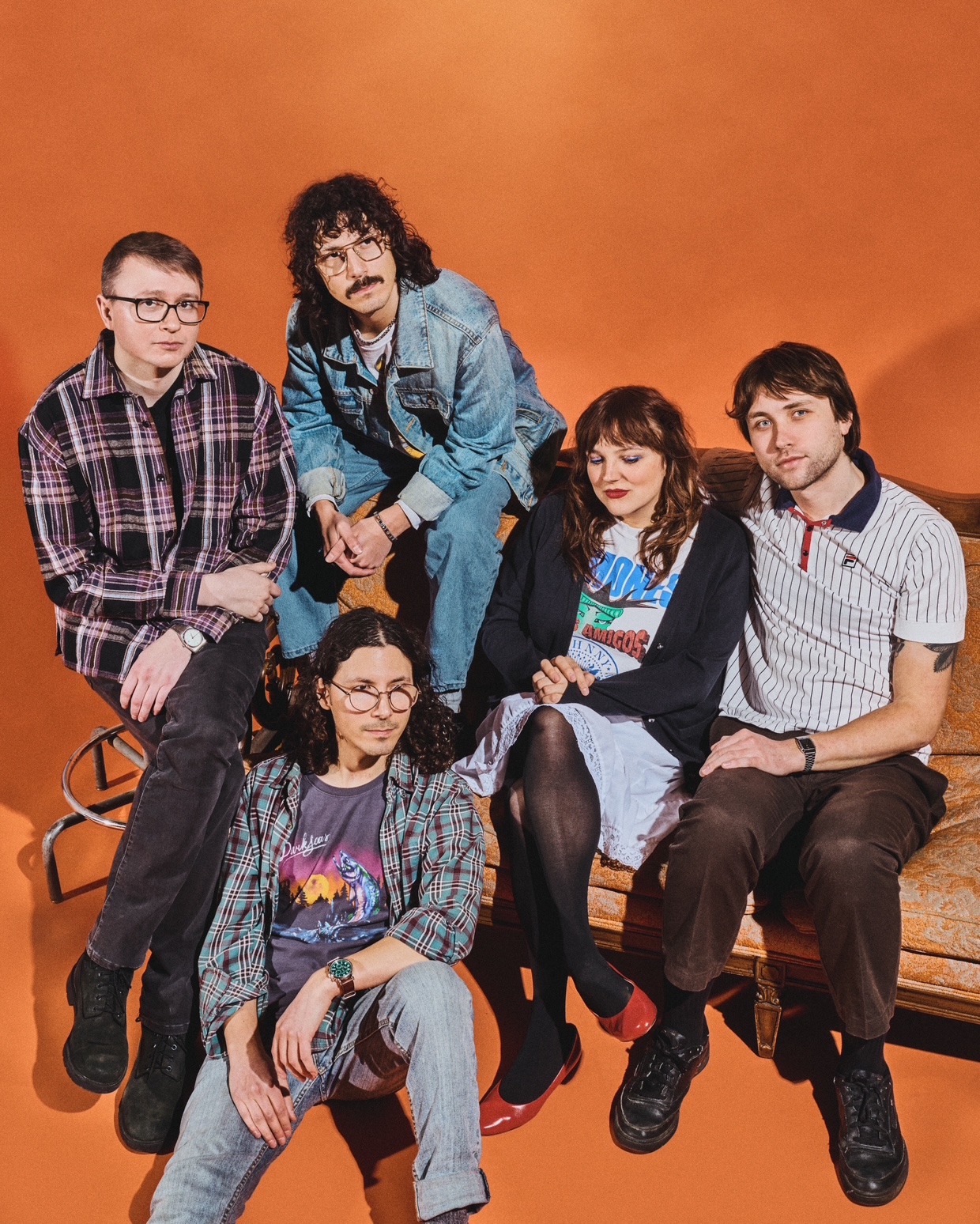
Photo by Zoe Heller
Growth in music is often measured by louder production, broader arrangements, or a more ambitious recording budget. Suitor’s evolution is far more compelling because it reflects a shift in artistic confidence for the Cleveland outfit. On their latest LP, ‘Saw You Out With the Weeds’ (Feel It Records), the band embraces expansion without abandoning the restless spirit that first defined its identity.
‘Saw You Out with the Weeds’ is a record that feels less like a sophomore statement than a deliberate reinvention. Where 2022’s ‘Communion’ (Just because records), introduced the project through the stark chemistry of vocalist Emma Shepard and guitarist/multi-instrumentalist Chris Corsi, its successor expands both the lineup and the band’s artistic vocabulary, transforming Suitor from an intriguing post-punk duo into a formidable five-piece whose music thrives on tension, movement, and collective instinct.
That evolution is immediately apparent. Recorded live in Kansas with Caufield Schnug and Lira Mondal of Sweeping Promises, ‘Saw You Out with the Weeds’ captures the electricity that only exists when a band is playing with one another rather than simply alongside one another. The addition of guitarist Stephen Ovak, bassist John Corsi, and drummer Ryan Matricardi doesn’t merely make Suitor louder or fuller, it fundamentally changes the architecture of the songs. The guitars intertwine in restless conversation, the rhythm section pulses with hypnotic precision, and Shepard’s commanding voice cuts through the dense arrangements with equal parts detachment, urgency, and quiet defiance.
The album refuses to settle into the familiar boundaries of post-punk. Echoes of gothic rock, deathrock, krautrock, jangle-pop, and psychedelic indie music surface throughout, yet none of these reference points ever feel like destinations. Instead, Suitor bend them into something distinctly their own with a sound driven as much by groove as abrasion, where melodic immediacy coexists with dissonance and unease. Tracks like “Model Actress,” “Private Prison,” “Factory,” and “Televangelist” move with an almost physical momentum, balancing sharp-edged riffs and taut rhythms against lyrics that explore alienation, violence, memory, disillusionment, and the quiet absurdities of everyday life.
What makes ‘Saw You Out with the Weeds’ especially intriguing is its sense of motion. Rather than polishing away imperfections, the album embraces friction. That push and pull between its musicians, the collision of beauty and distortion, restraint and release. Every performance feels alive, every arrangement purposeful, revealing a band more interested in creating atmosphere through interaction than through studio excess. It’s a record that rewards close listening, revealing new textures and subtle shifts with every return.
With ‘Saw You Out with the Weeds,’ Suitor haven’t simply expanded their lineup; they’ve expanded their creative horizon. Suitor is a group discovering how individual voices can strengthen a shared artistic vision. Every member contributes meaningfully to arrangements that are simultaneously intricate and instinctive, allowing layered guitars, melodic bass lines, dynamic percussion, and expressive vocals to function as parts of a larger conversation rather than isolated performances. The result is one of the year’s most absorbing underground releases. It is a record that is both immediate and elusive, visceral and thoughtful, proving that some of the most exciting bands aren’t reinventing post-punk so much as reminding us how much unexplored territory still exists within it.
Here, Suitor traces their evolution from the skeletal intensity of ‘Communion’ to the broader sonic ambitions of ‘Saw You Out With the Weeds,’ touching on the experience of recording live with Schnug and Mondal, the creative dynamics of an expanded lineup, and the band’s ongoing pursuit of music that is equally immediate, adventurous, and emotionally resonant.
Special thanks to Chris Corsi for the coordination and to the band for their time.
James Broscheid: There’s a clear sense that ‘Saw You Out with the Weeds’ is less a follow-up to ‘Communion’ and more a recalibration of what Suitor can be when the writing process, lineup, and recording environment all become part of the composition itself. When you think back to the earliest sketches of these songs during the transition into a five-piece, what kinds of ideas or instincts felt like they only became possible once the band stopped functioning as a smaller, more centralized writing unit?
Stephen Ovak: When we began playing together as a 5-piece, we initially began just learning the songs from ‘Communion’ so that we could start playing out. Even though we were playing older songs, we quickly realized that the songs felt and sounded different in the whole-band context. The intensity and heaviness that comes from five people playing in a room is something that you can’t really achieve writing and recording in an apartment. The experience definitely changed our dynamic and the sound that we ended up going for on ‘Saw You Out with the Weeds.’
Chris Corsi: It was a natural transition, but I was definitely aware and excited of reassessing what the band could be. I started writing more ambitiously with the confidence that the band could not only do it justice but expand upon it what I brought in.
JB: Recording in Lawrence, Kansas with Caufield Schnug and Lira Mondal (I love Sweeping Promises!), seems to preserve a kind of controlled instability throughout the record, where arrangements feel constantly on the verge of either locking into place or fracturing outward. What drew you toward embracing that tension in real time rather than refining it through more layered studio construction, and how did you decide which moments of friction were worth keeping rather than smoothing over?
SO: Recording live was Caufield’s idea, and we’re really happy we did it. It definitely preserves a type of rawness and imperfection that we wouldn’t have really been able to do if we recorded in isolation. We kind of had to accept that every take maybe wouldn’t be perfect, but we were willing to sacrifice that for the energy that recording live offers.
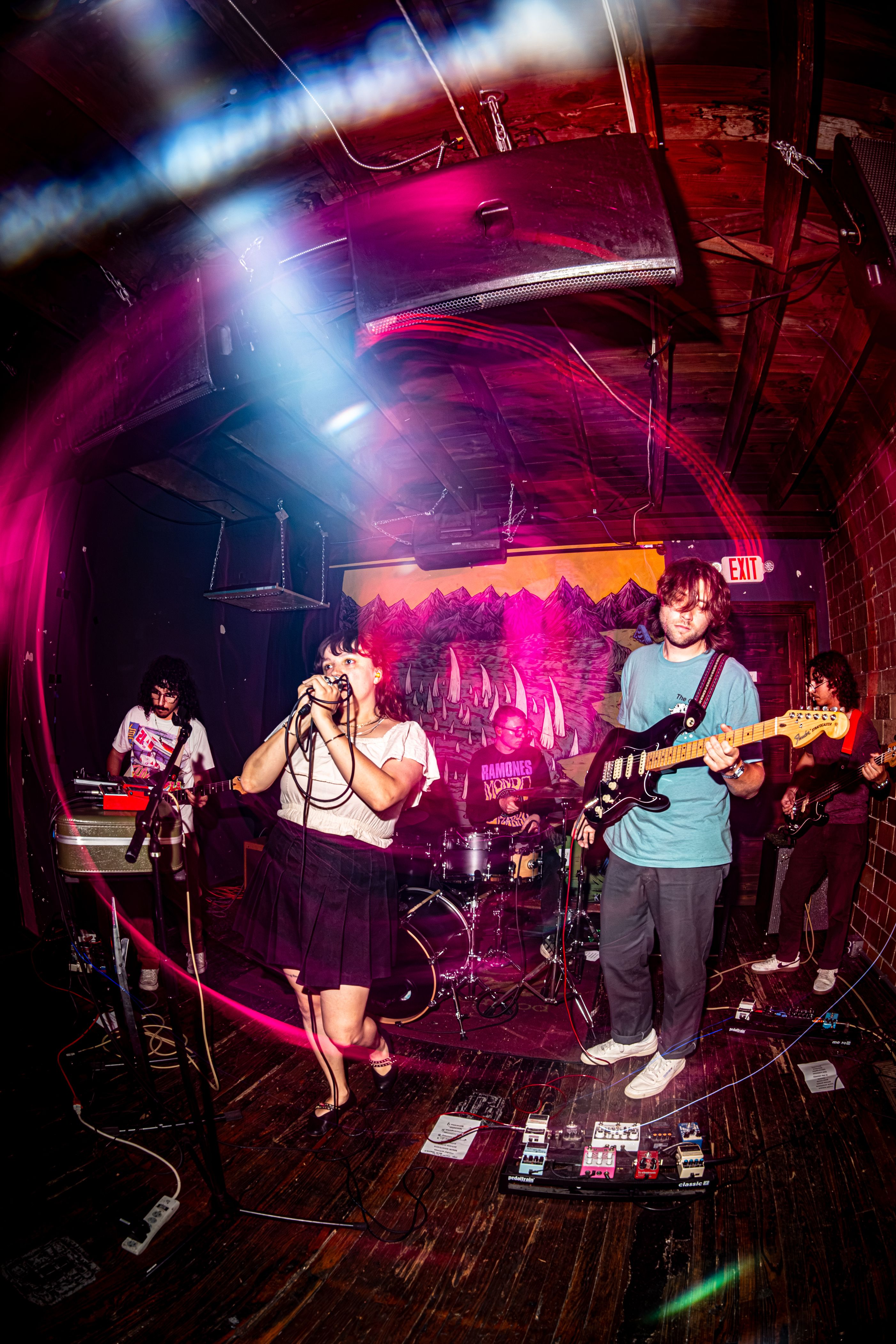 Photo by Mabel Suen
JB: Across songs like “Model Actress” and “Blank Americana,” there’s a sense that dual guitars are not just harmonizing or counterbalancing each other but actively disputing space, almost like competing narrative voices within the same emotional argument. When you were shaping those parts, did you think of guitar interplay as a form of dialogue with intention, or did that conversational quality emerge more instinctively through rehearsal and performance?
SO: It depends on the song, but our songwriting on this record was pretty fractured for the most part. Most of the writing for a given song is done primarily by one person working in a DAW (Digital Audio Workstation), and creating a skeleton of the song with most of the parts done. From there, the band will make tweaks and add some additional elements. Moving forward, we’d like to craft more ideas by jamming and collaborating in our rehearsal space.
CC: Once we started playing together as a group, it pretty quickly became an interest of mine to investigate what we could do with having two guitars. It opened a lot of doors writing-wise, and as we continued to work together it did become more instinctual for Stephen and I to play off of each other’s parts.
JB: Emma, your vocal delivery often feels densely packed with meaning while still resisting fixed interpretation, especially when it sits against such texturally saturated instrumentation. How do you approach writing vocal lines that need to cut through a wall of sound without reducing themselves to clarity alone, and where do you see the balance between intelligibility and abstraction in your songwriting philosophy?
Emma Shepard: We usually write the instrumentation before the vocal melodies- sometimes I am able to hear what I want out of the melody instantly, but sometimes we have to bend the instrumentation a bit in order to facilitate the vocals. Sometimes, I believe that a dense or saturated moment needs amped-up vocals that match the energy, but other times I instinctually gravitate toward a more restrained approach against a wall of sound. My songwriting philosophy is something that I would say is quite malleable, I don’t approach most of our songs with a clear mission or objective outside of expressing something in the moment. When spontaneity doesn’t lend itself to a finished product that we love, we listen to a song and tweak it until it becomes something we would want to listen to.
JB: “Private Prison” in particular, seems to hinge on a kind of structural constraint, where repetition and momentum generate a feeling of enclosure rather than release. Was that sense of confinement something that emerged from lyrical themes first, or did the rhythmic architecture of the track begin shaping the emotional language of the song before the words fully arrived?
CC: The latter for sure. Structurally speaking, the original instrumental demo for “Private Prison” was pretty much what you hear on the record, that’s all to say, Emma was certainly channeling some of that in her writing.
JB: There’s a noticeable shift in texture and internal chemistry on “Factory,” where the additional presence in the recording environment subtly expands the sonic field without necessarily making it feel larger in a traditional sense. What kinds of decisions go into deciding when an external contributor changes the identity of a track in a productive way versus when it risks diluting the core tension you’re trying to maintain?
John Corsi: Often when we’re adding some kind of ornament to a song, we try to exercise some restraint and keep the initial spirit intact. With “Factory,” our aim was to layer a little more texture and dreaminess to make certain sections unique or hit harder. It’s mostly a trial-and-error approach, making sure everyone is onboard with how the song is being affected. If an outside contributor is a part of the equation, the same kind of vetting is taking place.
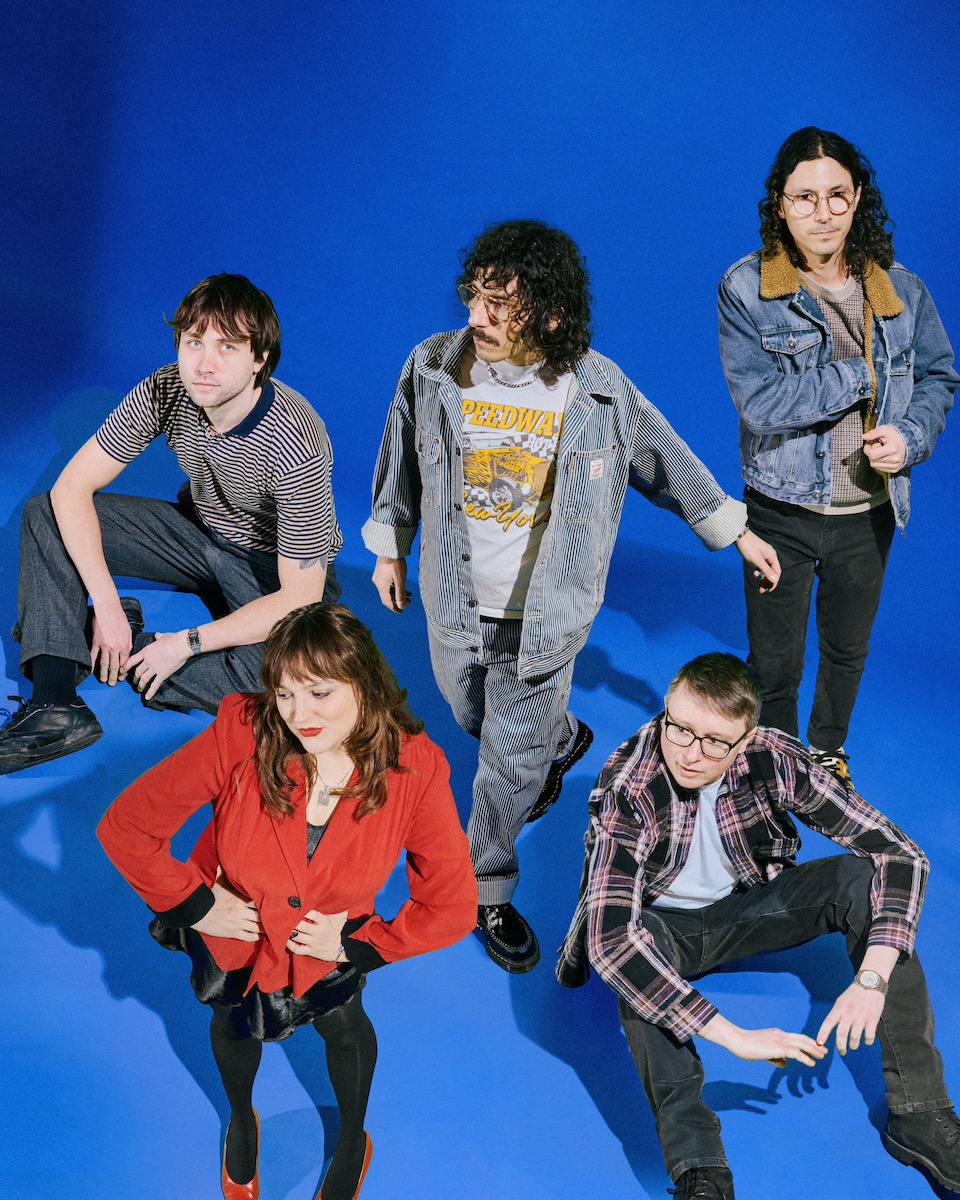 Photo by Zoe Heller
JB: “Still Life,” especially with the added vocal presence, feels like it opens a different kind of spatial awareness within the record, almost as if the album briefly turns inward to observe itself rather than continuing to push outward. How do you think about vocal layering as a way of introducing alternative perspectives within a song, and Emma, what does it mean for a second voice to either align with or resist the emotional center of your performance?
ES: When we went to Lawrence, Kansas to record the album, “Still Life” was an unfinished track. Being able to collaborate with Lira on this track truly opened it up. She had an immediate idea of what she wanted to add to it and hearing her additions made it possible for me to finish writing the vocals for a track that I had consistent writer’s block with. I think collaborating was essential here in order to revive this idea that had long been on the backburner, plus Lira is such an inspiring vocalist and artist, so she was the perfect person to collaborate with vocally.
JB: For tracks like “Sentimental Talk” and “In the Country,” the band seems to condense its language rather than expand it, as though you’re testing how much identity can be preserved under tighter formal constraints. Was this brevity a conscious structural counterweight to the album’s more expansive moments, or did these songs naturally arrive in a more distilled form and end up shaping the record’s pacing by necessity?
SO: I’d say it was a natural occurrence. This album was honestly a bit of a patchwork of songs written over a span of a couple years. I don’t think we ever consciously said “We need a song that is representative of this genre or this vibe,” it all happened organically. We have a lot of different influences, and we’re pleased with how they all showed up naturally throughout the record.
JB: “Televangelist” to me, feels like it builds toward intensity without resolving in a conventional cathartic release, instead sustaining a kind of suspended escalation. What interests you about withholding resolution in a moment that sonically suggests it might be imminent, and how do you collectively decide when a climax should be denied rather than delivered?
JC: I don’t think that was an explicit intention with that composition, but we do enjoy other songs that feel like you were dropped in the middle of it and it could go on forever. The big chorus at the end of that song felt pretty resolved to us, but we definitely have a tendency to steer away from including a kind of climax or final crescendo in every arrangement. We can be restrictive with how many times we want to subject the listener to a hook, usually feeling that less is more.
JB: The final track, “Dull Customer,” feels almost like a distillation of the album’s entire approach, where integration of parts takes precedence over individual showcase. When you arrive at a closing statement like that, do you feel the goal is to summarize what came before, or to subtly reframe it so that earlier tracks are heard differently in retrospect?
CC: I think both. Closing tracks are fascinating in that way, they can operate on so many levels, and “Dull Customer” is no exception in my mind. It touches on many elements from the record while still very much standing on its own with its own distinct palette. It feels like a proper melancholy noisy send off for the record.
JB: Stepping back from individual songs, the album as a whole seems deeply invested in density without collapse, where layers accumulate but rarely feel overcrowded. How do you as a band negotiate that threshold in practice, where complexity remains legible and energetic rather than tipping into obscurity or saturation?
CC: We try our best to stay on the same page with what we as a band see as the objectively most important elements in a song at any given part. We also put a lot of work into editing ourselves, so if we sense things are getting overcrowded, we will try to thin it out. It can be tough sometimes; It’s very much a balancing act.
JB: There’s also a strong undercurrent of cultural observation running through the record, particularly in the way imagery and language feel both familiar and slightly estranged. When you’re writing in that register, how do you decide whether you’re critiquing cultural surfaces directly or using them more as reflective material to expose internal emotional states?
ES: The lyrical content is based mostly on whatever imagery, experiences, feelings, or frustrations were conjured up by the piece of music itself. I don’t think I necessarily set out to capture anything specific tonally when I wrote any of the songs, I relied a bit more on spontaneous stream-of-consciousness rather than meditating on or zeroing in on a specific theme. For example, “Factory” was a song that I wrote vocals for in just a take because something about the sound reminded me of a very specific time and place in my own life. It felt dreamy and harsh to me at the same time and the visuals that I use in that song were pulled from my own experiences. I did not plan for the lyrical content to be made up of those experiences, but that’s sort of where the sound of the song took me. I think that creating an atmosphere within the song dictates which direction it moves in in a very fluid way.
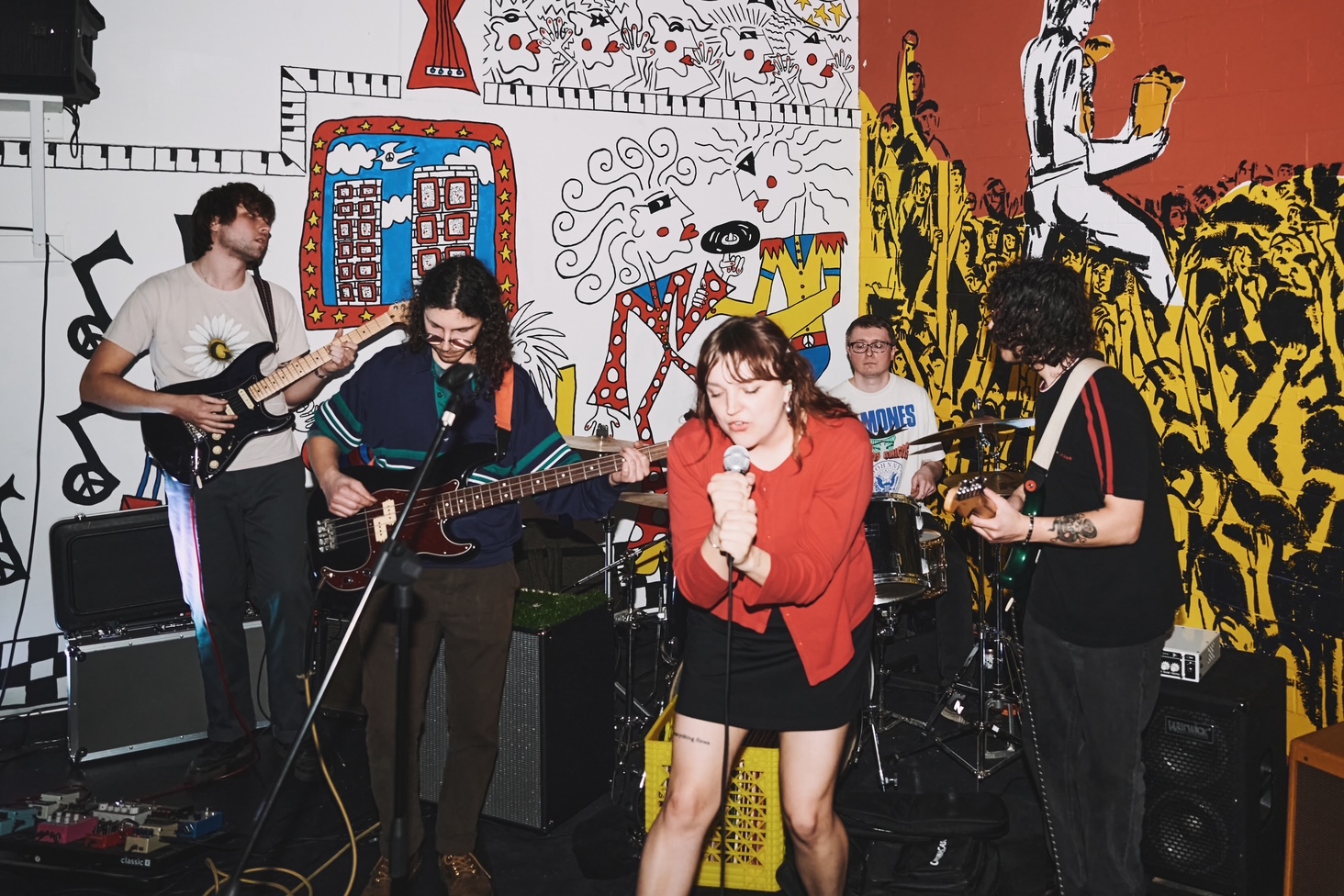 Photo by Zoe Heller
JB: Given how central live performance energy was to the recording process, do you feel these songs are fundamentally documents of a moment in time, or do you view them as frameworks that will continue to evolve significantly once they’re performed repeatedly on stage?
CC: These songs are certainly a document of a moment in time. At this point, we don’t foresee them changing anymore. But with many of the songs, we played them around Cleveland for a year or two so that transformation, if any, had already taken place.
JB: Being from Cleveland myself, I’ve always felt the city has a gritty but deeply passionate music culture that shapes the artists who come out of it. How has the Cleveland scene and its overall vibe influenced Suitor’s sound, live performances, and identity as a band?
SO: I feel like bands from Cleveland and Northeast Ohio historically have always operated outside a lot of the trends that are happening in other places. It’s pretty hard to be pretentious when you’re from Cleveland. You think of bands like Pere Ubu or Craw, or Akron bands like Devo and the Bizarros, and they all have this really unique, dark, unpolished vibe that only bands from Northeast Ohio could achieve. I think we’re all influenced to a degree by living in a city that has been in almost an entire century of decline, with empty streets, and ruins of a manufacturing golden age that we didn’t really get to see first-hand.
As for the music scene now, a lot of the people who book shows or run venues have either played in bands or have been booking for years, and they really care about the city and the artists within it. We’ve been fortunate that we can play across the city in a lot of different spaces and with bands from different genres. We just went on our first tour, and the whole thing would have been impossible if it weren’t for different musicians in Cleveland who helped us make connections outside the city. We feel very fortunate to be from here.
JB: Finally, with this expanded lineup now embedded into the identity of Suitor, how do you imagine the tension between individual authorship and collective authorship evolving in future writing sessions, especially if the instinct toward density, friction, and shared narration continues to deepen rather than resolve?
CC: Ultimately, we all want the same outcome, which is to make a cohesive collection of songs that we feel proud of. As we’ve been working on new material, we’ve been trying to push collaboration further than ‘Saw You Out with the Weeds.’ Lately it’s been about experimenting with different ways to write in an effort to yield more unexpected results (at least for us). The identity of the band is an ongoing conversation for us, we anticipate some dynamics to shift as time goes on and more music is written, that’s just how goes!
Learn more links: