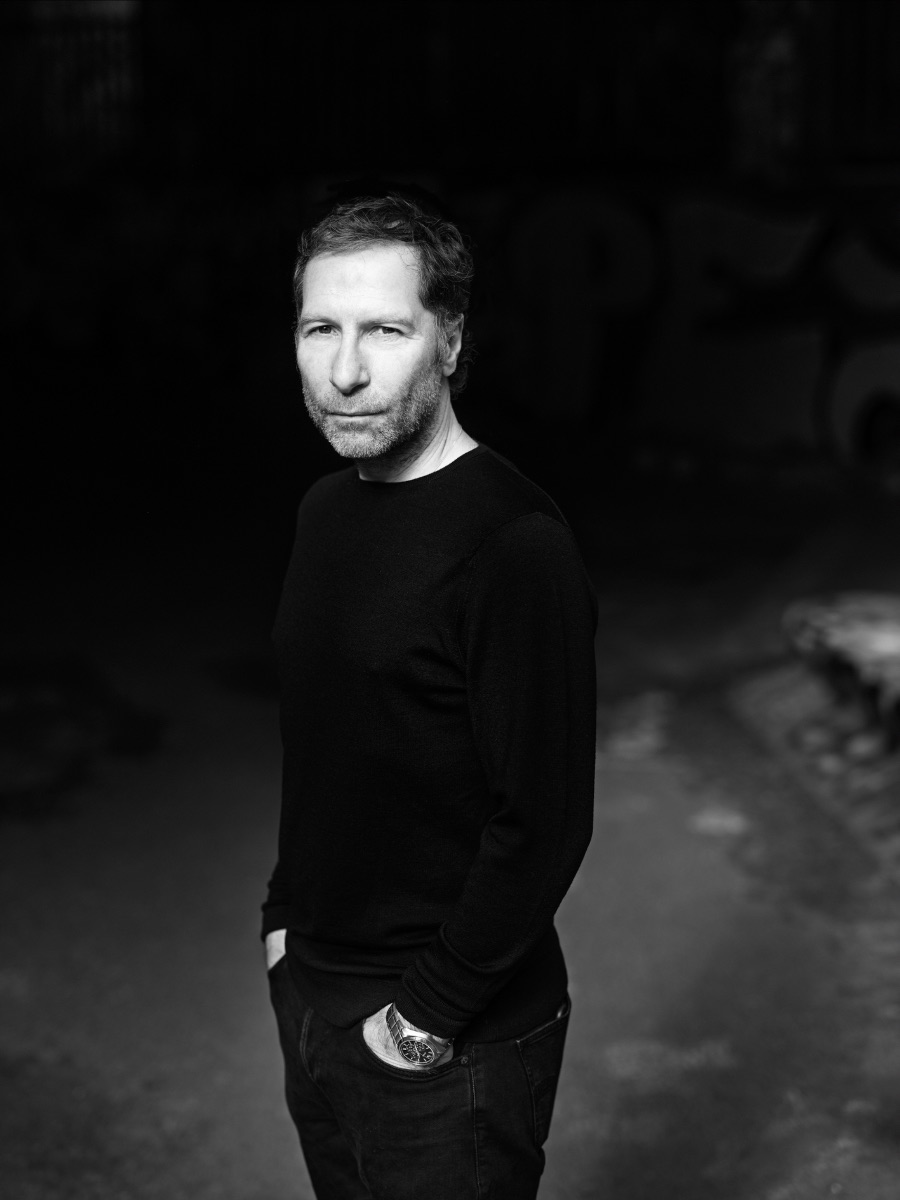
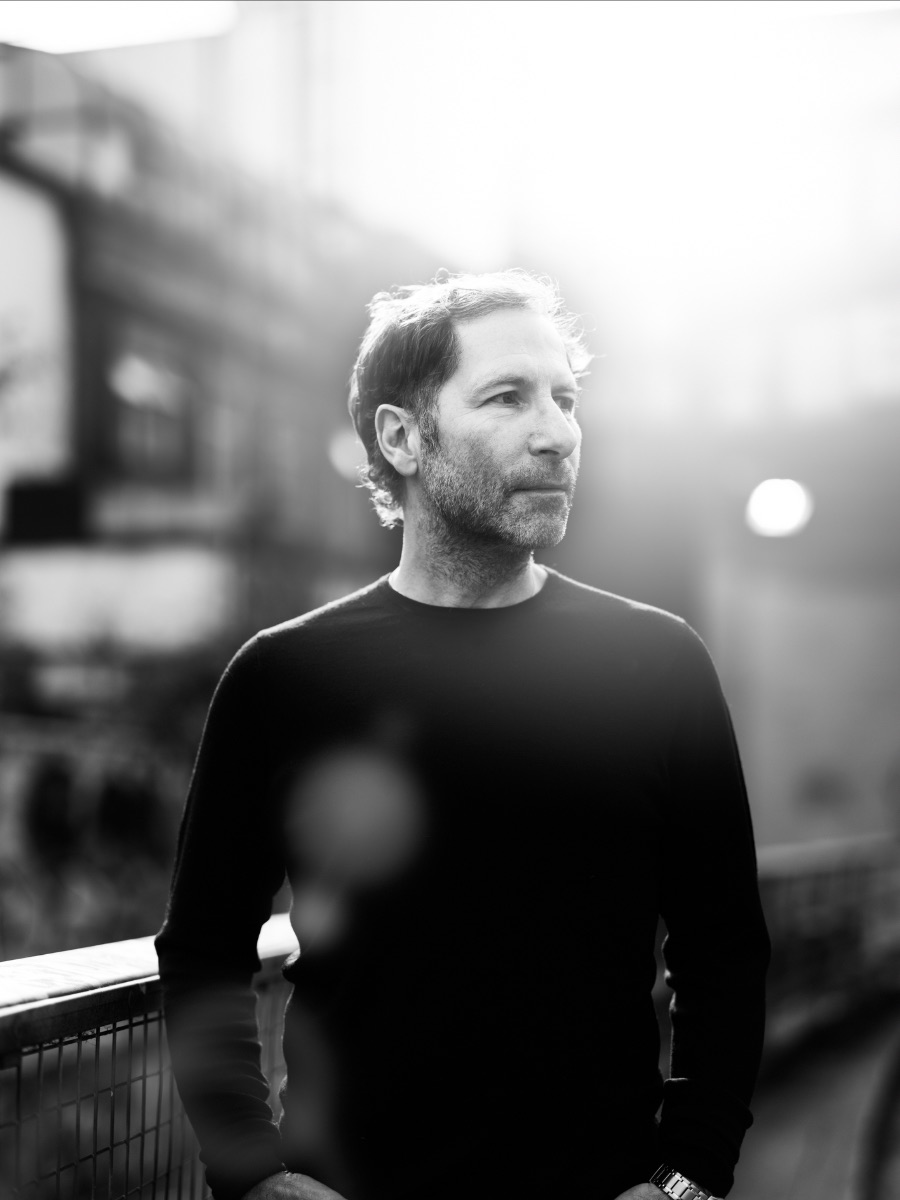
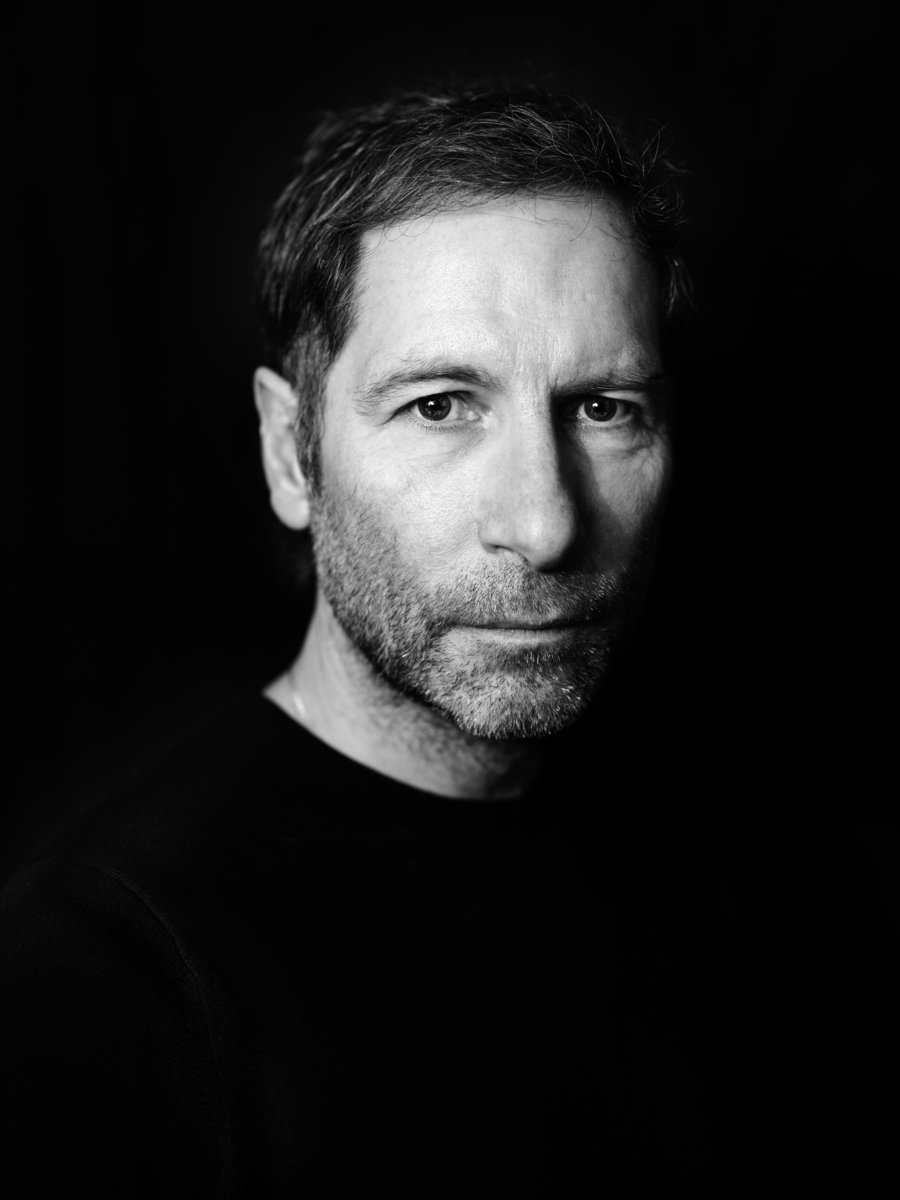
All photos by Brian David Stevens
The release of ‘Swallow’ (Sonic Cathedral) marks a quietly radical new chapter for Steve Queralt. Known for decades as the melodic anchor of Ride, a band whose sound helped define the textural vocabulary of British shoegaze, Queralt has long operated in the realm of atmosphere, shaping emotional weather from the low end. With ‘Swallow,’ he steps into a more exposed space: not abandoning immersion, but interrogating it.
If Ride’s music often felt like standing inside a cathedral of sound, ‘Swallow’ feels like walking alone through its echo after the congregation has gone. There is an intimacy here that reframes Queralt’s sensibilities. The bass is no longer simply structural; it becomes narrative. Texture is not just aesthetic but psychological. The record explores absorption, what it means to take something in, to internalize experience, to be altered by it. Even its title suggests duality: sustenance and submission, comfort and risk.
What makes ‘Swallow’ particularly compelling is the sense of artistic patience behind it. Queralt has never been an artist chasing immediacy. His career has been built on resonance rather than spectacle. This debut under his own name feels less like a departure and more like a distillation; an opportunity to articulate ideas that perhaps could only emerge after years of collaboration, touring, disbanding, reuniting, and evolving within a band context. There is also something quietly defiant in the timing. In a time of hyper-visibility and relentless output, the release of ‘Swallow’ is measured and self-possessed. It resists the algorithmic churn. It invites immersion rather than reaction. It asks the listener not merely to hear, but to inhabit.
The release of ‘Swallow’ reveals not a routine solo debut, but a meditation on authorship, space, and creative identity after decades within a defining band. The shift from collective architecture to solitary authorship reframes the spotlight as something quieter and more deliberate; less about visibility, more about articulation. For an artist long associated with enveloping, immersive sound, working alone becomes an act of recalibration: atmosphere is no longer negotiated but distilled, shaped by instinct rather than consensus.
After years at the core of Ride, this moment signals neither reinvention nor rupture, but a deepening, an acceptance of silence as material, and of voice as something earned slowly, then finally claimed. In many ways, Swallow is less an introduction than a revelation; an unveiling of the interior landscape that has always been present beneath the surface.
Much appreciation to Nat at Sonic Cathedral for the arrangement, and to Steve for the generous and delightful conversation.
James Broscheid: The release of ‘Swallow’ (Sonic Cathedral, 2025) took me by surprise because I didn’t know you were working on a proper album. With Andy (Bell) off touring the world with Oasis, I guess this being an optimum time as any. My wife is also a big fan of Ride and we both missed you when you visited Tucson.
Steve Queralt: We’ve never been to Tucson before. It was surprisingly good! I spent 24 hours there if that and walked the main “High Street” or whatever you call it (Congress), the main shopping street. It was good. It had a really good vibe about it. For a Brit, it was quite an atmospheric place with the trains going past the venue. You have the super long trains. Watching all the goods wagons go past took 20 minutes, and it was great. You hear the horns from the trains, that’s the stuff we hear in movies. I enjoyed Tucson a lot.
JB: I really hope you make it back. If it’s Tucson again, Phoenix or beyond, we’ll make the trip.
SQ: It would be good to see you.
JB: I wanted to talk about your hard drive because I thought that was really interesting how you have it divided in three folders. You have the dust bin, the solo stuff, and you have Ride stuff. Is there a specific sonic element or feeling that signals to you that an idea belongs with Ride or it’s gearing more towards your solo work?
SQ: Yeah, I think if a song, or a piece of music I should say, has got a more traditional arrangement, i.e. intro-verse-chorus-versus, those sections, I tend to think it would potentially be good for Ride. Songs like “Lannoy Point,” (on ‘Weather Diaries’, Wichita, 2017), “Sennen” (on the ‘Today Forever’ EP, Creation Records, 1991), and one or two others. I can’t remember now, but they were very song-orientated. Andy and Mark (Gardener) would listen to them and either Andy would say, “Oh, I’ll do the vocals for that one,” or Mark would say a similar thing. If something’s long and meandering like some of the tracks on ‘Swallow’ and the tracks on the EP that I put out before that (‘Sun Moon Town’, with *Michael Smith*_Bytes_, 2022), I can’t see Ride really doing those types of tracks. Well, that’s not to say they wouldn’t but, I think generally if it’s a traditional-shaped song or piece of music, then I put it in the Ride folder and then, if Ride doesn’t want it, I’ll steal it back.
JB: I spoke with another artist out of Montreal not too long ago, where he basically recorded every guitar lick that he’s ever done from when he was a kid all the way up to now. He said he’s got suitcases full of cassettes of only guitar licks or ideas that he may or may not ever use. He doesn’t throw anything away. I thought it fascinating because you have a rubbish bin on your hard drive. Do you ever find yourself going back to it thinking maybe there is something you could do with some of the ideas in the rubbish folder?
SQ: My dustbin folder is a folder of stuff that I think is rubbish. It’s not actually the bin. And yeah, of course, you do go back through it, but quite often it’s like, “No, it does need to stay in that c-rated stuff.” We’ll keep A and B bubbling along. Stuff that ends up in the C folder or the bin, then there’s usually a reason it’s in there.
JB: Have any of the tracks on ‘Swallow’ or even ‘Interplay’, a result of resurrection? Something you’ve been sitting on for a while that you maybe thought you wouldn’t use, but you revisited.
SQ: No, but the last couple of albums we have found ourselves … when we think we finish the record and all the recording’s done, there’s been a couple of tracks that have been left over that I’ve taken off or have taken back home and worked on and re-presented it to the band and whoever’s producing. There’s been a couple of tracks that have gone that way. “Jump Jet” (‘This Is Not A Safe Place’, Wichita, 2019) was one where it never really got looked at during the recording session. But I reworked it and brought it back in as the recording session has finished, and we gave it another listen. We agreed, “Oh yeah, actually, we can do something with this.” And yeah, “Jump Jet” turned out quite well and the same with a track on ‘Interplay’ (Wichita, 2024), I can’t remember what it’s called now. My mind is fried today! Yeah, similar thing, when we think we’re finished, sometimes there’s something last minute that we can turn into a song.
That’s about as far as it goes. There’s a couple of tracks on ‘Swallow’ … the whole idea of ‘Swallow’ started with a couple of tracks that I thought would be good for Ride. We were going to make an EP after ‘This Is Not A Safe Place,’ like we did with ‘Weather Diaries,’ we made ‘Tomorrow’s Shore’ (Wichita, 2018). We were going to do ‘This Is Not A Safe Place,’ followed by another EP, and I presented a couple of tracks for that, but that EP never came about. So, I had these two tracks, I thought, “Actually, I do really like them,” and I just carried on writing in that kind of style. That kind of post-rock, shoegaze-y style just to see where it would take me. I ended up with eight tracks and thought, “Why don’t I try and put a record out myself?” So, yeah, that’s how ‘Swallow’ came about really, just from having songs ready for Ride, but Ride not being ready for them.
JB: Which songs were they?
SQ: “High Teens” was one and there was another one actually that didn’t make it on to ‘Swallow’ because I thought it sounded too much like another band, another famous band so I removed it. But ‘Swallow’ started from those two Ride outtakes as it were.
JB: This record wasn’t anything you had in the back of your mind then? Like, you were building this solo album slowly, but surely, as the years passed.
SQ: No. A lot of the ideas came together within a six-month period. I just kept writing and writing and was quite happy with what I was creating. I was on a bit of a roll for a good few months. I had to sort eight tracks. I had 10 tracks all together, and I got very tired with two of them, and they ended up in the bin. At that point I thought, “Well, I can make a record. I can turn this into an album, but is it good enough?” I’m not a singer. I don’t write lyrics like, you know, I keep saying this, so it was always going to be an instrumental record. But then a couple of the songs I that’s probably the bits of music I thought they actually do sound like unwritten songs. The music’s there, they just need a vocal on top. Then I thought, “Well, let’s start reaching out to collaborators and people that can I can work with to finish and turn them into proper songs.” That’s how Verity (Susman) and Emma (Anderson) got involved.
Then there’s the spoken word track (“Motor Boats”), and I thought, “Well, actually, there’s albums out there that have a mixture of instrumental tracks, vocal tracks, spoken word tracks, etc.” There’s a techno artist called Mark Pritchard who made a couple of really good albums during the last 10 years where he does just that. I mean, he’s very electronic sounding, but there’s spoken word on a couple of tracks. I think Thom Yorke (Radiohead, The Smile), sings on a couple of his tunes (Pritchard and Yorke released a collaborative album called ‘Tall Tales’ on Warp Records in 2025 – JB), he’s got female vocals on other tunes, so that really was the template for me. I’m thinking, “That is a really good way of approaching a project,” when you don’t sing or write lyrics yourself. So, it was good that Emma and Verity agreed to do it. They shouldn’t be seen as guest vocalists. They should be seen as true collaborators because they had a lot of input in the writing of the tunes and certainly the lyrics.
JB: Did they did have they have free will to write the lyrics for the songs that they collaborated on?
SQ: Yeah. I mean, when we were talking about it, Emma was trying to get her head around the way it would work. She wasn’t used to having to write to an already written piece of music. She comes from, well, I’m guessing, writing on an acoustic guitar or piano or something. And, you know, forming a song and a tune and a lyric all at the same time. She found this a very weird way to work, you know? Being given a finished piece of music. Well, that’s how I do it quite often. She said, “I’ll give it a go.” There were hints of a melody there in the backing track so yeah, and she did a really good job finishing off the tracks and the same with Verity. “Messengers” is a very weird, awkward arrangement that I didn’t have to change at all. Verity came up with a really good vocal and melody, and great lyrics as well. I’m really pleased with what they did.
JB: I know Emma’s work in Lush obviously and I love the solo record she released. Verity, I’m sad to say, I’ve never heard before until this album, and I thought her voice was equally compelling and just mind-blowingly good.
SQ: Yeah, they’re good people to work with.
JB: One fascinating thing that stuck out in an interview I read was that you mentioned your musical tastes are narrowing as you grow older (Steve agrees). Do you feel that sharper focus makes it easier for you to compose because you know exactly what you want to hear, or does it make you more critical of what you release because what you have in your head is held to a higher standard?
SQ: That’s a good question. I knew what I wanted with this record. I knew I didn’t want it to be like another Ride record, which we’re almost kind of moving in a pop direction. Still, the guitars are very forefront, but there’s a lot of electronics. I wanted it to sound more like traditionally shoegaze-y post-rock. It sounds a bit cliche to say, but that’s the music I really enjoy listening to. I do find myself saying, “Oh, I only like their first two albums,” or “No, I’m not a big fan of them,” or “Oh, I hate that band,” and people often say to me, “Do you actually like music?” (James laughs) I’m saying, “Yeah, I am very, very passionate about music,” but I guess I’ve got really … not standards, but strong criteria. I can’t be bothered with things that don’t grab me instantly. I think the other problem is, there’s so much music out all the time. There’s so much new music being released every week. I feel pressure to keep up with it because I enjoy listening to new tracks and new albums.
You have to filter it yourself. You have to say, “No, I don’t like Jazz, so I won’t bother listening to that.” You read reviews and you look out words like if it says R&B. I know generally, I don’t like R&B, so I’ll skip past that one. If something says, hip-hop. Generally speaking, I don’t like hip-hop. That’s not to say I hate hip-hop, but it doesn’t really do anything for me. There’s great hip-hop artists out there, and there’s been amazing music made, but I haven’t got time to spend listening to every single record that comes out. I think I just look for anything that says ambient, electronic, strings, cinematic. folk singer, anything with those kinds of watch words. I’ll think, “Oh, I’ll give that a go.” I think you have to apply that logic otherwise how are you going to get new music? You’re going to have to try and listen to everything or wait for people to recommend stuff to you.
JB: It feels impossible to keep up a lot of the times.
SQ: Yeah, it is. There’s so much stuff as well. I do annoyingly post music that I listen to at the end of every year and people make suggestions. “Oh, didn’t you listen to this album?”, or “Try listening to this, you’ll love this!” Also, you read the “50 best albums of the year” in a certain magazine, and you’ve not heard 30 of them. You’re familiar with 20. It’s a very stressful world to be in (both laugh).
JB: Especially with shoegaze in general and its resurgence. There’s so much stuff being labeled shoegaze, most of the time incorrectly, but there are so many artists coming in under the genre. I think for me, I know what I like and what to look for. If they aren’t the original artists like Ride, My Bloody Valentine in the UK and Lilys, Swirlies, et al over here, I do keep an ear out for the younger artists these days that are doing something different with the genre (Steve agrees). They’re not just copying Ride or My Bloody Valentine. Don’t get me wrong, there’s a lot of copycats, too, and that stuff I’ll immediately dismiss because they’re not doing anything with the genre in a time when there are more tools to work with. Like you were saying, I pay attention to buzzwords to get pointed in a direction.
SQ: Shoegaze is sort of quite a broad church now. A lot of music is called shoegaze when it probably isn’t, or is it? I don’t know what the term means anymore really. Who knows? Ride were included on a shoegaze album put together by Rob Da Bank about 15 years ago (“Sci-Fi-Lo-Fi Vol. 3 – Shoegazing 1985 – 2009”, Soma Quality Recordings, 2008), and I think it had “Nowhere” on it. There were the usual bands like Pale Saints, Lush, Cocteau Twins, etc, etc, but also Boards of Canada were included.
JB: Wow!
SQ: Yeah, I mean, fair enough. It’s quite ambient so why isn’t it shoegaze? I’m not sure Boards of Canada would have been too proud to be on that album, but being on an album with Boards of Canada was certainly a highlight of mine.
JB: I always think of Boards of Canada as ambient and more electronic.
SQ: Absolutely, yeah. Then you know you. You go back, maybe not to the first bunch of bands that were around, like Slowdive and My Bloody Valentine, but you go 10 years later, and you have people like Ulrich Schnauss who was doing the very kind of the beginnings of electronic / shoegaze music. It has evolved I think over the decades into, like I said, a much broader church than it originally was.
JB: I think electronic marries pretty well with shoegaze (Steve agrees). I don’t know if you know the Montreal band No Joy?
SQ: Yeah. On Sonic Cathedral too, right?
JB: Yes. She put out an LP called ‘Bugland’ this year that is mind-blowingly good. When I spoke to her, she said Boards of Canada were one of the driving factors for the album because she’s been incorporating different elements into her sound. It’s completely different, but she’s doing it well. Why not incorporate different elements? It can be done. I wanted to ask about Hania Rani and Cassandra Jenkins. They were mentioned as inspirations of yours. Did listening to those modern songwriters influence how you structured the more song-based tracks on your record, even if you weren’t writing the lyrics yourself?
SQ: Well, Cassandra Jenkins. I fell in love with the last two albums. I heard them quite close together, and I’d never heard of her before. Those two records soundtracked the last 12 months of touring with Ride. They’re beautifully written songs, a bit unusual, which I love. Whilst I really enjoyed them and had some really. Great moments! I remember we played in Fuji Rock and the day after is quite a long journey from the festival site back into Tokyo and you drive through some really amazing Japanese countryside. I remember I had the last Cassandra Jenkins album on the headphones and it was a moment I’ll never forget just coming through the mountains. Listening to that was absolutely perfect, but I wouldn’t necessarily describe those albums as an influence, but certainly Hania Rani. She does a lot of instrumental music. I mean, she’s classically trained, superbly gifted, and writes really beautiful pieces of music. So, in as much as she’ll write a bit of music that’s six or seven minutes long, instrumental that captivates you and keeps you interested. So, in that respect, yeah. That’s what instrumental music’s about. AIso, I do touch on very minimal classical. I can’t play piano, but there’s bits of it in there where it goes very quiet, very loud. So structurally, I think Hania Rani’s a good influence on me. Just massive respect to both of those artists. They just keep writing great music!
JB: Are they both pop artists would you say? I’ve never heard of either of them.
SQ: No. Hania Rani is described as new classical. So, it’s very ambient, very film, soundtrack-y. Her latest album is just four tracks, four classical pieces, and no vocals. Just beautiful music. Cassandra Jenkins is, I guess you’d call her a female singer-songwriter. It’s not just her and an acoustic guitar. It’s a band setup, but her songwriting is really interesting. Definitely worth checking out. Beautiful songs.
JB: Yeah, I’m going to have to look them up because the story of them soundtracking your journey on the road resonates with me. I had ‘Just For A Day’ (Creation, 1991) by Slowdive on constant repeat as we were going through Northern Montana on our way up to Glacier National Park. We did about a week-long backpacking trip in the back country and, although I didn’t have my headphones with me the entire time, I had that album running in my head as I hiked through some of the most magnificent nature I’ve ever seen. There’s something about that genre that ties together beautifully with nature, and it always has for me.
SQ: The whole genre is very filmic, very kind of widescreen. So, yeah, it’s a beautiful way to soundtrack your life.
JB: Speaking of soundtracks, I read about you citing ‘The Big Blue’ (Gaumont / Columbia Pictures, 1988) and ‘Blade Runner’ (Warner Bros., 1982) as formative influences. If this record were a soundtrack, what kind of film do you think it would be scoring?
SQ: Wow, what a question! That’s a really difficult one to answer. I guess something along the lines of a setting in the near future. Dystopian, it’s all gone wrong and it’s a bad world we live in. Everyone is supposed to be happy. J.G. Ballard (English novelist, 1930-2009), is a great author and writes really well about life being lived like life has been provided for you. So, you’ve got everything you need, you’ve got somewhere to live. You’ve got a cafe to go to. You’ve got a gym. You’ve got all the things you need to live a comfortable life, but why aren’t you happy? Explain to me what’s missing because society has laid everything out for you, but what’s missing? It’s that vital ingredient that makes you human and gives you a way of enjoying life. I think that really interests me.
Books like “Cocaine Nights” (Ballard, Flamingo London, 1996), where everyone goes through their life, living a very, I guess boring life; just satisfactory and no more than that. But there’s no joy, there’s no point to it at all. I think it’s in “Cocaine Nights,” they start creating chaos by introducing crime into this community of people living a very dull life just to spice things up. Everybody does react in a kind of, “Oh, you know, we’ve just been sleepwalking through life until this point.” A movie along the J.G Ballard kind of route, I think, would be good.
JB: When I first heard ‘Swallow’ the instrumental pieces were always in the back of my head, thinking, “This would be a great score for a very serious movie.” Whether dark or not.
SQ: (Agrees) It wouldn’t do Laurel & Hardy films any good.
JB: (Laughs) Definitely not a comedy for sure. I once asked a musician about that – why no lyrics in his songs, he’s always been a primarily instrumental composer. He said that he can convey what he wants over instrumental music (Steve agrees). Your approach to lyrics is more like adding another layer to the music which is a great example. How did that philosophy impact the mixing process with Matthew Simms?
SQ: So, in the 90s and certainly with Ride’s first album (‘Nowhere’, Creation, 1990) and first EPs, the approach to mixing was that the vocals need to be sat inside the music, almost like another instrument. This wasn’t an original idea. My Bloody Valentine were doing a similar thing. I think the whole aesthetic with whatever the oral equivalent to aesthetic is, but one of the flavors of shoegaze was about being very humble and very shy and not having a screaming extroverted front man singing these amazing lyrics and driving them into your face. It was all about being very subtle, being very humble.
I remember speaking to Emma when we sent her a couple of finished mixes and she asked, “Do the vocals need to be louder?” And I said “Possibly but, I’m going back to the traditional way of shoegaze music.” The vocals need to be sat in rather than on the backing track, and she got that. And I’ve just never been one for lyrics. There’s been the odd few records that the lyrics are really important. A lot of The Smiths which are musically amazing, but Morrissey’s vocals and lyrics are what makes it unique. Quite often I find that I do like music with vocals, but I hardly ever listen to the lyrics. I’m not interested. I couldn’t quote you most of Ride’s lyrics. Just no idea.
JB: That’s surprising! I remember when I first got into music as a kid, I’d put an album on and sit there and read along with lyrics. As I got older, especially with shoegaze, I don’t really look at it as I need to know what they’re saying.
SQ: Usually not very much.
JB: Right. It’s more of a vibe or it’s used to accentuate the music.
SQ: Yeah, it’s trying to evoke a kind of a feeling more than anything, isn’t it? Like ”When The Sun Hits,” (from Slowdive’s ‘Souvlaki’, Creation, 1993), you know what that feels like. “Vapour Trail” has a good lyric. I probably do know the lyrics to “Vapour Trail,” actually, but I think that’s probably the only one. It’s just not that important to me.
JB: The “Swallow’ tracks that feature Verity (“Messengers”) and Emma (“Lonely Town” and “Swiss Air”), I noticed their vocals are up in the mix. Did you find yourself wanting to bury the vocals initially?
SQ: I probably would have more, but you know? With respect to the two singers, they need to be heard. And I’m very proud of what they say. I’m happy with the mixes, but I think if I was mixing it, if I knew how to mix it, I probably would have had them a notch lower.
JB: Those three tracks are really good! I thought the final mixes came out really nice.
SQ: Thank you.
JB: While you didn’t set out to make a political statement, the track “Motor Boats” was interesting with the inclusion of the Julie Sheldon poem, “The Same Boat.” How did you come across that specific poem?
SQ: Just trolling the internet looking for some words that I could feed into an app that basically speaks text. I was thinking I was going to use a robotic voice and speak some interesting words. So just looking for poems that resonated, and it was a long search. But I found Julie Sheldon’s poem really, really simple with a really strong message. Well, I hated the kind of rhetoric that was going on during the lockdown with “We’re all in this together,” and there was this kind of “Dunkirk Spirit” that we have to fight for each other. It was all rubbish, and I think Julie’s poem is like we’re supposed to be in this together, but we’re not. We’re all different. There are some small sailing boats on the open sea and there’s some big liners out there and we’re getting bumped about by people making decisions, and I think it was very, very simplistic, but quite powerful.
JB: Was the music written to fit the cadence of her words or, or did you have to edit the reading to fit the pre-existing rhythm?
SQ: I didn’t use the whole poem. I took certain lines and edited it together. When I approached Julie about the idea of using it, I thought she was going to say no, because I basically butchered her poem. I repeat lines when they shouldn’t be repeated. I’ve taken bits out of context, but she loved it. She gave me her full support and was quite excited about the whole thing. So that was good.
JB: I’m sure she’s heard the final mix, right?
SQ: Yeah. I sent her a copy. She was very happy.
JB: That’s great. We’ve talked a little bit about Ride, obviously, and you having spent decades locked in with Loz (Laurence Colbert, drummer), to form that band’s rhythm section. On ‘Swallow’, you’re largely responsible for the entire soundscape. Did you find it liberating not having to be locked in with anyone on this record, or did you find like that lack of rhythmic partner to bounce ideas off difficult initially?
SQ: No, I really, really enjoyed it. I’ve been making music for, if you add up all the Ride years, I think it adds up to about 18 years. It’s great working with Andy (Bell), Mark (Gardener) and Loz, and when we get together, we make really good music, but It’s always a pull and push kind of process. Is the bass line good enough? Should I change it? And people say, “Well, maybe try and play it like that,” and we’ll make suggestions to Loz like, “Don’t put a fill in there or less fills or more fills,” all those kinds of things. So, there’s a very kind of team approach to a lot of Ride songs, not all of them. But a lot of the writing is done with the four of us. With this record, it was really good to not have to go through all that. Just the kinds of things like, “Actually, I want to do it this way,” and “I don’t want fills all over the place” or “I don’t want the guitar to be too quiet and if it’s too loud, that doesn’t matter.” It’s part of what it should be, and I want it if I want it to go quiet in this place, then we’ll make it quiet in this place. There was no discussion to have.
The scary thing came when I had to play it to people because until now, it’s what’s been in my head. Once you put it out into the public arena and if you get laughed at it’s all on you. Whereas if Ride put stuff out and it gets laughed at, it’s the four of us. So, it was quite nervy. I played early versions to my wife and she really enjoyed parts of it. I played early versions to Andy (Bell) and to Nat (Nathaniel Cramp) from Sonic Cathedral and got very encouraging comments. Nothing really prepared me for release date when I thought this could all go sideways.
JB: Where do you think that reluctance comes from in having to share your work?
SQ: Just not knowing or not going through that process where you’ve got three other band members and a producer doing the quality control telling you, “Oh, don’t do that. Do it this way,” and everyone agrees. So you believe that must be the way forward. Not having that process, while being exciting and rewarding is quite scary as well. You’ve got no quality control. No one to say, don’t do it that way, or you’re mad if you try and do that. It was a great experience and one that I’ll do again because I enjoy it. Now, I’ve got the confidence to do more, I’ll do it. That’s not to say that the next Ride album won’t be back to being a team.
JB: Now that you mention it, I think Ride’s latest stuff has been phenomenal. I’m finding that a lot of the UK artists that are coming back after that first wave of shoegaze, their later day work is just as good, if not better than their original stuff and Ride is certainly included.
SQ: That’s good to hear, thanks! Thank you.
JB: My wife adores Ride, so she’s kind of taking ownership of all the band’s work since ‘Weather Diaries’ . She has stated on multiple occasions, “This is my band!”
SQ: Hopefully, you’ll both be able to come and see us.
JB: I did see Ride in Denver back in 2017 but having you right down the street in Tucson and not being in town for it, we’ve been kicking ourselves ever since!
SQ: Yeah, that was good. It was good. I remember the support band (Rocket), the singer (Alithea Tuttle) was really ill. She couldn’t sing and lost her voice, so they did an instrumental set, which was quite good. That was good evening. It was a good night
JB: How was the turnout?
SQ: Can’t remember. Like, you said, it’s quite a small venue but it was pretty full. Yeah, it was good.
JB: That club’s got a really good sound to it, despite the trains behind the venue.
SQ: Yeah, it felt like you were in America. Real, true kind of Americana vibes about it.
JB: Yeah, we’re proud of our town. I wanted to ask you about the self-production process. It had been mentioned as indulgent because you didn’t have to compromise like we just talked about earlier. But you also found it kind of unnerving without your bandmates for quality control and now that the album’s out and from what I read, it’s receiving great praise. Has your view about isolation from the other three changed?
SQ: No. Like I said, I look forward to writing and continuing to write. There’ll be tracks that I think I’ll put in the Ride folder for a potential Ride song and it’ll be good to collaborate with the other three again and to get their input. Tracks like “Lannoy Point” and actually “Jump Jet,” although I count them as my songs, Mark’s and Andy’s singing and lyrics with Andy’s lead guitar lines transformed both of those tracks. So, you know, there’s good things to be had from working together with the others in the band as it were. What would have happened if Ride played all the tracks from ‘Swallow,’ I don’t know. But, you know, I wanted it to be all me.
I didn’t want anyone else to play on it. Quite selfish, I guess, but it was quite important for me to produce it and to have all the ideas. I think the only kind of other artistic input apart from Emma and Verity would be Matt. He did, actually bring a lot to it in terms of some of the effects he put on the tracks. I mean, we didn’t change any of the arrangements or chord patterns or anything like that. The overall style and feel was kept, but I think he kind of added a good 10% of beauty on top of it all, so he should be recognized for his input as well.
JB: Do you feel like you have more confidence in your own quality control?
SQ: Yeah, I now know what to expect. I’ve got a few ideas sketched out for another record. It won’t come out anytime soon because I don’t have a lot of time to do it at the moment. But no, I’m looking forward to getting back into the studio and creating more music and seeing where it takes me, whether it’s another solo record, more music for Ride or a collaboration with somebody.
JB: I asked Emma the same question because I really adored her first solo album. I thought it was brilliant. She said the same thing in that she doesn’t have all the time in the world these days, I kept revisiting it because I just loved her album telling her to put out another album. She said she has a couple ideas, but it’s early days.
SQ: I asked her the same thing, you know, “What are you working on next? What’s it going to be like?” She has got some pretty amazing ideas going so I’d be amazed if she doesn’t put out another record too.
JB: Yeah, the only thing is now that you have your record out and she’s got a record out, inevitably the next question is when are you gonna play live so I can see you, but it’s not that easy, is it?
SQ: Financially, it’s impossible. You’ve got to pay to put a band together. Then travel around the country with that band playing tiny venues to probably not very many paying people, so the finances don’t add up. It’s very, very difficult. That’s not to say it will never happen.
JB: Do you think a record like ‘Swallow’ is even meant to be heard live?
SQ: Yeah, I’d like to give it a go. I’d like to get a band together and play it and see what that sounds like. It might sound dreadful, you might be right (James laughs), like this isn’t working, but yeah, it would be good to try it out one day.
JB: Do you have any players in mind for your backing band?
SQ: No, just as long as they don’t mind being told what to play and how to play it (both laugh).
JB: Well, it is your record.
SQ: I can be very controlling (more laughter). The parts aren’t difficult so I think most musicians would be able to play the parts. It’s all about the sound, I think. I’m not a guitarist, I’m not a keyboardist, but I managed to put it all together by hook or by crook.
JB: Do you find yourself messing around with different instrumentation much?
SQ: No, I think I mentioned the other day that it would have been really difficult to make this record in the 90s, because I’m just not a good enough musician. And also, in the 90s, you’d have had to probably go into a studio with a producer which was really expensive. You’re talking about £30-40,000 to make a record. Now you can just do it at home on your laptop. Essentially plug in a guitar, plug keyboards in and play guitar really badly over and over again until you’ve got a passable take, you know, and it’s not cost you any money as long as you’ve got the time to do it. You’re in control. I think the technology allows you to get by.
Although, I think that you can take it to the extreme. I read this article that really irritated me the other day, and it was about an AI-produced track that’s been the best-selling track in the states, and in Holland. There’s a quote from the artist, saying, “Well, you know, I’m not a musician, but I’ve got things to say. Therefore, I had AI write the song.” Well, I think that’s against the rules. I’d love to be an astronaut, but it will never happen. Therefore, if you’re not a musician and you can’t write music, you shouldn’t be allowed to do it, you know? It really angered me and still does.
JB: It’s funny you bring that up because I was listening to a radio show here in the states, and they were debating the same thing. It may have been in regards to the same person you’re referencing that said, “I’m not a musician, I’ve never written a song, but I had artificial intelligence do it for me.” Everyone on the radio show were unanimous in their conclusion. That’s not a musician.
SQ: Yeah. Further down the scale, you could argue that I shouldn’t be allowed to make a record because I can’t play guitar that well or I can’t sing. I can’t write lyrics. I can’t play keyboards. I can play bass pretty well. I’m not a drummer, but I’ve managed to make a record using technology in the house. Okay, there’s no AI involved, you know, it’s all been my ideas and my way of putting music together, but the purist could argue that, “Well, you shouldn’t be allowed to make music because you’re not a talented musician.”
JB: AI is completely cheating.
SQ: Absolutely.
JB: When the punk movement started, most of those bands clearly stated they couldn’t play their instruments well either yet some of the greatest records of all time came out of it. Now, people have to go out in the world and defend their position of having AI generate a song that everybody’s listening to and as a listener, you should stop at some point and think, “This isn’t really a song that I’m listening to.”
SQ: Then, if you fast forward 10 years, kids up to 20-year-olds will be listening to AI-generated music and won’t care what it comes from, they’ll think it’s music. There will be music for people who don’t really like music that much. They want to hear something while they’re driving, when they’re going for a run, soundtrack their dinner party or doing whatever, you know? They don’t care that it’s not made by an artist. It’s music to enhance the mood or to soundtrack whatever they’re doing. No, I think to our generation and certainly people in the last 20, 30 years, it does matter. We like reading about the artists, we like reading about their creative process to see what kind of people they are, what influences they have, what makes them write lyrics the way they do. You won’t have that with AI. It will be meaningless. It just won’t happen. So, it will be the music that’s made for people who don’t like music basically.
JB: That’s a good point, too, because as a listener, I put on ‘Swallow’ and there’s something about it that makes me feel certain things or there is a correlation to you as the artist. What is the connection between me and the artist? You buy the record and connect with it and you want to hear more because humans relate to one another.
SQ: An example that always fascinated me was ask AI to create a new David Bowie single. It will probably be really, really good. It’ll sound like David Bowie wrote it. It’ll sound like David Bowie singing it. It’ll be a great David Bowie song, but is that enough? David Bowie had nothing to do with it. There’s none of his personality in it, even though it sounds like there is. You’ll either be the sort of person that thinks, “I don’t care. It’s new David Bowie,” or you’ll be the sort of person who says, “I do care because it’s not David Bowie,” and I think that’s a big difference.
JB: It’s new music by an artist who is no longer alive. You would think an artist’s legacy is enough to inspire people to pick up an instrument and try. Maybe there will be a David Bowie hologram tour too. I could see that happening. There are some positives with AI, but I don’t think there’s any in music.
SQ: No, it’s destroying the creative industry, I think. But AI has its uses. If it can find a cure for climate change or for deadly diseases, and what have you. It’s faster thinking than any doctor, better at making diagnosis. And it might find a way out of the climate emergency that we’re in as well. I think that’s what everybody’s banking on. So, it has its uses, but yeah, I do fear … there’s good AI and then there will be AI that gets into the wrong hands and where that will take us is anybody’s guess. There’ll be a film made about that, and my music will soundtrack it (both laugh).
JB: That would be great, actually. I wanted to go back to Verity and her contributions to “Messenger” demo. It had been mentioned that she helped save the project when you you were at a pretty low point. What was it specifically about her arrangement that helped revitalize your energy?
SQ: Well, number one, I was expecting her to send back a rough demo. There was the music I expected her to be doing some La, la, las and humming a bit of a tune along to it and asking me, “What do you think of this so far? Is this what you were thinking?” But she sent back an almost finished song complete with backing vocals. I listened to it and thought, “Wow, this can work. My music with a singer that knows what they’re doing and can write words and put a good tune together. This really works!” It was at that point that it gave me so much confidence just to actually think, “Let’s go ahead with this. Let’s pursue it further,” because, like you said, before that I was kind of giving up. I thought it was not going anywhere. I’d asked a few singers before I got to Verity whether they’d be interested and people were saying yes, potentially, but it was going nowhere. I thought it was a doomed project. I remember thinking to myself, “Yeah, it was a nice idea, Steve, but it’s never going to happen.” But that changed when I got Verity’s version back. It was so good that I thought I would continue to contact people and ask them to collaborate.
JB: Was that moment early on in the formation of the album?
SQ: Yeah. When I came to the conclusion that I needed some help with certain songs as some of the songs didn’t really stand up as being instrumental or were the kind of traditional arrangement that lend themselves to having vocals, I asked Debbie Ball, who did Ride’s social media at the time about whether she knew of any potential collaborators. She was in a band (called) Electrelane with Verity and suggested that Verity might be good. Verity said yes, very early on and was always interested in the project, but at the time, she was moving house doing art and had all sorts of personal stuff going on. Even though Verity said yes, it took her a long time to get a song back. It was during that point, I thought it was never going to happen. Fortunately, it did. Then Emma came back and said yes. Emma works really quickly, actually, and got involved very quickly and all the sudden it started taking shape again.
JB: Did Verity’s contribution change how you approached the remaining unfinished tracks?
SQ: (Thinking) Not really. There were always the three tracks, maybe … the track that ended up as “I Don’t Know How To Sing,” that was going to be a vocal track as well. The vocal for that was a bit of a joke, but we put it through a vocoder (electronic device or software that creates synthesized speech), and Matt did a mix with it, you know, mixed it up as a lead vocal and I thought maybe we didn’t need a singer to do that track. Maybe it works in a kind of weird, tongue-in-cheek, ironic kind of way as it is. We decided that the three vocal tracks we had were enough, plus the “I Don’t Know How To Sing” vocoder track and spoken word track (“Motor Boats”). That’s probably enough to make a record with.
JB: Was it simply just the melody that had you on the fence about whether a track needed vocals?
SQ: The melody was there. I just thought four four vocal tracks … it was then an eight-track album, four vocal tracks would be good. A nice 50/50 split but we ended up with three. Like I said, the fourth one, Verity wasn’t interested in doing another track, Emma had already done two. Did I really want to go out and start writing to other potential singers and start that whole thing again? I realized we don’t need to do it. Now with the vocoder on that melody, it seemed to work really well.
JB: I wanted to ask about Emma. She’s one of my favorite people. I understand she was initially reluctant to take the lead on “Lonely Town”?
SQ: Yeah.
JB: I read that you wanted a French disco/*Stereolab* vibe to that track. Did you have to work with her to put her voice at the forefront on it?
SQ: I didn’t have to do any work on that. I originally asked her a year before she said yes. I approached her because we toured with Lush in the 90s as you probably know, and I watched Lush play almost every night on that tour. So, fast forward 30 years and I thought, “I’m going to ask Emma from Lush if she fancies collaborating,” and I wrote to her and she said, “Yeah, but I don’t sing.” I said, “Yes, you do! I saw you every night!” (James laughs). She said, “No, I do a few backing vocals. I write most of the tunes, but Miki (Berenyi) was always the lead singer. I’m not a lead singer.” And I thought, “Oh, that’s weird. All right, I’ll move on and maybe ask someone else, thanks anyway.” Then, I put my EP out with Michael Smith (‘Sun Moon Town Versions’, Bytes, 2023) and a few months after that, she got back in contact and said, “I heard your EP. I’ve started working on my own album, and I kind of found my voice. So, if you’re still interested, send me some tracks.” So, I think over that year she was quite reluctant to be the lead singer, but I think in putting together her own album she gained the confidence to be able to be the front person and to front up her own songs. It was her growing in confidence on her own. It wasn’t anything to do with me. She just reached a point where she thought, “I can now contact Steve and see if you know he still wants some help.”
JB: So ‘Swallow’ was in development for some time then?
SQ: Yeah, a good number of years. Yeah, like I said, it was the first two tracks were for an EP after ‘This Is Not A Safe Place.’ That was when the first tracks were written and then I think during the pandemic a lot of stuff came together. It’s been a long time in the making and that bothered me to begin with but then, I thought, “What’s the rush anyway?” Then, when it was finally ready and mixed and all ready to go, even Nat turned around and said, “We don’t want to rush this out. Let’s make time for it. It’s going to be in nine- or ten-months’ time.” At that point I’m saying, “I just wanted to come out!” and be excited about it. And you know, there’s no rush, just take your time. And weirdly Ride is kind of on a forced hiatus. And it came out, you know, as Ride finished touring, my album came out, and the timing couldn’t have really been much better, I don’t think.
JB: I was thinking about what you said earlier. Had this been in the 90s, and you had to have a studio and spend the money to produce the record, which puts you on a time crunch (Steve agrees), I would think ‘Swallow’ would come out a drastically different album if you were produce this record under that kind of environment.
SQ: Absolutely. There was no pressure other than to finish it for my own satisfaction. But it took as long as it took. Also, I remember speaking to Erol (Alkan), who produced ‘Weather Diaries,’ and ‘This Is Not A Safe Place,’ and he said that his record took him four or five years to make. That was a real surprise to me because when it came out, it sounded fresh, and he said, “No, I’ve been working on that record for a long, long time.” So that took the stress away a little bit. I remember what Erol said about his record and thought it doesn’t matter if it takes a few years.
JB: I love what Sonic Cathedral and Nat does. How important is it for you at this stage in your career to be on a label that functions more as a community rather than just a business?
SQ: It’s perfect. It’s a perfect label. It’s what? You do feel, though it sounds a bit corny, but you do feel part of a family. It’s not being signed to a major where they’ve got. R&B artists, their reggae artists, shoegaze artists, rock artists you know. Sonic Cathedral is all about one thing, it’s all about the music and the sound of the music. It’s a really nice home to be in. It is the perfect little Indie label, just like Creation was and like 4AD used to be. Every record released on 4AD, you knew what it was going to be. It was going to be very goth-y, reverb-y or a bit ethereal. The same with Creation. With all the bands you knew what you were going to get. It’s not so much the case anymore. 4AD is quite broad with its releases now. So yeah, Sonic Cathedral is the perfect, perfect home for me. I’m so pleased Nat agreed to do it.
JB: Back when the record was in development, what kind of feedback were you getting from Nat?
SQ: Yeah, he always told me, “Oh, we should definitely do this,” but I think Nat would agree, he’s so busy. He doesn’t always get back to you on email, so you sometimes think he’s not interested. I’ve sent him all this stuff I haven’t heard back. Then you bump into him somewhere and he’ll say, “Yeah, we’ve really got to do it,” and gives you all sorts of great feedback saying, “I definitely want to put it out when it’s finished.” Nat gave me good feedback early on, so I wanted to give him the first refusal and I’m so pleased I didn’t have to go anywhere else.
JB: I think it’s a good fit (Steve agrees). Finally, I wanted to ask about Ride and what’s next. I think you guys are on a pretty good clip now that if you have a few out newer albums under your belts.
SQ: Yeah. The truth is I don’t know. I’m seeing Andy tomorrow, actually, we’re going to go to the My Bloody Valentine show at Wembley. So, I’m going to see him tomorrow. I haven’t spoken to him in a while. He’s just obviously got back from South America with Oasis. I don’t know what their plans are for the next year. We’ve got a couple of dates penciled in for late next year, but as for new material, we haven’t really talked about that. I think the Oasis thing happened at a pretty good time for us. You know, we put the last record out and we managed to do a tour pretty much in all territories around the world. Okay, we missed out on a few summer festivals, but we got our work done. We’ve been at it again for 10 years, so it’s good to have a little pause for however long it’s going to be. One or two years and we’ll see where we are at the end of that. Whether it’s going to be a new record, maybe I don’t know. I’m speculating now.
JB: I ask because I saw Mark make a post on social media asking, “Hey, we’ve been away a little while. What songs are you anxious to hear live?”
SQ: We’ve got a couple of dates that have been put our way that we’re considering. But for me, there has to be a point to playing live. Is it because of a new record? Is it an anniversary of an album or something? I don’t see the point of just going out and playing unless you haven’t played in five or six years and it’s almost like another comeback, but I don’t know. We’ll see what happens. I don’t think we will do anything until the latter half of next year at the earliest.
JB: With that, thank you for your time Steve, I really enjoyed this. Bravo on ‘Swallow,’ it’s a great record.
SQ: Thank you! It’s good to hear. And is it, Alice?
JB: Yes.
SQ: Say hi for me. Cheers.
Visit Sonic Cathedral or Bandcamp to have a listen or to order.