All photos by Joshua Anthony Rodriguez
Sunjammer is a sonic manifestation of South Texas inertia, operating on a temporal frequency that prioritizes the slow burn over the quick fix. The project functions as both a literal descriptor and a philosophical anchor, delivering unhurried arrangements that possess a deceptive, heavy-lidded sophistication. Comprised of five obsessive crate-diggers bound by a decade of shared history, the collective has finally distilled their mutual obsession with vinyl culture into a cohesive statement that feels less like a debut and more like an inevitability.
Their 2025 self-titled LP (premiered HERE), was issued through Tall Texan Records, and stands as a defiant monument to analog conviction. In an era defined by sterile digital perfection, Sunjammer provides a tactile correction. Tracked live to magnetic tape amidst the humming transistors of San Antonio’s Good Medicine studio, the record preserves the human fingerprint, the audible tape hiss and the organic interplay of musicians prioritizing chemistry over the constraints of the clock.
The band’s sonic architecture maps a distinct geography, bridging the Chicano soul of San Antonio’s West Side with a cosmic prairie ethos. While echoes of pastoral melancholy and intricate guitar weaves suggest a kinship with modern psych-folk pioneers, Sunjammer transcends mimicry to inhabit a genre-fluid space of rural rock and country funk. The addition of soulful Hammond organ textures and avant-garde saxophone flourishes elevates the compositions, transforming standard grooves into a sophisticated suite of South Texas atmosphere.
Lyrically, the album mirrors the internal monologue of a self-aware protagonist navigating the modern malaise. The songwriting finds poetry in the mundane, turning the exhaustion of the daily grind and the desperation of a lunch break into a shared, cathartic experience. These moments of working-class friction are balanced by dissociative reprieves both sunny and soulful that crossfade, offering a temporary escape from responsibility. The record eventually finds its thesis in a krautrock-infused climax that chooses movement over stagnation, urging an interruption of the cycle before it consumes the self.
From the music to the physical presentation, Sunjammer remains a tactile operation. The cover art, hand-painted by Milton Holbrook of San Antonio Rose Tattoo, rejects digital shortcuts in favor of endangered craft. Ultimately, the project serves music’s most honest purpose: the rejection of utility in favor of existence. It is an invitation to inhabit the collective pulse; unpretentious, soulful, and best understood while sitting in the dirt and letting the music explain itself.
Huge thanks to Kyle for the coordination effort.
James Broscheid: Congrats on the LP, I’m really digging it! Could you give us a quick introduction to the band, instruments played, and how you formed?
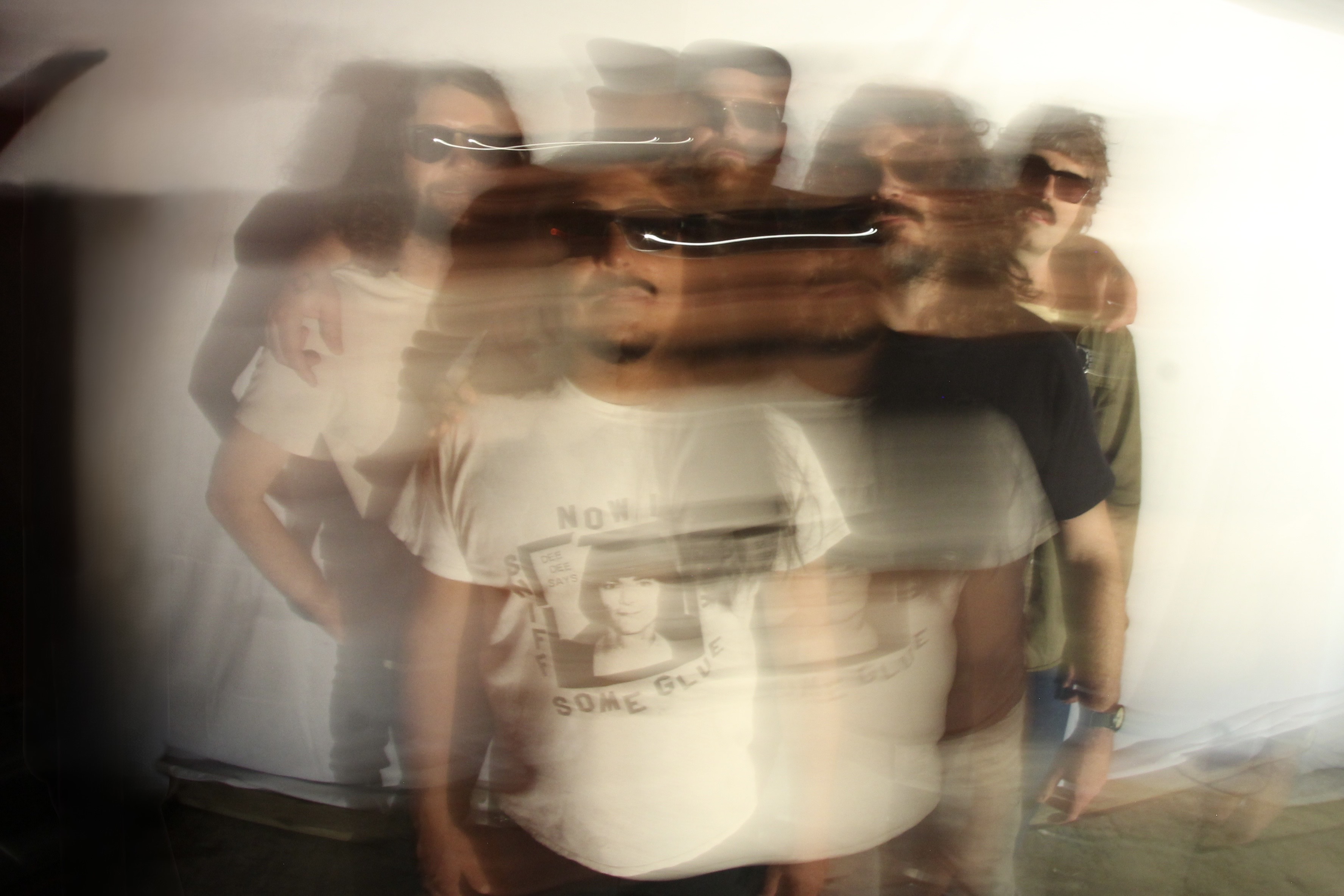
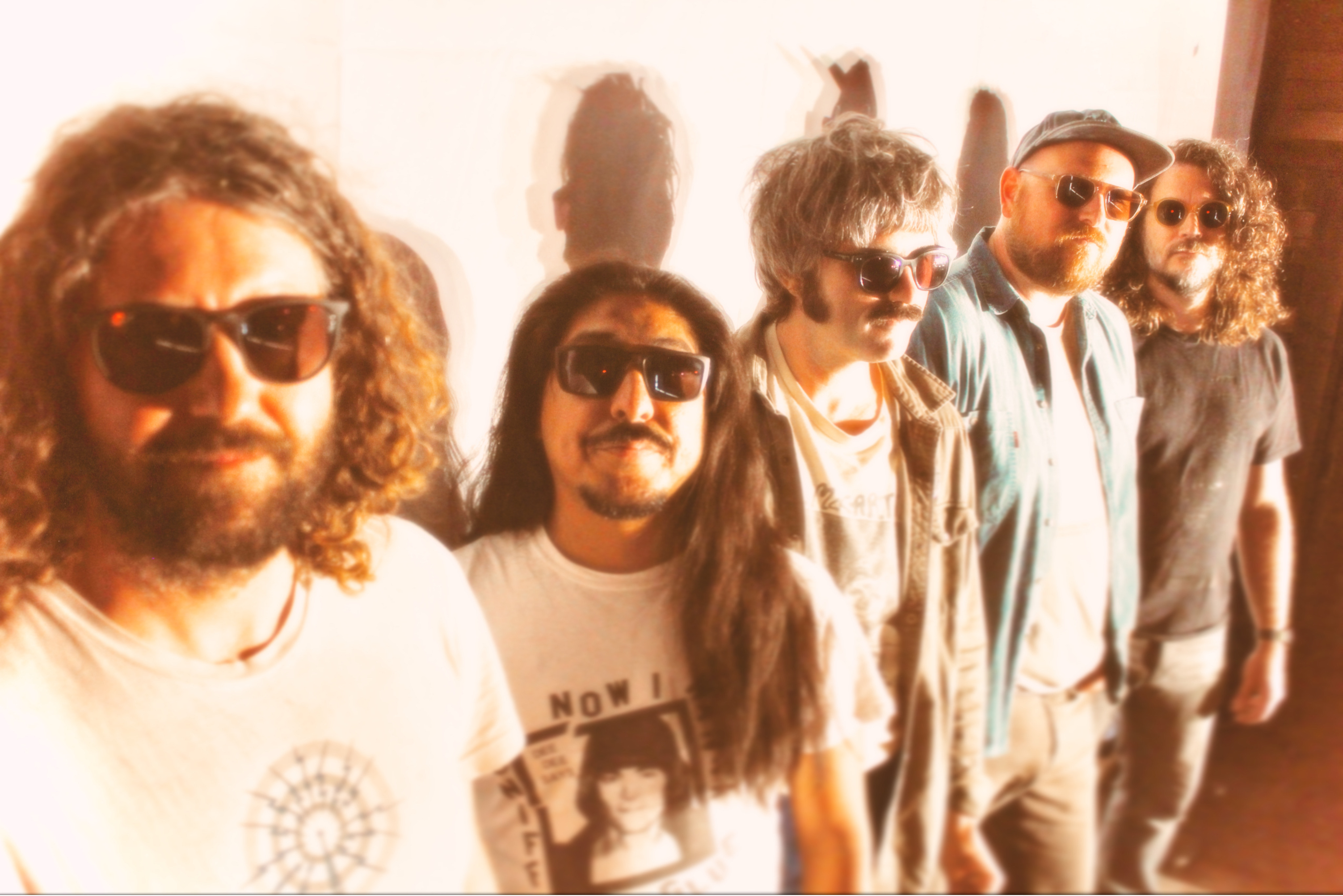
Kyle DeStefano: Sunjammer is Torin Metz – guitar, vox (Quit, Lunch Break), Joshua Bloodsworth – guitar, vox (New Bird, Yonder), Michael Nira – bass, myself – drums, John Dailey – keys. Before Sunjammer, everybody got to know everybody from the crossroads of house shows and service industry. Over a few years we’d all made music together in one way or another, but we played our first show as Sunjammer in 2015. From there we started recording and playing shows, making tapes every few years. John got involved and brought keys when we recorded our first LP, ‘Relatively Decent Weather’ (self-released) in 2023.
JB: What specific sonic qualities or limitations of the analog process at Good Medicine were most crucial in shaping the final sound of the album, and how did you resist the urge to ‘fix’ things in the digital realm afterward?
KD: Studio time and tape real estate are limited. We have found recording a bunch of takes usually comes with diminishing returns, so you really have to get the song nailed down within a few tries. There were a lot of choices made in the moment. On “New Bird,” we knew the gist of what we wanted but had a foggy middle and no end. What came out was this really fun structure that kind of bounces and breathes with everything locking together in real time.
As for “fixing”, the tape warble on the first and last track say it all. If the take feels true, keep it, otherwise rewind and try again. The little bumps and warts leftover are honesty. You can take those recordings and drag them to the grid and sand down the edges or whatever but who cares, it isn’t techno.
JB: Given the deliberate choice to record live through buzzing transistors and unspooling magnetic tape, what specific sonic qualities or limitations of the analog process were most crucial in shaping the final sound? How did you learn to embrace the “tape hiss, clicks, incidental noise, and abrupt song endings” as part of the album’s vocabulary?
KD: Our first stuff was recorded through a TEAC stacked on milk crates in a dirt floor shack!
Torin Metz: Humble beginnings for sure. The process for this record was fairly advanced compared to past productions mainly because our bandmate Joshua has a legit studio we can get into now. Though everything is far more professional, the formula is similar; track as much as possible live, to tape. Overdub after that. Tracking live you get some room sound, instruments bleeding across mics, tempos pushing and pulling. Sounds like a mess but I really think that is a crucial part of our sound, capturing the band live and in the room. I’ve personally always been drawn to incidental noises (the sound of tape rewinding always gets me). We could easily edit them out, but I think we all prefer to preserve some of those moments that you normally wouldn’t experience outside of the studio.
JB: It is easy to hear the tape hiss, clicks, incidental noise, and abrupt song endings are part of the album’s vocabulary. For a musician, how do you learn to embrace those as essential character, and was there ever a moment during tracking where the band had to decide not to scrap a take because of a particularly notable piece of incidental noise?
TM: We embrace and intentionally pepper in those moments because it’s a fun part of the editing process. You’ll catch little moments between takes, maybe a riff is sped up and reversed, and it just sounds fucking cool. It’s just paying attention to the sounds that are being captured, even in the false starts and bad takes there may be some little audio gems that would otherwise get wiped and never heard. Typically, when we’re tracking and deciding on takes, we’re not overly concerned with the incidental stuff. The main concern is the feel of the song. Which one has that I-don’t-know-what. Which one feels right.
Joshua D. Bloodsworth: As well, there’s a freedom in knowing we can manipulate space & time with the equipment to achieve a result that just sounds cool as shit. There have been moments & methods in both of our previous full-length records (‘Primitive Mind,’ 2016 and ‘Relatively Decent Weather’), where we would slow the song way down to achieve a wild vocal harmony or some solo that just needs to sound tight, fast. There was a single we put out a couple years back, a cover of Captain Beefheart’s “I‘m Glad,” where the decision was made to slightly slow the entire song down to achieve a more syrup-y sound for the tape transfer. You can do cool shit like that when working in analog. This is really all just a mindset, an ethos.
JB: The vintage Hammond organ has a recurring role on this record. Was the organ part of the songwriting process? Was it a foundational element the songs were built around, or more of a texture woven in once the core arrangements were established?
TM: The organ is a fixture at the studio where the Good Medicine folks work. You turn that thing on and it’s straight to church (sacred or profane). Leslie speaker whirling. We came in with the songs mostly formulated but organ came during the overdub process. The damn thing sounded good on everything. When in doubt, the missing glue often was an organ part. Our keyboardist, John Dailey, made that thing sing.
JDB: One of the funnest things about the organ is how it can sneak in & out of the song, a swell phrase here or a slick lick there. John tracked live with the Wurlitzer so I would say that was the foundational instrument but I can’t overstate how cool it is to let the organ walk around & take up sonic real estate during the mix process. Tons of fun ideas.
JB: I wanted to ask about your live approach of facing each other instead of the audience. How does this physical choice influence the musical dialogue and improvisation within the band, and how did you manage to translate that intimate, internal performance energy to the self-titled studio LP?
KD: When we started, we were playing full-on jams and so we’d rely a lot on visual cues, listening to anticipate changes. Now we probably don’t need the visual cue as much, but we like to play dynamic and low volume so that tight placement still works to keep an ear on everything that’s happening.
JB: The tracks “Real One” and “Soul 69” allow the band to really explore more jam-based settings. As musicians, what is the line between a necessary jam that serves the song and one that risks losing the listener, especially on a studio recording that needs to maintain focus?
KD: That’s a philosophical question. An early song of ours called “Jelly Jam” (‘Primitive Mind,’ 2016), is basically two chords, verse/chorus/rinse/repeat for however long. Drone is a timeless zone. That song is spaced out enough to lose people and long enough to pull them back in. For the listener, I guess the message is to get comfy and stay a while or don’t. “You don’t like my jelly, why’d you pick the fruit? Don’t like the situation, why don’t you leave the room.”
JDB: At the end of the day, who gives a shit? We are playing what feels right and that’s gotta be enough.
JB: The record tackles themes of “burnout,” “exasperation,” and wanting to “quit your job, your habits, your cycles.” How does the band decide which working-class frustration is best served by a concise, unfussy arrangement versus one that needs the space of an extended psychedelic jam?
KD: Thematically, it’s a pot roast of a record. All the ingredients are distinct, but there is a unifying flavor. There is an alienation and depression vs. agency and expression story happening on “Step Out of Line” that manifests as downtrodden surf offset by Stooges -y freak outs. Then some of those same themes take on a more romantic melancholy with a tracks like “Soul 69” and “Lunch Break.” Both of those tracks have lines that were pulled directly from natural conversations we were having while the songs were being written.
JB: Speaking of “Step Out of Line,” it includes a lyrical pivot from despair to possibility: “A razor to the wrist / It doesn’t have to end like this.” Was the placement of this song at the album’s emotional climax a deliberate choice to provide a moment of resolution, or did it naturally land there in the final track sequence?
KD: That song bookends with “Quit” at the top of the record. We open on a song that’s upbeat in contrast to the kind of recursive tragedy it paints; the horror of same shit, different day and grinding every aspect of life in fully financialized hellscape with no way out. It sounds bouncy and fun, but lyrically it’s pretty bleak. Flip that for “Step Out…” and you get a song sounding dark and brooding that’s really about reclaiming your agency and seeking hope off script. After the record paints a picture, “Step Out of Line” resolves it with a call to action.
JDB: From a place of energy alone, ya gotta always leave the listener satisfied but still wantin’ more!
JB: What elements do you think bridge the gap between the structured, minimalist aggression of punk/drone and the expansive, unhurried nature of the South Texas groove you embody?
TM: If you start scratching back the layers, all styles of music overlap somewhere in time. I think our ethos ties us to DIY sensibilities and a directness found in punk and rock & roll. Tilting it all back there’s some softness to our sound, a breeze, chill. I think we sway to the softer side largely on our latest record, but our discography oscillates between modes. We all listen to a lot of different styles of music which really helps us hold it all together. We have some footholds that can get us on the same page about where an idea is heading. “This one will be like Crazy Horse. Give that one a Bo Diddley groove or Spaceman drone, etc.” A lot of times an idea will start with a reference point but as we figure it out it will become something else.
JB: The band has been described as a combination of “puro San Antonio,” with echoes of West Side Sound and Doug Sahm (singer/songwriter and multi-instrumentalist from San Antonio, 1941-1999). For listeners unfamiliar with the depth of the San Antonio scene, what is the twist that makes this heritage distinctly your own, rather than a simple homage?
TM: The San Antonio scene is constantly shifting on top of a deep and amazing history. It’s always been just outside the mainstream markets which creates a different mindset. For us, I think it’s humbling to be around. We’re doing it for the love of music and not much else. Stylistically, we’ll dip into some soul, boogie, and whatever the hell; tipping a hat to the masters that came before. We’re not really trying to copy the Texas Tornadoes (a Tex-Mex supergroup Sahm formed with Freddy Fender, Flaco Jiménez and Augie Meyers in 1989 – JB), or Lung Overcoat but an awareness of the wide possibilities of style that have sprung up in our city is a deep well of inspiration.
JDB: If you haven’t jammed on Royal Jesters (active 1958-1977 – JB), yet, do yourself a favor & shrek that out.
JB: Your songs address the grind of blue-collar life directly (the way a standard work week can make you lose touch with your own identity). Where on the record do we see those vital, ordinary blessings that balance out the sense of weariness?
KD: It’s rough out here, you gotta get it where you can. On that same song, there’s a line about having “sex on your lunch break” that speaks to moments of beauty and reprieve that you can carve out from inside of the slog. Likewise, the songs that Joshua sings on this record, “New Bird” and “Yonder” and “Beatdown” share a kind of lemons-to-lemonade lens, treating hardship as a teacher. Good and bad, it’s all in the soup, some spoonfuls are just broth but other times you get a nice hunk of meat.
JB: In a digital era, you chose to have Milton Holbrook hand-paint the album cover and the record was pressed by Tall Texan Records. How important is it for Sunjammer’s anti-digital, human-fingerprinted sound to be consumed via a physical object, and what does the cover art specifically communicate about the music inside? What does it mean to be working with Tall Texan?
KD: We have always had tattoo artists do our covers and Milton is no exception. His design is great because it’s a free association with the material. We sent him the masters and the next day he had a painting based on what he heard—illumination, burning fire, self-reflection, blue skies and motherfuckin’ birds! There’s no right way to listen. This record could go hard in a dishpit or headphones or chopped up on a May Day playlist. Vinyl is the format of choice because songs were made as an album. There’s an intentional rhyme and rhythm to how it rolls out. We’re still producing everything ourselves, but when it comes to the artifact, Tall Texan has been an important part of the process. Tall Texan is a huge help with them not only pressing the record, but getting it to more analog listeners. The association with bands like the Shinglers or Alien Eyelid or our pal Garrett T Capps is also cool. It’s a nice curation, everybody doing their own thing sonically but all dialing in to make good records.
Find out more: Bandcamp | Instagram | Tall Texan Records