
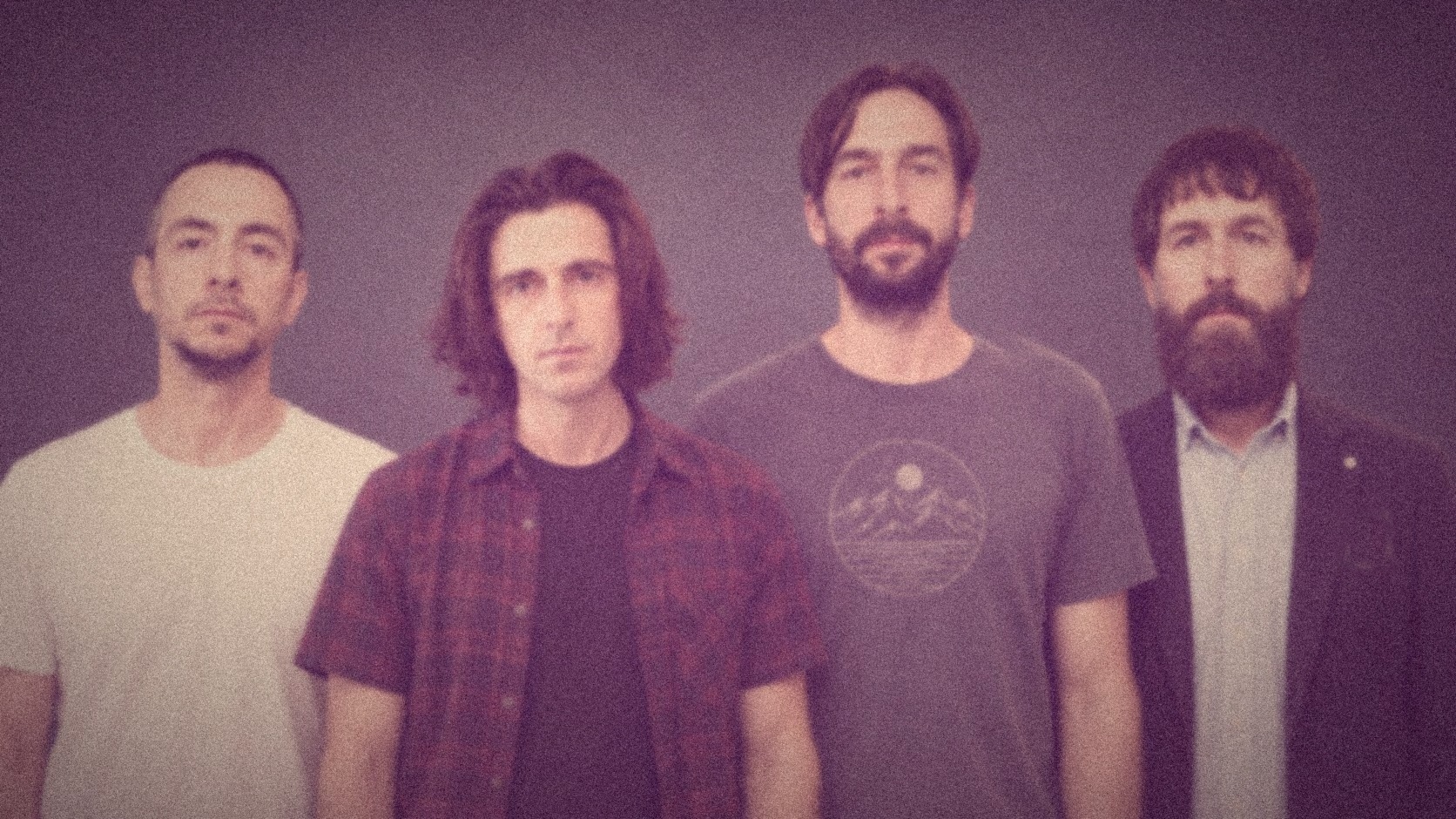
All photos courtesy of Velveteen
Velveteen don’t seem to trust silence. Listen to the gap between one song’s last chord and the next one’s first shudder and you’ll hear it: amps still humming, the room still buzzing, nothing quite finished. That leftover hum is where this London four-piece have always lived, and on their new EP, ‘My Dreams Are Changing’ (Noon Records), they’ve gone and built a whole house inside it.
The band arrive here after a quiet stretch. Their 2022 release, ‘Empty Crush’ (Shelflife Records), was followed by a hiatus that might have ended a lesser group, the kind of pause during which people drift toward other cities, other jobs, other versions of themselves. Instead, Drew Younger (guitars/vocals), David Thomson (guitars), Patrick Malins (bass) and James Nolan (drums/vocals), got back together in 2025 and headed into the studio knowing a little better what they wanted to wreck and what was worth saving. What came out of it is six tracks that settle all accounts.
Plenty of bands lift the look of 90s noise-rock and call it a day. Velveteen don’t seem very interested in nostalgia at all. The ingredients are the ones you’d expect: guitars pushed well beyond polite saturation, feedback used like a lead instrument, vocals sunk so far under the racket that they work as texture rather than message. But they handle all of it with real patience, like people who know that heavy music depends on holding back as much as turning up. Songs dissolve into fog and still sound deliberately built. A melody shows itself for a moment and then it’s gone.
The record was written and recorded as a group, and it shows. Younger and Thomson’s guitars knot together into one big, tangled cluster, and it’s nearly impossible to tell where one player stops and the other starts. Malins keeps the low end planted like bedrock, and Nolan, who shares vocals with Younger, plays the drums with a restless, almost physical urgency that stops all that haze from going to mud. Anthony Chapman, who mixed and mastered the EP, deserves some credit too, because this is a hard balance to strike. Records this abrasive tend to flatten into a single slab of noise, but this one has real depth inside the distortion, enough that you can wander around in it.
The title carries a quiet philosophy of its own. Saying your dreams are changing means admitting that ambition isn’t fixed, that what you wanted at twenty-two might not be what you want now, and that growth sometimes shows up looking a lot like loss. For a band coming back from a break, that lands differently. It isn’t a complaint and it isn’t a victory lap, just an honest note from someone partway through a change. The music holds the same ambiguity, offering comfort and unease in about equal measure.
It’s worth remembering how odd it is to make music like this at all. Noise-rock wants you to come toward it, to hand yourself over to a wall of sound with no clear lyrics or neat hooks to cling to. Velveteen know that’s a big ask, and they pay you back for it. Stay with the record and the chaos starts to show its structure: small decisions and deliberate pressure points hidden under the roar slowly reveal themselves.
Huge thanks to the band for the generous rounds of back-and-forth conversation.
James Broscheid: ‘My Dreams Are Changing’ arrives after a period that included both creative momentum and unavoidable setbacks. Looking back now, how did that time away from releasing new music reshape the band’s identity, and are you hearing a different version of Velveteen than the one that made ‘Empty Crush’?
James Nolan: I don’t think we see ‘My Dreams Are Changing’ as a reinvention, just a next step. We’re always learning and trying new things, and hopefully that’s something people can hear on the record. Since ‘Empty Crush’ we’ve also played more shows and we’ve grown as a live band. Following the issues we had after the album release, we do seem to have a renewed sense of purpose, so perhaps the new EP feels more focused and more ambitious. The setbacks put everything on hold for a while (we couldn’t gig or tour), so getting back to making music has been great and maybe you’re hearing a more confident, more determined version of the band.
JB: The record’s title suggests evolution rather than reinvention. What kinds of dreams are changing here; creative ambitions, personal outlooks, expectations of the band, or something more abstract?
JN: Maybe all of those things. Over time, your outlook changes and your priorities shift. People evolve and grow, that’s just part of life. As a band though, our overall vision hasn’t changed. We still want to write the best songs we possibly can and make the strongest music we’re capable of making. The title itself is deliberately ambiguous, as changes can be good or bad or neither of those things and just “different” and all of that depends on individual interpretation. We like the idea that people listening to our records are able to draw their own meaning from the music we’re making.
JB: After spending years refining your sound, do you ever find yourselves consciously resisting your own musical instincts in order to avoid repeating familiar ideas?
JN: We still enjoy playing older songs, but when we’re writing new material we never really like to go over old ground, though not doing so can actually be quite natural. We’re always learning and that always has us evolving in some way, so when we do get onto new material it’s moved on in the same way. That is a natural process, but also what we actively try to do as well. We definitely don’t want to keep making the same records.
JB: Looking back at ‘Yours To Enjoy’ (self-released, 2016), ‘Bluest Sunshine’ (Shore Dive Records, 2020), ‘Empty Crush’ and now ‘My Dreams Are Changing’, what thread connects every release despite the band’s evolution?
DY: I guess there has always been a similar aesthetic to the records we have made so far. We’re still the same band and our overriding philosophy hasn’t changed. We’ve always wanted to write the best songs we can and make records we’re proud of. I guess the thread, in this case, is that ambiguous “mood” that exists in the music.
JB: Many contemporary shoegaze bands lean heavily into nostalgia to the point of regurgitation, but your work seems more interested in using the genre as a foundation than as a destination. What aspects of shoegaze still feel unexplored to you, and where do you think the style can continue to evolve?
JN: There’s a lot of modern shoegaze that’s really good at capturing the atmosphere of the genre. For us, though, the records that stay with you are always the ones with the strongest songs, regardless of adherence to genre. A strong song should be able to survive transposition. I think there are lots more avenues for exploration in terms of aesthetic and being inventive in terms of sound, but aesthetic only gets you so far. Everything else grows from good songwriting. The bands that inspired us weren’t just great at creating atmosphere, they were great songwriters.
JB: Shoegaze has obviously become increasingly visible over the past several years, yet your music retains a darker, more abrasive edge than much of what currently is considered to populate that genre. Have you ever felt pressure to make your sound more immediately accessible?
JN: If anything, we maybe have tried to make our music less immediately accessible, as that’s just the sound we prefer. We’ve never wanted to sound like every other shoegaze band. Developing our own identity is very important to us. There’s nothing worse than being generic.
JB: Your music has always embraced ambiguity rather than self-explanation. How do you know when a song contains just enough mystery to invite interpretation without becoming emotionally distant?
JN: We’ve always liked music that takes a bit of time to get into. Not because it’s trying to be difficult, but because it’s the kind of music you keep coming back to and might hear something new each time. For us, it always comes back to the song. The effects and atmosphere are important, but only if they serve the song and are emotive. Knowing when we think we have got the balance right is just instinct. After a while, you get a feel for what needs to stay and what needs to go, but obviously in music that is a very subjective thing.
JB: You have previously described enjoying art that leaves lasting impressions because it cannot be fully explained. Has making this EP changed your own understanding of that philosophy?
DY: In a lot of ways, it’s exactly that sort of philosophy that we have tried to employ, perhaps more than any of our previous records. In terms of a lasting impression, we wanted to create a record that rewarded repeat listens and also was something that is perhaps a bit more intangible than our previous efforts. Having said that, we do have more direct tracks on this EP, but the overall goal of making a lasting impression is always what we are striving for.
JB: Your records seem to invite listeners to bring their own experiences into the music rather than directing them toward a fixed meaning. Have you ever encountered an interpretation of one of your songs that genuinely surprised you or even changed the way you thought about your own work?
DY: We haven’t really looked into that, to be honest. People often ask us for the lyrics, which we never really provide, but we have noticed what seems like AI translations of our lyrics pop up in places, which is kind of funny. I guess even AI interpretations can be genuinely surprising!
JB: There is a recurring sense throughout the EP that beauty and unease are never far apart from one another. What is it about that emotional tension that continues to draw you creatively, and do you think it reflects the way you experience the world outside music?
DY: I think any kind of emotion that is more visceral in that way will always be more interesting to us. And I think that’s true of life and the world in general too; the greater the emotive weight, the more impact something has. We try not to get too comfortable with our music and I think it’s important to be challenging ourselves in the world outside of music as well. Having said that, there is always room for some nostalgia, but too much nostalgia, too much ease and comfort, can lead to complacency and we never want to be reliant on anything too tried and tested.
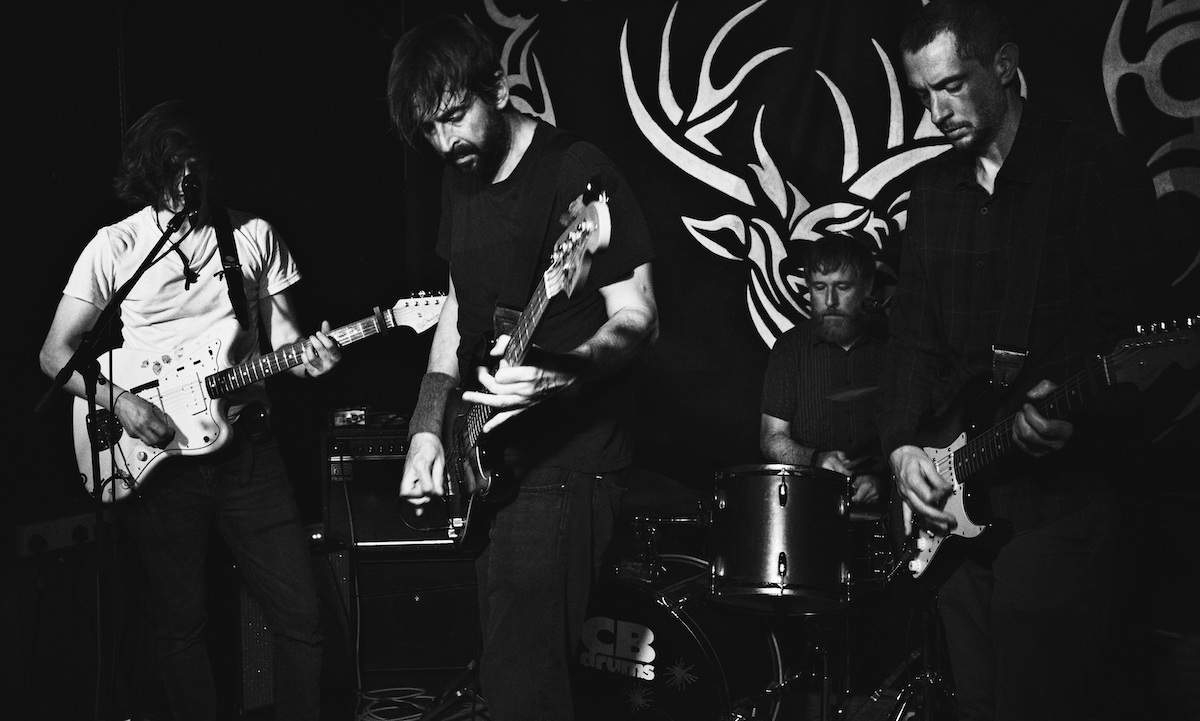
JB: Your answers frequently return to the importance of restraint. In an era where many productions seem intent on filling every available space, what have you learned about the emotional power of leaving something unresolved or unsaid?
DY: I think having space to digest and be introspective is incredibly important and with the constant “noise” of modern life, those spaces are harder and harder to find. For some people it can actually be quite difficult to sit in silence because I think when you do your brain starts to unpack and resolve things that it doesn’t get time for when our lives, our senses, are so busy. That can be an uncomfortable experience as well as a clarifying, cathartic one. I think leaving something unresolved or unsaid also lends power to the listener and asks them questions, creating a more personal experience, as it then comes down to individual interpretation. In an age where we do have a lot of things shoved down our throats, it’s nice to have some downtime to reflect.
JB: Your music often rewards patience, but the modern listening landscape increasingly encourages immediate gratification. Has that changing relationship between audiences and music influenced how you think about making records, or has it strengthened your commitment to creating work that unfolds gradually?
DY: Yeah, it definitely does sometimes seem that immediate gratification is very much part of modern culture, and I guess there is some pressure to “play the game,” so to speak. For the most part, we try to create music that we value and, as I’ve said before, we really respect the audience and think people are still up for a challenge. I think things that are worked for, in whatever way you want to see that, are the most rewarding. Things that come too easily just don’t have the same level of appeal. Because we believe that as a band, our music will always try to provide some level of depth and perhaps something our audience has to go looking for.
JB: Since you’ve spoken previously about drawing inspiration from literature and film as much as music, were there particular books, films or visual ideas that quietly informed the atmosphere of ‘My Dreams Are Changing’?
DY: I think everything you’ve read, seen or heard can resurface at various points of a creative process and inform what you are doing. The very best pieces of art change you in some way. I was in Oslo visiting some friends and they had this great section dedicated to Norwegian fairy tales with work by artists like Theodor Kittelsen (Norwegian artist, 1857-1914). Some of those paintings have such a great “mood” to them, dark and mysterious, and that is a good example of something that was very inspiring, but with no direct influence, so to speak. Anna Kavan (British novelist, 1901-1968), is an author I was reading a lot of at the time of writing the EP and she invokes such an amazing sense of loneliness and isolation in her work and her writing can be full of imagery and ambiguity. When we write music, we like to create the same kind of thing; a mood, emotion or affection. Music can be part of our inspiration too, but it’s certainly on an even keel with a lot of other things.
JB: Your music often evokes movement between dream states and waking reality. Do songs generally begin with an emotional feeling, a guitar sound, a rhythmic idea or an image that refuses to leave your mind?
DY: It honestly can be any of the above. As mentioned previously, we draw inspiration from a variety of areas, but, yeah, in the more traditional fashion, sometimes we might also just pick up a guitar and play something that has promise and before we know it we’re down a rabbit hole with that and it becomes a decent song. There’s a notion I heard that a story idea finds the novelist, rather than the novelist finding the story and, with that in mind, we often don’t like to force anything. That’s also quite a comforting perspective, especially when we might be struggling to work up a song in that maybe it’s just not “for us”. And we definitely have to be in the right space to be creative.
JB: The EP feels simultaneously massive and intimate. What conversations took place in the studio about preserving emotional vulnerability while surrounding it with overwhelming layers of distortion and feedback?
JN: Those things tend to happen naturally through the writing process. If something feels right, we trust it. We don’t tend to overanalyze each emotional decision, we’d rather follow our instincts and let the songs become what they’re going to become. Drew Younger: That said, we do like to use contrast and levels of dichotomy in our songs. It’s great to find something unexpected in one of the last places you’d expect to find it. And we always like to give the people listening to our records the respect of being a bit more challenging with elements of our songs. We don’t like to pull out the family silver or present things in a fashion that doesn’t require some kind of thoughtful attention.
JB: Your arrangements often seem meticulously layered yet they retain the immediacy of a live band. How much of the sound is carefully planned beforehand, and how much emerges through experimentation once recording begins?
JN: By the time we go into the studio, the songs are essentially finished. We’ve already worked through the arrangements in rehearsals, so we know what we’re trying to achieve. There might be the odd new idea during studio recording, but we don’t have the luxury of spending weeks experimenting in the studio. If something genuinely improves a song, we’ll always explore it. But for the most part, the creative work is already done before we start recording.
DY: There have been cases where we have kept demo parts of songs where we feel some kind of quality we liked has been lost in the studio. Sometimes being in a studio doesn’t always translate to “better” and we like an organic kind of sound rather than something too polished.
JB: The EP is remarkably immersive without relying on excessive song length. Was concision a deliberate goal, or did these compositions naturally arrive in their final forms without demanding expansion?
JN: It’s a bit of both. Concision has always been important to us. If something doesn’t need to be there, we’ll cut it. The songs sometimes evolve when we play them live, but on record we’re always trying to keep only what’s essential.
JB: Looking back across the EP, were there any moments where instinct and careful craftsmanship pulled you in opposite directions, and how did you decide which voice to follow?
DY: Yeah, there was and a good example of that is the last track, “Untitled 103.” We actually had a full vocal recorded for that track, but in the end decided to omit it, apart from the last refrain. I guess in the end we felt that including the vocal might pull the listener in a particular direction, as where leaving it out allows for a lot more “headspace” which we felt was more fitting for the music itself. That was a decision we really weren’t sure about at the time, but having sat with the record for a while now, I think it was the right one. Sometimes we have regrets about songs and recordings too, but we don’t beat ourselves up too much about that stuff. Making mistakes is very much part of the human experience. I think going with what feels right at the time and following our intuition usually has us in a good place.
JB: Drew, your dual-guitar approach with David creates textures that rarely sound like two players competing for space. How do you divide those roles when writing, and has that relationship evolved since your earliest recordings?
DY: Whilst I generally create the backbone of guitar compositions, Dave is a very technically gifted guitar player and is great at experimenting with what we have when we get to the point of working a song up as a band in the rehearsal space. This can inform how we play a song live and its development in terms of recording. We often experiment with different tunings to create different contrasting textures even at times when we might essentially be playing the same thing. The process hasn’t really changed over time, but we are probably better now at identifying what is working, what else we might need and what needs to be omitted. And we always are chopping and changing what pedals we are using and stuff like that.
JB: Patrick, the bass often acts as the emotional anchor beneath walls of guitar rather than simply reinforcing rhythm. How conscious are you of shaping the emotional narrative through low-end melodies?
Patrick Malins: I definitely feel the role the bass plays in music like ours is very important: providing that rhythm section along with the drums, particularly in songs where the guitars are really “washed out.” In terms of having the bass contribute to emotional song elements, there are often places I add counter melodies to contrast with what the guitars are doing, adding depth. The more I’ve played with Velveteen the more I’ve really tried to hone my sound, particularly for live performances. Ultimately, I’m trying to keep true to that overdriven sound which is prominent on our recordings, while also having a really punchy element, something I love in some of my favorite bands’ live performances.
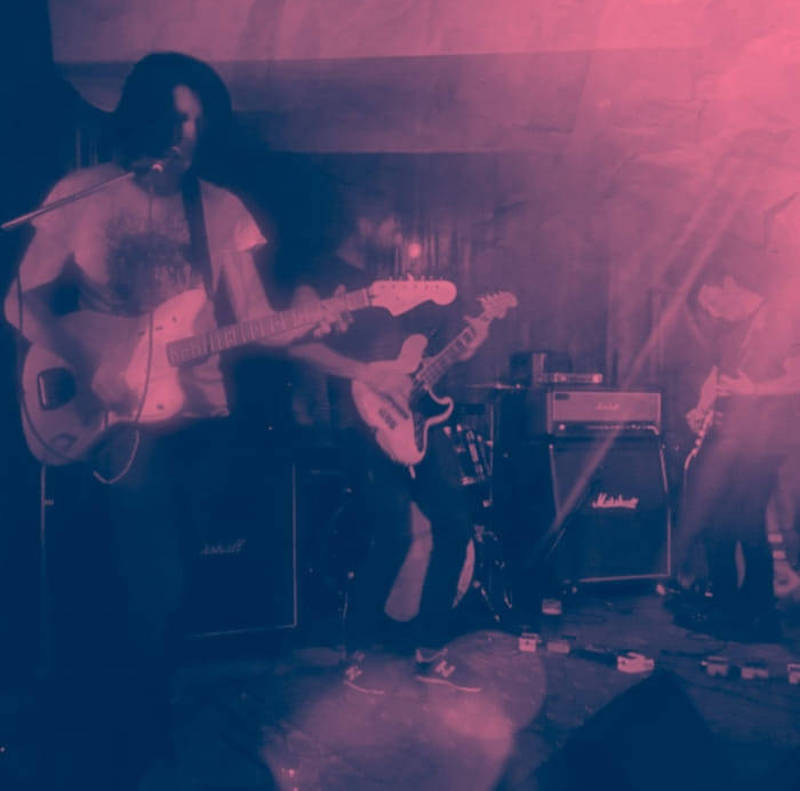
JB: James, your drumming often balances propulsion with restraint while you also contribute vocals. How do you approach rhythm in songs where atmosphere can be just as important as momentum?
JN: I always put the song first. I’ve never been a self-indulgent drummer. I’ll usually start by trying different ideas and then strip things back until only what’s essential is left. Once I feel the part has enough substance, I leave it alone. I don’t feel the need to add any embellishments just for the sake of it.
JB: The vocals across the EP are deeply embedded within the mix almost functioning as another instrument. What draws you to treating the human voice as texture instead of placing lyrics at the forefront?
JN: It’s definitely part of the shoegaze tradition, we certainly didn’t invent it. But it also always felt like the right approach for our music. We’re not really interested in putting the lyrics front and center or making grand statements with them specifically. They are another element to discover.
DY: We do spend a lot of time writing lyrics, as there is nothing worse than bad lyrics, even when you can’t make them out so well. Having the voice acting as another instrument helps create that dreamlike atmosphere, and that feels much more natural for the kind of music we make.
JB: *Sabrina’s appearance on “A Fool’s Paradise” introduces another emotional color to the EP. What inspired that collaboration, and what did her voice bring to the song that you felt the band couldn’t achieve alone?
DY: Sabrina brought a different emotional quality that we simply couldn’t achieve ourselves. Her spoken word added another texture and helped give “A Fool’s Paradise” the abstract character we were looking for.
Sabrina Lefebvre: I think what brought us together was a shared sensitivity more than anything else. There was something very honest and cinematic in their music that I immediately connected with. I approached my voice almost like another instrument, something intimate and fragile. I hope it added a different emotional layer to the song, a quiet vulnerability that beautifully complemented what the band had already created.
JB: Anthony Doyle’s percussion also adds another dimension to that same track and “Untitled 103.” What opportunities did those additional rhythmic elements open up creatively?
DY: Anthony playing percussion on this record really allowed us to expand what we could achieve with the overall atmosphere of those tracks. Anthony is a very accomplished and inventive percussionist and someone I have known for years and getting him involved meant that we could really layer up the rhythmic elements and create something more expansive, which was important for both of those songs. A good example is the percussive rushes you hear at the end of “Untitled 103.”
JB: Anthony Chapman has worked closely on both the mix and mastering. What qualities did he hear in these recordings that helped elevate the material beyond what you originally imagined (if at all)?
DY: Anthony has a very broad musical palate and he also has a great ear for shoegaze, but more importantly he understood what we were trying to achieve. He never tried to turn us into something we weren’t. He understood our vision and helped bring out the strengths that were already in the recordings. We’re at the stage with Ant where we really trust him with knowing the personality of the band, what to rein in and what to leave more visceral in mixes. We’ve always been really happy with whatever he has done for us.
JB: The band’s chemistry has clearly benefited from longevity. After so many years together, are disagreements now more productive because you understand one another’s instincts, or do creative debates become even more passionate?
JN: We’ve known each other for a long time and we’re genuinely good friends, so there’s a lot of trust between us. We all share the same vision for what we want Velveteen to be, so even when we disagree it’s usually about the best way to get there. Everyone’s opinion gets heard, and we’re mature enough to talk things through. At the end of the day, we’re all trying to make the best music we can.
JB: How has finishing and releasing ‘My Dreams Are Changing’ changed your perspective on the songs themselves? Were there any tracks that revealed something unexpected only after you had lived with them for a while or started performing them for audiences?
DY: We do still find our perspectives being changed on the songs and maybe start to appreciate little nuances more or less depending on how we’re looking at it. And of course, the songs can change a bit in terms of how we play them live compared to the recording. Playing them live we can try slightly different interpretations of the tracks and create a new experience of them compared to the record. There is a degree of separation between recording and live performance. “A Fool’s Paradise” is one that we enjoy playing and live we use a sample of Sabrina’s vocal over the top of the music. That song seems to become more expansive in a live setting.
JB: Fans have already noticed hints that a second full-length album may not be far away. Has this EP served as a bridge toward that next chapter, or does it represent a complete artistic statement in its own right?
JN: It’s very much its own record. These were songs we believed in and wanted people to hear, so we didn’t see the EP simply as a bridge to something else. As for what’s next, we’ll keep that to ourselves for now.
JB: If someone unfamiliar with Velveteen heard only ‘My Dreams Are Changing’, what would you hope they understood about the band beyond the obvious shoegaze influences?
JN: We would hope they hear a band that’s using shoegaze as a starting point rather than trying to recreate the past. More than anything, we hope they hear a band with its own identity. If they finish the EP wanting to listen to it again, then we’ve done our job. We think that this latest EP, perhaps more than any of our other releases, benefits from repeated listening, so we do hope it’s a record people keep coming back to.
JB: Nearly a decade after the project’s earliest incarnation, what continues to surprise you about making music together, and what do you think this version of Velveteen can achieve that none of the previous versions could?
JN: We’re just as excited and passionate about making music as we were when we started. We’ve grown over the years, and it took a while to understand exactly what kind of project Velveteen was, but I think this is the strongest and most focused the band has ever been.
Learn more links:
Velveteen
Noon Records
Soundcloud
YouTube
Instagram
Facebook