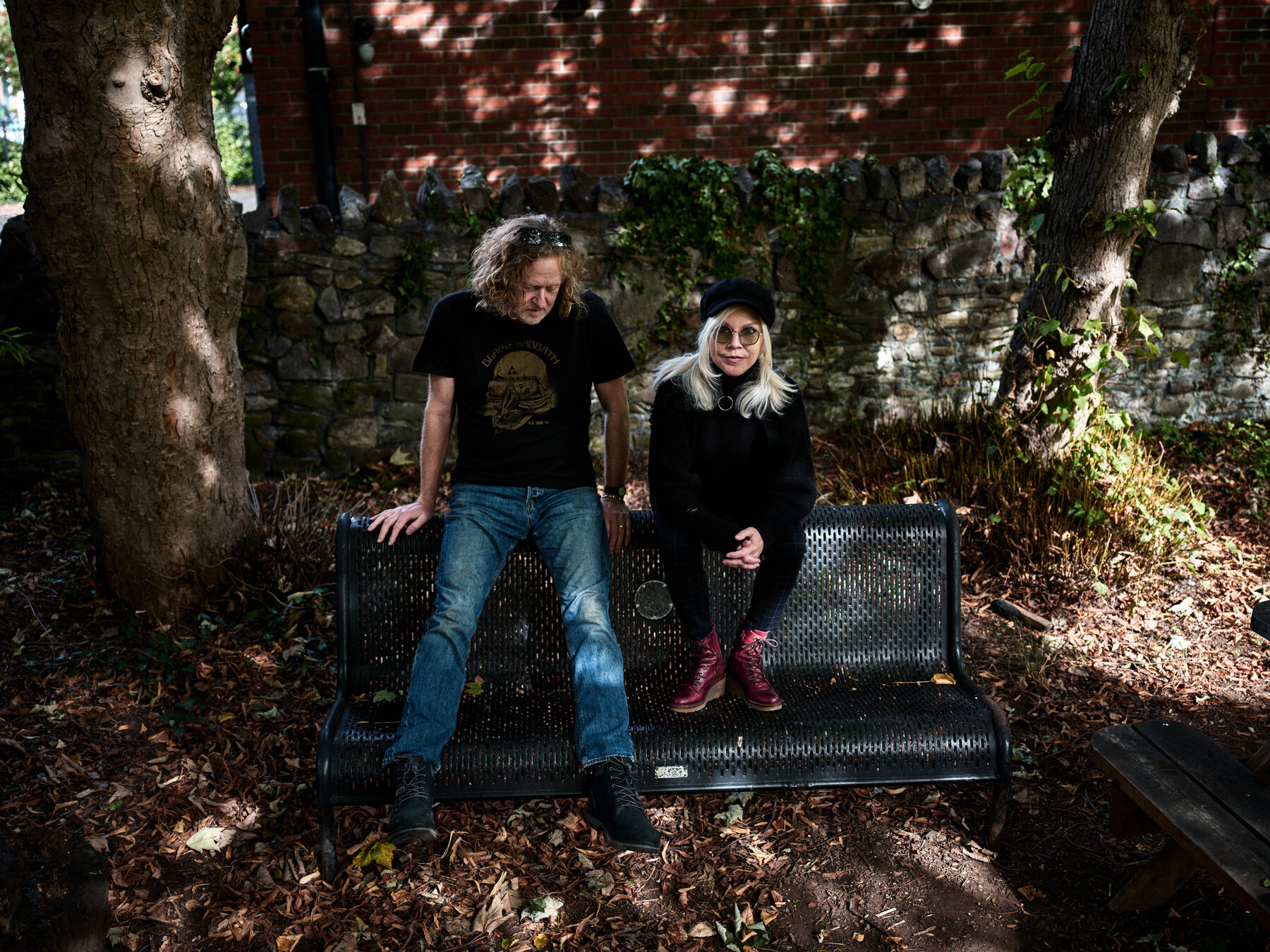
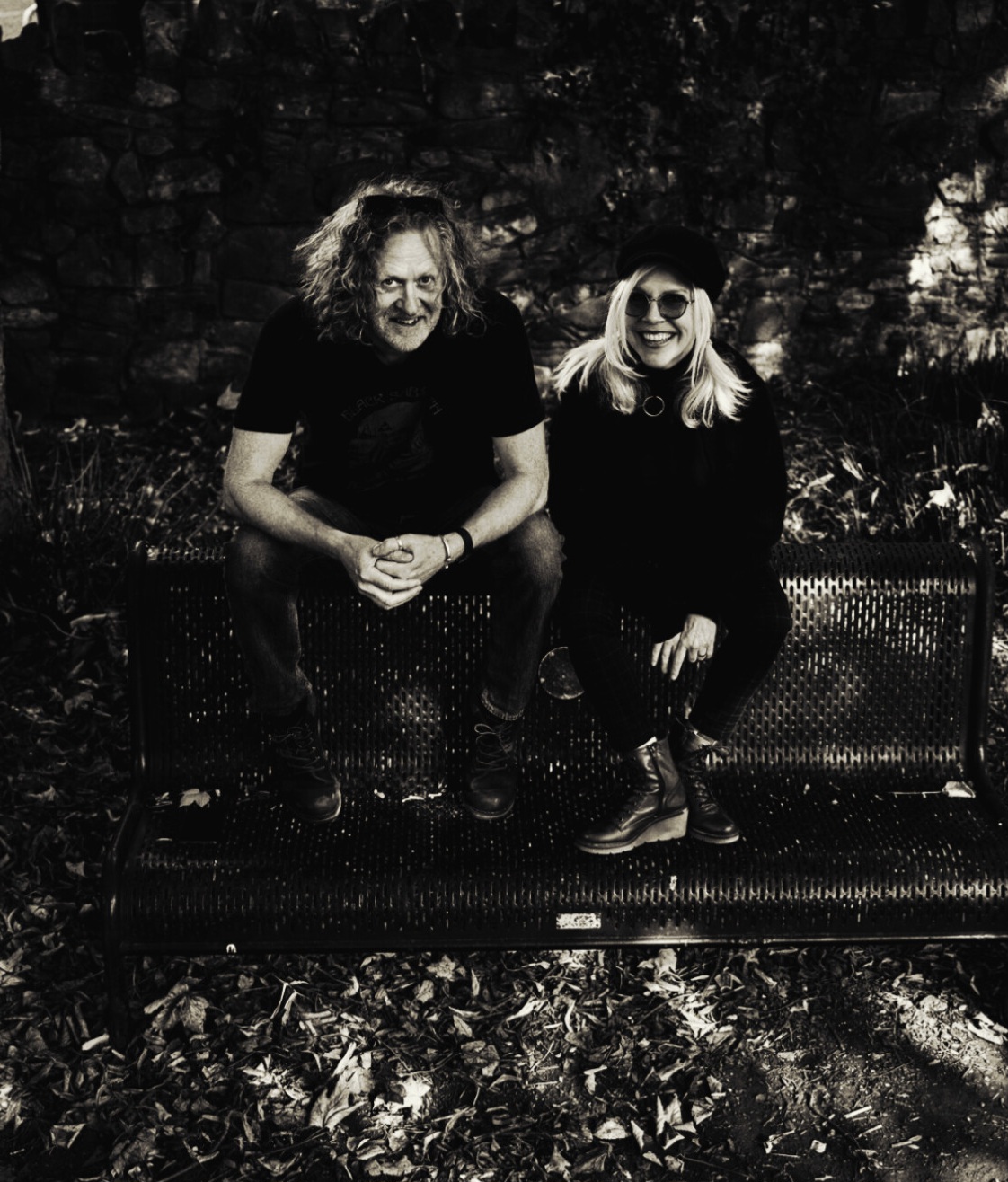
Photos courtesy of Brian Futter
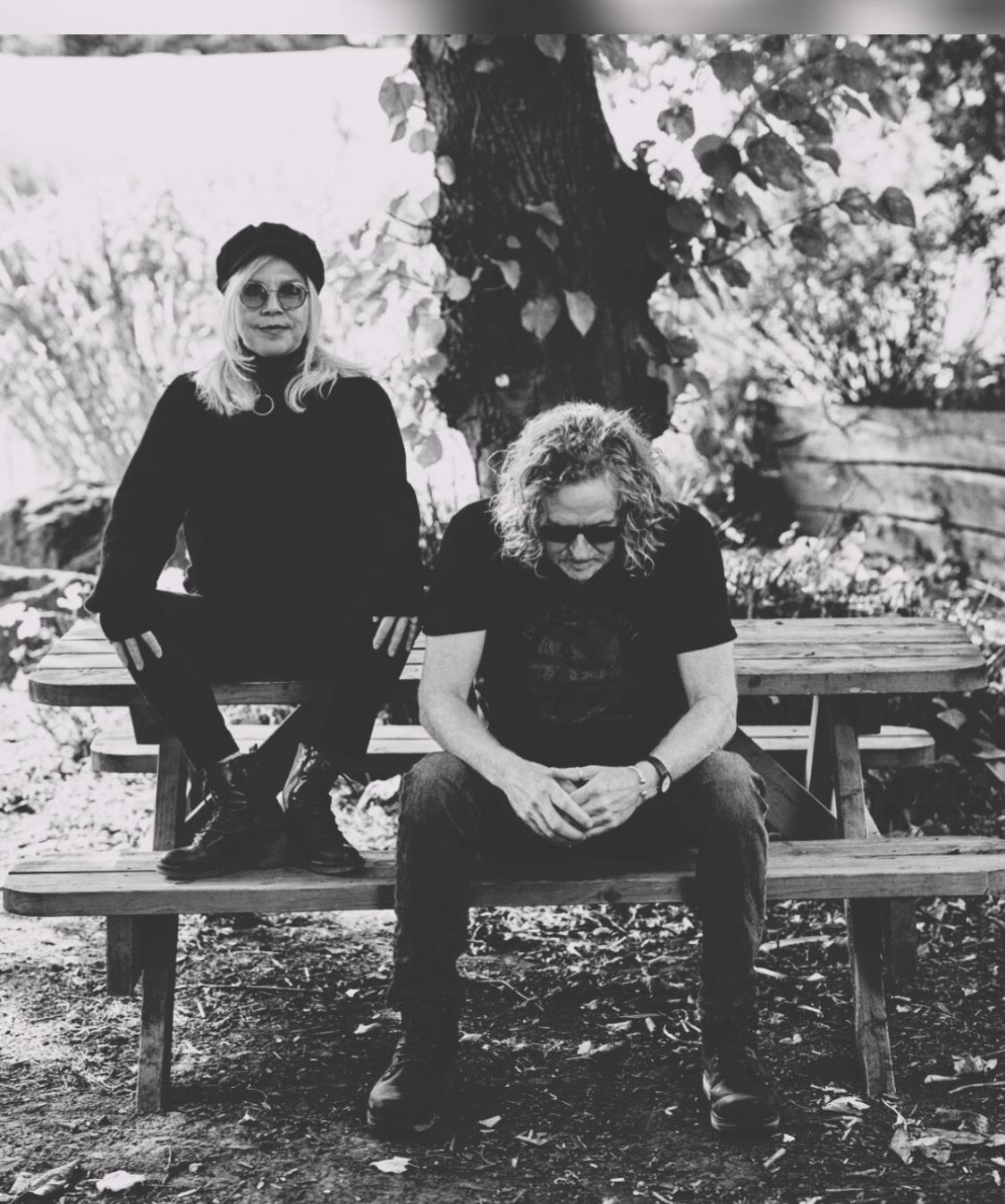
Good Day Father arrives as a collaboration that feels less like a reunion of established voices and more like a recalibration of creative instinct. For Brian Futter, long recognized for shaping immersive guitar worlds, this project marks a shift toward something more interior and deliberate. Alongside Tanya Donelly, whose voice has long carried a rare emotional clarity, he constructs a sound that resists easy categorization. Their shared past may trace back decades, but Good Day Father is firmly rooted in the present, uninterested in revisiting former identities. The EP introduces a partnership defined not by legacy, but by a mutual willingness to explore unfamiliar emotional and sonic terrain.
The track “Sonic Amadea” sets the tone with a sense of spatial awareness that feels almost architectural. Futter’s guitar work stretches outward in luminous layers, less concerned with dominance than with atmosphere, while Donelly’s vocal presence grounds the piece with an intimate, unembellished directness. It’s a dialogue rather than a showcase, one where each element listens as much as it speaks. That same dynamic carries into “Hymn,” where restraint becomes its own form of intensity, and into “Carving Bones,” a track that leans into a darker, more skeletal emotional landscape without ever losing its sense of control.
What’s striking across the EP is how little interest there is in spectacle. Futter’s approach privileges detail over density, allowing space to function as an active component rather than a void to be filled. There’s a quiet confidence in the way these songs unfold, as though they are less concerned with immediate impact than with long-term resonance. Donelly’s lyrics, elliptical and precise, circle themes of memory, dislocation, and quiet endurance, offering just enough to draw the listener in without ever fully resolving the tension at their core.
As Futter steps into this new chapter, Good Day Father feels like both a continuation and a departure; an expansion of his musical language shaped by collaboration rather than reinvention for its own sake. In conversation, he reflects on the process behind ‘Sonic Amadea,’ the balance between instinct and intention, and the subtle chemistry that defines his work with Donelly. What emerges is a portrait of an artist still deeply engaged with the possibilities of sound, still searching, and still finding new ways to articulate what resists easy expression.
Much appreciation to Brian for taking the time to answer this super fan’s questions.
James Broscheid: Looking back at your first meeting during the recording of “Judy Staring at the Sun” (from the Catherine Wheel LP, ‘Happy Days,’ Fontana / Mercury, 1995), how has your creative shorthand with Tanya Donelly evolved to allow for the transparency found in this EP?
Brian Futter: Living in The Catherine Wheel was a completely different life when it came to writing songs. Rob (Dickinson, vocals/guitarist), is a perfectionist and ultimately was the sharp end of the band when it butted up against an audience, so naturally he was the new song gatekeeper. Why would he front a song he didn’t have complete confidence in? There was also a certain amount of politics, and a massive level of external pressure. If I had a new song or idea, I had to pitch it right and steer it perfectly to get it on a record. With Tanya it’s a much more relaxed process. We’re both fans of the music, have zero pressure and just want to record the best songs, the songs we like and have fun doing it. This results in a pureness and transparency that can’t be faked.
JB: Has that freedom ever felt disorienting after coming from a more structured dynamic in Catherine Wheel? How do you self-edit when there’s no gatekeeper?
BF: It certainly allows us to stray into other genres I wouldn’t have considered back in Catherine Wheel. Future Good Day Father songs will probably be more diverse in genre to a certain degree, who knows. Tanya always comes up with addition parts, she always enhances the song and comes up with ideas I could never think of.
JB: In building the rhythmic skeleton of the track, how did the drumming of Aurora Di Rocco influence the way you approached your bass lines to ensure the song maintained a forward-leaning momentum? How did you hook up with Aurora for this project?
BF: “Sonic Amadea” was always about the driving bass line. It was the foundation of the song from the get go, the whole song was built round that pulsing bass line. My producer friend, Graham Pilgrim took the multi-tracks to his studio in Italy. One of his favourite drummers is Aurora. She is incredibly good at interpreting a song very quickly. He asked Aurora to lay the drums over the top, she did it in a day and the results were incredible!
JB: Speaking of drummers, Neil Sims provides a specific atmospheric depth on keyboards; at what point in the tracking process did his textures dictate the oscillating distortion levels of your guitars? Was he a consideration on drums for Sonic Amadea considering your work with him in Catherine Wheel and 50ft Monster? Does he contribute to the EP’s other two tracks?
BF: Neil was involved with the basic drums for track building on “Sonic Amadea” and “Carving Bones,” another song on the EP. He surprised me one day with the keyboards for “Sonic Amadea” when the song was almost built, so the keyboards were added at the end, influenced by the track. They have become an essential part of the song, especially towards the end!
JB: You’ve created a three-dimensional field that mimics a vast cathedral; what was your process for blending clean arpeggios with distorted layers to ensure the instrumentation felt like the vital, living entity it does?
BF: Some people can sit down with an acoustic guitar and write a song, I find that too one dimensional, I can’t see the bigger picture that way. Songwriting for me is like a capture of an essence. I write with a studio. I need to capture things as they happen. I choose the sounds I use on the go as I’m writing the song, there’s no navel gazing. It has to be caught there and then in a frenetic moment. The song content is built very quickly without much thought; some songs live by it, others die. I can’t do it any other way.
JB: The vocal production is remarkably dry compared to the expansive instrumental reverb. How did you and the team decide on this proximity to ensure the listener feels centered in an internal monologue while the music suggests an external, vast landscape?
BF: The vocals are the core of the song, they keep you centered, they are the sense in a swirling world, everything falls into place with the anchor of drier vocal line, a little bit of sanity in a swirling madness!
JB: As the person responsible for both guitars and bass, how do you prevent the low-end frequencies from cluttering the delicate, breathy inflections of the vocal performance? Are the tracks presented to Tanya after they are put together or does she have input outside of her vocal performance?
BF: A lot of the credit sonically for that goes to Graham Pilgrim for mixing it so well. The song was finished musically for Tanya to do her vocals, she put her own inimitable stamp on the whole thing, including quite a lot adlib stuff. I gave her no direction in that regard, I trust her instincts and abilities completely. Any other ideas from Tanya were always gladly appreciated!
JB: The lyrics move through various states of being, from reality time is over to the redemptive insanity can be over. Did you compose the guitar solo specifically to act as the bridge for this emotional transition?
BF: I kind of detest guitar solos. The idea has been so horribly abused over the years, the whole concept ranges from pure cliché to embarrassing and tedious technical frippery. I’ve always found Kurt Cobain’s guitar solos to be the most perfect. Menacing, emotionally-compatible with the song and able to setup the next vocal without being technically embarrassing. I hope the “Sonic Amadea” guitar solo does this too. I remember in Catherine Wheel I had to do two guitar solos for “I Want To Touch You” (Fontana, 1992). Rob and I decided it should sound like a teenager in his/her bedroom trying to learn how to play. When I have to play a solo, I still am that teenager.
JB: Truth be told, I never really saw you as a “guitar solo guy.” Your stuff was way more nuanced than that. Given your aversion to traditional guitar solos, how do you decide when a guitar passage is emotionally necessary versus indulgent? Is there a litmus test you use?
BF: The litmus test for guitar solos is, “How can I not play one?” And if I do have to, I’d rather it mimics a previous vocal line in some awkward way. A guitar solo limping awkwardly down the road on three legs sounds so much better to me than some crafted cliché ridden technical monstrosity.
JB: Lyrically, how does the concept of losing all that came before apply to your current artistic identity with Good Day Father, and how do you feel this single honors your past without being beholden to it?
BF: In one way that lyric is a nod to the place I was in when Catherine Wheel ended/parked. We were all burnt out. I was pretty unhappy in my personal life and it all compounded for me into a hatred of music and a general unhappiness which lasted for quite a long time. The malaise took a change of personal circumstances for the darkness to lift. It also refers to a sanctuary most of us have. The sanctuary of being able to lock the world outside and revisit and reminisce/heal listening to songs that have been pillars of your world throughout your life.
JB: Was writing for Good Day Father (and 50ft Monster) in any way an act of reclaiming music as a sanctuary rather than obligation?
BF: In the beginning writing music for me was a complete sanctuary. That was all ground away by the time Catherine Wheel got parked. 50ft Monster was a stutter in trying to reclaim that. By the time Good Day Father came around two major things had changed. I became alcohol free. I wasn’t a massive drinker, but more of a consistent one. One or two glasses of wine a night, etc. After stopping I found suddenly I had time to think freely, my musical imagination burst back into life and I had the desire and motivation to want to create again. Couple this with the amazing home studio setups around now and suddenly I was back in the sanctuary. It’s been wonderful.
JB: You mentioned in another interview that the title “Sonic Amadea” emerged from phonetic nonsense that coincidentally translated to God’s love. Since you’ve noted that you usually prefer darker, personal memories for lyrics, did this accidental discovery of a more spiritual, light-filled theme change how you approached the guitars and bass? Did its meaning influence you to brighten the shoegaze heritage of the track, or did you purposefully keep the music grounded in that oscillating distortion to contrast the lyrical theme of divine love?
BF: The music for me always comes first, I’ve never canged a song sonically to suit a lyric. I find writing a song to be a mysterious procedure. Charles Bukowski (1920 – 1994) said, ‘The Gods will offer you chances, know them, take them…” (from the poem “The Laughing Heart”, 1993), so I don’t like to miss any chances the Gods give me. The “Sonic Amadea” phrase emerging from the random words in the guide vocal was definitely one of them! I was always going to keep it. I also find the rhythm and scanning of the guide vocal tends to be the definitive version. Written lyrics usually always have to follow the rhythm of that original vocal, otherwise it never sounds as good.
JB: It is intriguing that you are now collaborating on lyrics with Jaynie Bye given her background as a writer and editor. Since you mentioned that some of your darker memories aren’t repeatable, how does having an editor in the room change the way you share those internal monologues?
BF: I think we can demystify this question pretty quickly. I live with Jaynie 24/7 and have done for many years so, since we have always both worked within the creative world, it’s virtually impossible not to collaborate. As with any creative partnership, it’s always intriguing to get another perspective on lyrics, sounds and visuals, all of which Jaynie has rich experience of. All that and Jaynie is brilliant at correcting my spelling mistakes. Our morning coffees are never dull! Tanya is a born collaborator, I’ve never known her to restrict any collaborative process, which makes her such a dream to work with.
JB: You noted that hearing Tanya Donelly on the debut single inspired you to write a song specifically for her called “Hymn.” Given that Neil and Aurora help provide the foundation for your sound, did you write “Hymn” with their specific playing styles in mind, or was it a purely melodic pursuit intended to capture the graceful precision of Tanya’s voice?
BF: “Hymn” was written to focus on Tanya’s amazing voice. The song is stripped back, all instruments are minimal and Tanya’s voice dominates, there is nowhere for her to hide and she shows she needs no hiding place! The collaborators are just me and Tanya, with a bit of Ebow guitar from producer Gethin Woolcock. Gethin mastered the songs and is also the singer and guitarist from Prosperina.
JB: “Hymn” is a beautiful number. With it being stripped back to spotlight Tanya’s voice, did you experience any vulnerability in removing the layers of distortion and density that often define your work?
BF: Not at all. I’ve been there before with Catherine Wheel songs such as “Fripp” and “Eat My Dust You Insensitive Fuck,” they were both extremely exposed guitar wise, absolutely nowhere to hide. Tanya had the greatest exposure here. Her amazing vocal performance is absolutely on its own, and completely defines the song.
JB: Since you wrote “Hymn” specifically for Tanya after hearing her phrasing on “Sonic Amadea,” did you find yourself altering the instrumental architecture to better accommodate her vocal range?
BF: Tanya is an ideal singer for me because my voice sits approximately an octave below hers, so I can sing all the guide melody lines in my range and it transfers to her range comfortably without changing keys. Tanya added a lot of her own little twists to the melodies, which was exactly what I wanted to try and capture her phrasing and identity.
JB: You admitted that being the same two humans naturally leaves a fingerprint on the music, yet you feel a complete lack of pressure to please anyone but yourselves. If the need to please is non-existent, are you finding yourself pulling more from your recent exposure to live acts like Lola Young than from the shoegaze heritage you mentioned?
BF: Exposure to new music can only change so much. Our hardwired tendencies are baked in. If you are being true to yourself and writing music that excites you, those baked in goods will always be the major template, all other new exposures will be there but only faintly.
JB: You have a clear roadmap to release these three songs through 2026 before moving toward another EP and an eventual album. Does this slow-burn approach allow you to treat each song with its own unique production style, or are you aiming for a unified sound that honors the Good Day Father name across the entire collection?
BF: We need to take time to soak into the landscape of social media. Starting from nothing, it’s a slow process, there’s no way round it. So for now, a drip feed of releases allows us to let the world know we’re here. It also allows us to make the best of every song we create.
JB: While working in the studio for this project, did you rely on vintage Marshall heads or did you transition to a more localized, modern amp setup to achieve the gently undulating distortion of “Sonic Amadea”?
BF: I’m a great believer in the less I know, the more original my ideas will be. There are too many rules and regulations telling you how to play a chord, how to write a song, what amp or effect to use to get a certain sound. I find my choice of sound creation to be completely random and open to circumstance. The guitar sounds on “Sonic Amadea” were made by a little Zoom G1X FOUR pedal I had kicking around. I would never have used it if I was tied down by rules.
JB: Are there other specific pedals, amps, or recording techniques that have become essential to your identity moving forward?
BF: No. As I said before, I’m keeping away from go to sounds and crutches. I believe the best sounds are ones I haven’t made yet by devices I haven’t used.
JB: With the sheer volume of human and AI-generated music now flooding the landscape, do you feel the role of the songwriter has shifted from creator to something more like curator or brand-builder?
BF: There’s no way round it. Record companies used to brand build. Now its all down to you. Music and songs are almost worthless financially. It’s the brand and visibility on social media that drives the wagon now. It’s not a bad thing, just different.
JB: Do you think the ease of completion today risks robbing songs of the tension that once came from limited studio time and budget constraints?
BF: Of course, gone are the days of waiting for 18 months for your favorite band’s new album to come out and then living and listening to that album for the next year or two. Attention spans and expectations have completely changed. On the upside, I think live performances have gained a lot more weight. Actually seeing music played live by the creators of that music seems almost unbelievable to people now. The spectacle of that has become almost god-like.
JB: If Catherine Wheel had access to today’s home recording technology during albums like ‘Ferment’ (Fontana, 1992) or ‘Chrome’ (Fontana / Mercury, 1993), do you think it might have led to more experimentation and perhaps less pressure?
BF: I don’t think so. We were pretty focussed back then. I think our music would have become diluted by too many options and navel gazing.
JB: I read that you think it’s hard to stop analyzing music in films now that you have worked on scores. Obviously a great score is every bit as important as an actor or director. Has working with film sharpened your appreciation for great scores? What films have you worked with so far?
BF: Yes, it was a genre and skill I hadn’t really noticed before, not until I tried it myself, then everything became noticeable. From massive films down to tv stalwarts like ‘Masterchef,’ etc. I also noticed there is a hell of a lot of plagiarism, especially on the TV stuff. Always with the exact amount of consecutive notes not to get sued! I’ve only worked on a couple of films, for fun really. I did the soundscape on the film Home (2021), directed by Robert Pugh, he’s a Welsh actor, he played Craster in Game of Thrones (drama series 2011 – 2019). And the score for another called Promise, directed by another Welsh actor Sion Tudor Owen. I found putting sounds to images fascinating and would love to do some more.
To learn more or to have a listen, please visit Bandcamp.