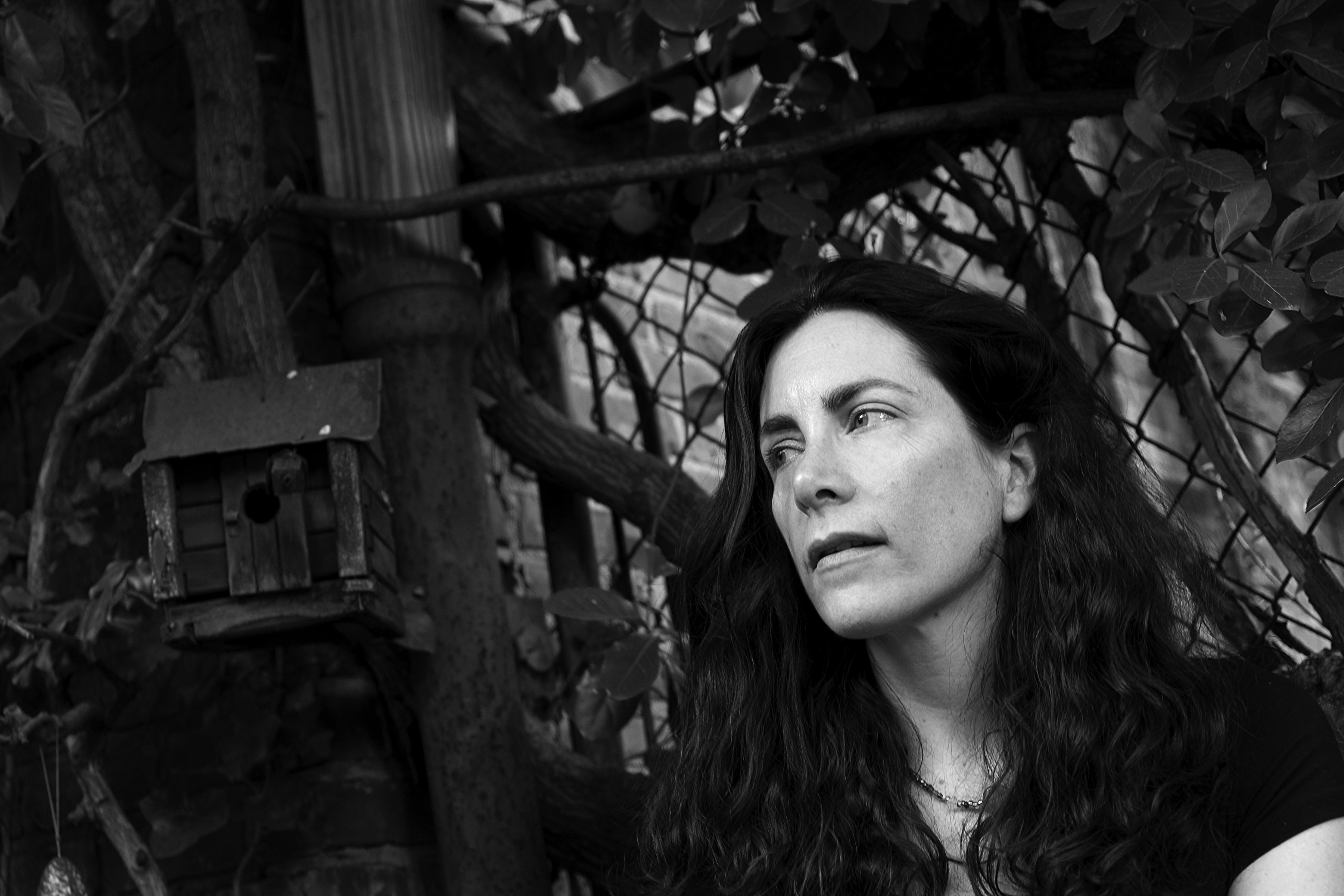
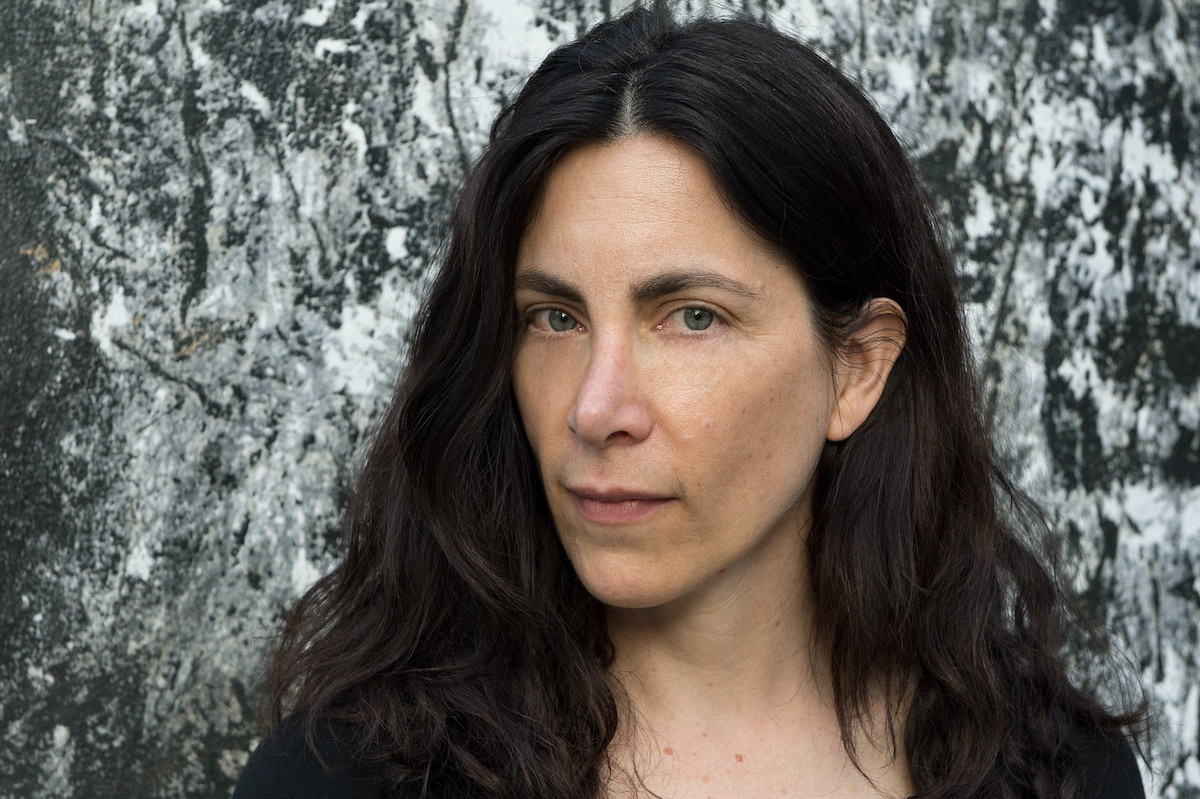
Photos by Ebet Roberts
For Diana Darby, music has never been a matter of performance alone, it has always been a form of excavation. The Chicago-based singer-songwriter approaches songwriting as both an artistic discipline and a deeply personal reckoning, digging beneath memory, grief, resilience, and uncertainty in search of something honest enough to illuminate the human experience. Her work inhabits the space where introspection becomes connection, where private wounds are transformed into shared understanding.
After a twelve-year absence from releasing a full-length record, Darby returns with ‘Otterson,’ an album shaped by a decade marked by profound loss, physical hardship, renewal, and creative persistence. What began during the isolation of the pandemic evolved into a collection of songs that bears the weight of lived experience while remaining remarkably open-hearted. Rather than documenting events, Darby captures emotional landscapes; moments of reckoning, fragments of healing, and the quiet revelations that emerge when one is willing to look inward without flinching.
Named in honor of visual artist and longtime friend John Otterson, the album reflects Darby’s belief that songs can function much like paintings: preserving fleeting emotions and transforming them into enduring works of art. If Otterson worked with canvas and color, Darby works with language, melody, and vulnerability, creating portraits of the inner life that feel both intimate and universal. The result is a record that resists easy categorization, embracing instead the complexity, contradiction, and beauty of being human.
At a time when division, uncertainty, and collective exhaustion seem woven into everyday life, Darby remains committed to the restorative power of art. She writes not from a place of certainty, but from a conviction that healing begins with honesty. Each song becomes an act of discovery, a journey inward undertaken with the hope that others might recognize parts of themselves along the way. With ‘Otterson,’ Diana Darby returns not simply as a musician, but as an artist dedicated to transforming hardship into meaning and offering empathy in an age that desperately needs it.
Huge thanks to Mark Linn at Delmore Recording Society for the connection and to Diana for her time.
James Broscheid: Twelve years passed between records, marked by personal upheaval and the enforced stillness of the pandemic. How did that extended silence reshape your relationship to your creative voice and identity, and did you feel you had to undergo a kind of self-healing before these songs could fully emerge?
Diana Darby: Where did the time go? The extended silence didn’t change a thing for me. I have always sought out solitude…it’s the only way I can hear the music that is inside of me. For me, songs emerge as part of healing, and writing is what heals me. So, it’s a process of writing and discovering repeatedly. The story of the twelve years will hopefully be documented in a novel I’ve been working on about caring for my ailing parents. It’s a dark comedy called, “Saving Bunny and Fofo.”
JB: Can’t wait to read that! You’ve described the songs on ‘Otterson’ as “portraits frozen in time,” yet your writing often reveals its meaning years later. How do you navigate releasing work that captures emotional states you may not yet fully understand or have finished processing?
DD: In the moment that I am writing a song, I feel confident I know what it’s about. But through the years, I have discovered that when I re-visit my songs, many of them reveal something different with the passage of time. It’s like when you stare at a painting and you see something new in it that you’d never noticed before, “Oh, there’s blue where I only saw yellow…” or you see an image you never saw. It’s the same with my music. When I wrote “Looking For Trouble,” I was writing about my dog, Trouble, who had just died. But what I realized months later is that the song has a second meaning for me – which is that in my life I have spent years literally chasing the very things that are bad for me…and like an addict, I keep chasing that which I shouldn’t want, but somehow can’t seem to stop chasing. Now when I have an instinct that is not in my best interest, I often hear a little warning voice in my head gently say, “You’re looking for Trouble.” And then I hear the song start playing.
JB: The album’s themes of loss and resilience seem to parallel your difficult transition from analog recording to digital tools. In what ways did that technical struggle influence not just the process, but the emotional texture and imperfections of the finished record?
DD: I’m not sure how much the technical struggles effected the album’s sound, but they definitely affected my mental health! I had a few happy accidents. One of them was on “Seattle Is Fine.” I played a midi instrument called a “condensenator” and somehow it ended up extending across some of the other tracks which created a really cool mood on the other parts. I don’t how it did it or why, but I kept it. But don’t ask me how it works. I really don’t know.
JB: Across the album, there’s a striking tension between intimacy and distance, as though listeners are both inside your thoughts and observing them from afar. How consciously did you shape that dynamic, and what do you hope it opens up for the listener?
DD: I didn’t consciously shape any dynamic. My songs are so personal, sometimes I wonder if I should even be putting them out or singing them before an audience. Then, I heard this amazing drummer/percussionist, Hamid Drake say on stage that he was an “inner-tainer”, not an “entertainer” and that really struck me. For the first time, I heard someone describe what it is that I do. I go inside and let people come along for the ride. But I need to feel like no one’s watching, because if I didn’t feel that way I’d be too self-conscious.
JB: You’ve stated the unifying theme of loss only became clear after the songs were written. What does that reveal to you about the role of the subconscious in your process, and do you think of songwriting more as discovery than intention?
DD: The subconscious plays a huge part in my process. There are the initial emotions that drive me to pick up my guitar and start playing… and then there’s something else, the voice inside of me that knows more than I do, that comes through me and has a deeper insight into me, than what I know about myself. Songwriting is always about discovery for me, and it usually leads me into places that I couldn’t touch any other way. My poetry teacher in Los Angeles used to always tell us to “get out of the way of our genius.” That’s a big part of what I do. He also said, “the ordinary is the enemy of the great, and don’t just bleed, bleed into the cup.” I bleed a lot.
JB: The presence of older recordings alongside newer material creates a kind of dialogue across time. How did revisiting past versions of yourself alter your sense of authorship, memory, and emotional continuity on this album?
DD: Listening to the older recordings was really a kind of time travel for me. I remember the emotional state I was in when I recorded each song, where I was and what was going on for me. There is a fragility in who I was then, that I still have now. I’m not sure how much I’ve changed over the years.
JB: Your connection to John Otterson’s artwork and life feels deeply embedded in the record. At what point did his influence shift from inspiration into something more personal—a mirror for your own experiences?
DD: The weird thing is everything changed for me when I re-watched the Super 8 movie (unreleased documentary) I made about John when I was in film school at USC. As I watch the movie now, I realize how much John and I have in common. We both went through so much adversity, but it was our art that kept us afloat. For John, it was his painting, and for me, my writing, both poetry and song. I knew that I wanted to call the album ‘Otterson,’ not just as a tribute to John, but also as a way of celebrating triumph for both of us. It wasn’t easy for me to get this album made, but like John, who had to re-learn how to walk again after a horrible accident, I just kept going. Each time I had a setback, I refused to give up.
JB: There’s a recurring sense of characters in your songs inhabiting emotional disguises or double lives. What draws you to these figures, and do they feel like extensions of your own psyche or reflections of the world around you?
DD: The two songs on ‘Otterson’ that do this are “Sara” and “I Saw You Today”. “Sara” was written about someone I knew, and the story I wrote about her came from the stories in my mind. The song was written from the emotion of betrayal, as I felt she had betrayed me. Whether or not she is leading a duplicitous life or not, I don’t know, but in my mind, I made that part of the lyric. “I Saw you Today” was also a song about betrayal. A jilted girl who is still so obsessed and lost from being dumped, that she is stalking her ex. She hopes to see him but not be seen by him. So, she puts herself near him but keeps a distance because it would be too painful to come face to face with him. Again, betrayal. And there’s also the feeling that she misses him so much, that she literally sees him everywhere. Everyone and everything reminds her of him and their life together. He is like a strange sort of mirage.
JB: It’s no surprise that many of these songs sit in emotionally intense spaces (tension, paralysis, cyclical thought). Do you see your writing as a way to document, understand, or exorcise those states, and how do you balance emotional honesty with self-preservation?
DD: I’m not that great at self-preservation. It’s not something I think about. I mainly just write and find that when I let myself touch the deepest places in myself, I come out the other side feeling better. Not going in is what often leads to cyclical thought and paralysis. Staying up in my head is what I do to protect myself, but it never helps. Only allowing myself to feel the pain helps.
JB: You’ve spoken about needing to “go in to come out” when creating. Has completing ‘Otterson’ changed your understanding of that process? Does it still feel necessary to enter those darker spaces, or has your perspective on healing evolved?
DD: No, it’s absolutely necessary. My process remains the same. I have to go in to come out. It is the only way.
JB: Sound-wise, the record blends nostalgic textures with more surreal, theatrical elements. How did you approach shaping that sonic palette so it serves the emotional core rather than functioning as stylistic homage?
DD: I listened to the songs and tried to give each one what I thought served the emotional content best. For example, on “Say Goodbye,” I really loved the idea of opening the track with the sound of thunder and rain. It just felt right, and brought the feeling of nature to it, a God-like quality, as if God were speaking and saying, “What have you done to my world?” With “Sunday is Waiting,” I found some midi instrumentation that added to the tension. I liked instruments that weren’t recognizable. As a whole, I didn’t like using the “real instruments” from midi, like violin, trumpet, or cello. Somehow, they weren’t real enough for me. I ended up gravitating towards the midi instruments with the weird names, like “Romulan Raindrops.” Those sounds functioned more as emotional accents which complimented my music.
JB: Your work has long engaged with themes of healing, from earlier songs to now. Do you see ‘Otterson’ as a continuation of that conversation with your past self, or does it come from a fundamentally different place as an artist?
DD: No, all of my songs are written from places in myself that I am trying to understand and heal. ‘Otterson’ is no different in that regard.
JB: Given your belief in music’s capacity to heal, do you see your role shifting toward something more collective? Maybe creating spaces where listeners can confront and move through their own emotions alongside yours?
DD: Yes. I sincerely hope that when people listen it helps them to go inside and to feel whatever is going on for them. I’ve had people write and tell me how much my music has helped them when they were going through difficult times. And when I was in Italy on tour, I had people often come up to me after a show and just gesture, clutching their heart. Even though they didn’t understand what I was saying because of the language barrier, they were moved emotionally. That meant a lot to me.
JB: With enough material from these sessions for more than one record, how did you decide which songs belonged on ‘Otterson’? What defines, for you, the moment when a body of work has fully captured a feeling?
DD: It was a process of trying some songs in a sequence and then removing them. Also, a few of the songs just didn’t have the quality I was looking for, or they had technical issues. In my film, John Otterson has a quote about that. He said, “I’ve known too many artists that never know when to stop. They tell me, I have the damndest time in knowing that last brush stroke. I’ve tickled them up too much.” Then John said, “When I come to the final point, I know damn well, that’s it!” And that is art isn’t it? Knowing what to put in but also, knowing what to leave out. After listening and listening, and asking myself will I be happy with this when I play this ten years from now, and have I done everything I could do to make it the best I can, and lastly when I’ve gotten sick of it, I think, yeah, I’m done.
JB: Looking back on the entire journey of personal loss, isolation, rediscovery, and creative friction, what challenged you most in making this album, and what did it ultimately reveal that you hadn’t previously been able or willing to face?
DD: What challenged me the most was the technical aspects of recording with new equipment and learning new software. I feel like that with this album more than almost any other album I’ve made, I faced my fears and conquered them. I am truly proud of myself for finishing ‘Otterson’ and it’s given me the courage to begin making two more albums with the same equipment. Only this time, I won’t be starting from scratch.
For more information, please visit Bandcamp | Facebook