
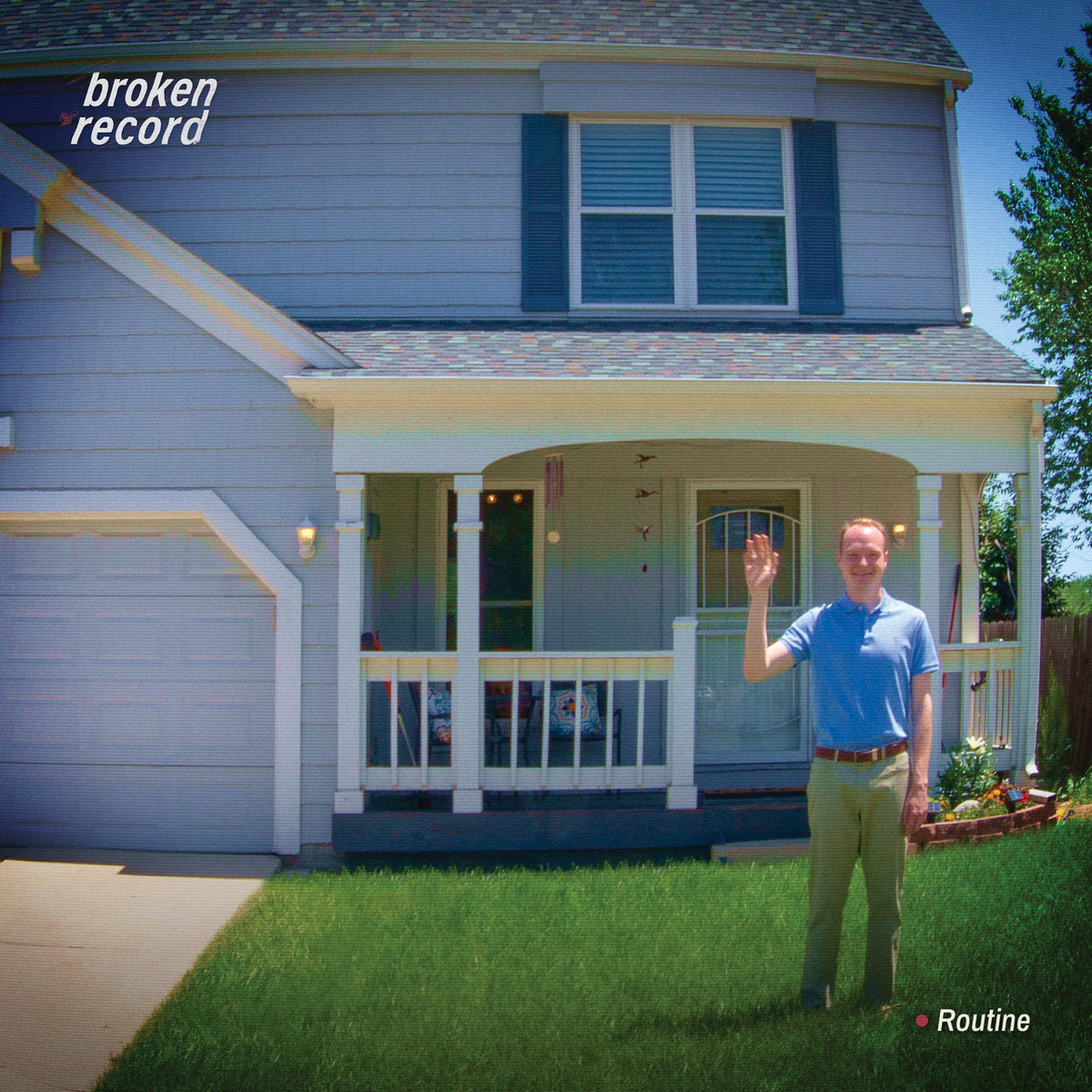
Routine is often described as the enemy of inspiration, a force that dulls curiosity and reduces life to repetition. Broken Record’s ‘Routine’ approaches the concept from a more nuanced perspective. Across ten concise yet emotionally substantial songs, the band examines the habits, frustrations, compromises, and fleeting victories that shape everyday existence. Rather than treating ordinary life as something to escape, the album finds drama within its patterns, exposing the psychological currents that run beneath familiar rituals and recurring disappointments. Driven by the creative partnership of Lauren Beecher and Justin Pizzoferrato, with Beecher serving as guitarist and vocalist alongside guitarist Larson Ross, bassist Corey Fruin, and drummer Dr. Nicholas Danes, ‘Routine’ presents a sharply observed portrait of contemporary restlessness. Its sound balances urgency and introspection, channeling elements of alternative rock, post-punk, and indie rock without becoming beholden to any single tradition. What emerges is a record that derives its power not from grand statements but from its ability to articulate experiences many listeners recognize yet rarely examine closely.
The opening track, “Drag,” establishes the album’s emotional landscape immediately. Its title suggests resistance, friction, and exhaustion, all qualities reflected in the song’s momentum. Beecher’s vocal delivery carries an appealing duality, projecting confidence while allowing vulnerability to seep through the cracks. The performance captures the sensation of moving forward despite emotional weight, setting the tone for much of what follows. That feeling intensifies on “No Vacation,” a brief but incisive examination of perpetual obligation. Lasting less than two minutes, the song wastes no time on excess. Its compact structure mirrors its subject matter, conveying a life compressed by responsibilities and expectations. Ross’s guitar work contributes a restless energy that prevents the track from sinking into resignation, while Fruin’s bass provides a steady undercurrent of determination.
“What Always Happens” explores the cyclical nature of human behavior. The title itself carries a sense of inevitability, and the song grapples with the patterns people recognize in themselves but struggle to change. Broken Record avoid presenting these cycles as purely negative. Instead, they acknowledge their complexity, recognizing that familiarity can offer comfort even when it limits growth. Beecher’s lyrics and vocal phrasing communicate this ambivalence with remarkable subtlety. One of the album’s most compelling moments arrives with “50% Sea.” The title evokes imbalance, partial immersion, and incomplete transformation, themes reflected throughout the composition. The song occupies a fascinating emotional space between certainty and doubt, suggesting a person caught between competing versions of themselves. Musically, the arrangement benefits from the band’s instinct for dynamics. Rather than relying on obvious contrasts, the track builds its impact through carefully measured shifts in intensity.
“Corner of the Room” narrows the focus from broad emotional states to physical and psychological observation. The song captures the experience of watching life from the margins, occupying a position of simultaneous participation and detachment. Its atmosphere feels intimate without becoming confessional. Ross and Beecher weave together guitar parts that create a sense of spatial depth, while Danes’ drumming provides subtle momentum beneath the surface.
The intriguing “T-60” introduces a more mechanical dimension to the album’s concerns. Whether interpreted as a countdown, a measurement, or a reference point, the song examines the relationship between time and anticipation. Its structure reflects that preoccupation, moving with deliberate purpose while maintaining a sense of unresolved expectation. The performance highlights the band’s chemistry, each musician contributing to a collective momentum that never feels forced.
On “Knife,” Broken Record deliver one of the album’s sharpest emotional statements. The track examines conflict, whether internal or interpersonal, through imagery that emphasizes precision rather than destruction. Beecher’s vocal performance is especially effective here, balancing restraint and intensity in a way that amplifies the song’s impact. The arrangement remains focused throughout, demonstrating the band’s confidence in simplicity when simplicity serves the material. The shortest track on the album, “Do It Yourself,” transforms self-reliance into both subject and philosophy. Its brevity reflects the directness of its message. The song rejects passivity without lapsing into self-help rhetoric, presenting independence as a necessity rather than an aspiration. Fruin’s bass work stands out particularly here, grounding the song’s kinetic energy with understated authority.
At over four minutes, “Nervous Energy” is the record’s longest composition and one of its most revealing. The song captures a distinctly modern condition: the conversion of anxiety into productivity, movement, and constant activity. Yet Broken Record recognize that such energy is often unsustainable. Beneath the propulsion lies a sense of depletion, creating one of the album’s richest emotional contradictions. Danes’ drumming deserves special recognition, navigating shifts in mood and intensity with exceptional sensitivity. Closing track “A Small Step” provides a fitting conclusion to the album’s central themes. Rather than ending with dramatic revelation, the song embraces incremental progress. Its title suggests modest achievements, but within the context of the record, those achievements carry considerable significance. After spending nine songs examining frustration, repetition, uncertainty, and self-doubt, Broken Record concludes by acknowledging the value of persistence. Change may arrive slowly, but it remains possible.
A major factor in the album’s success is the work of Pizzoferrato as engineer, mixer, mastering engineer, and co-producer alongside Beecher. The production achieves a delicate balance between immediacy and clarity. Every instrument occupies a distinct space within the arrangements while preserving the organic interplay that defines the band’s sound. Nothing feels excessively polished or artificially enhanced. The performances retain their humanity, allowing imperfections and personality to coexist with technical precision. What makes ‘Routine’ particularly impressive is its ability to elevate everyday experiences into subjects worthy of serious artistic examination. Many records seek significance through spectacle or conceptual ambition. Broken Record locate significance in smaller moments: recurring thoughts, familiar frustrations, subtle shifts in perspective, and the effort required simply to continue moving forward. These concerns may appear modest on paper, but the album demonstrates how deeply they shape human experience.
By the time ‘Routine’ reaches its conclusion, it has revealed itself as far more than a collection of songs about repetition. It is a thoughtful exploration of how people navigate lives shaped by habit, expectation, and uncertainty. Broken Record understand that routine can be both prison and foundation, limitation and necessity. Their debut transforms that contradiction into compelling art, resulting in an album that is emotionally intelligent, musically assured, and remarkably perceptive about the realities of contemporary existence.
Learn more here: Power Goth Recordings | Broken Record