
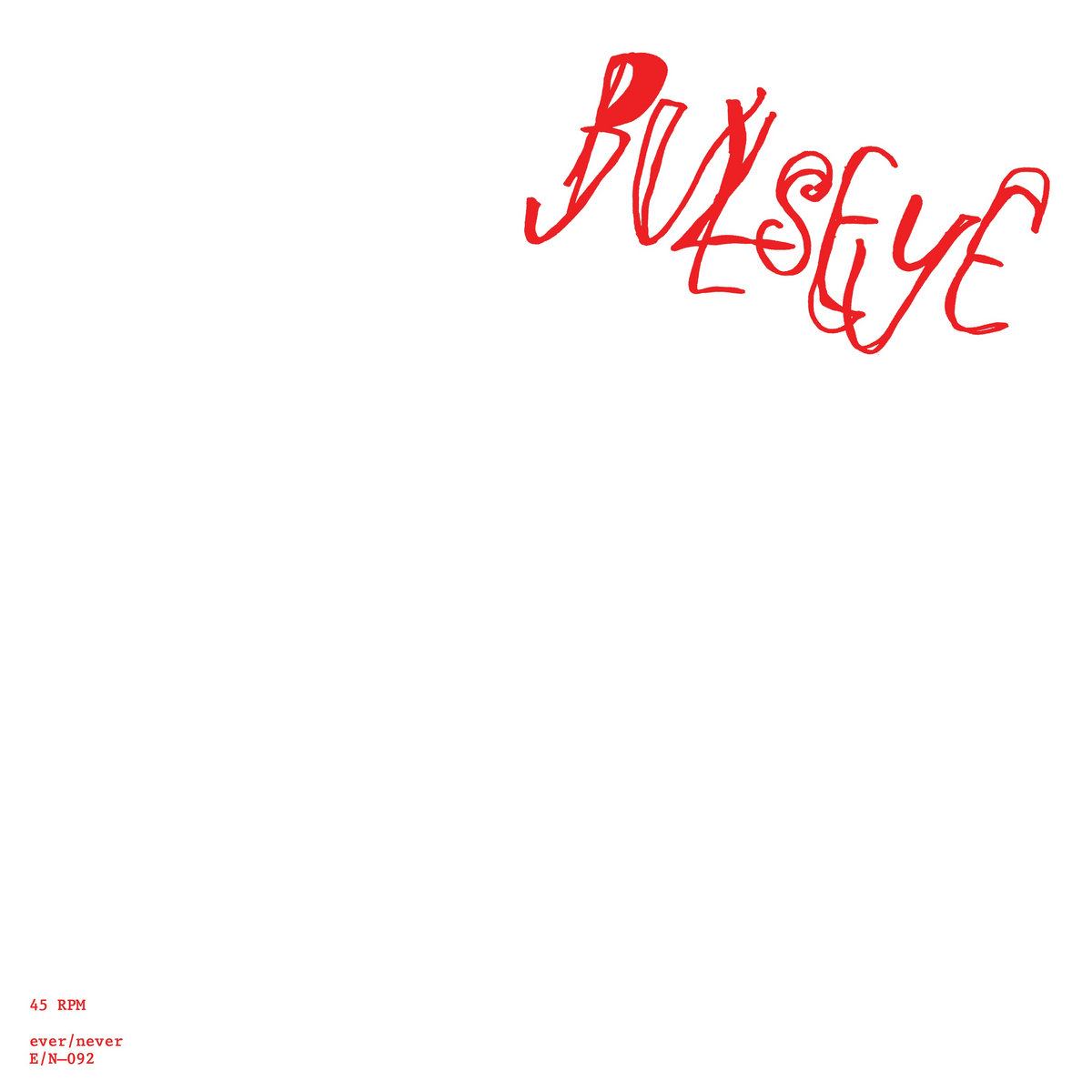
Bullseye’s self-titled release arrives with an appealingly stubborn conviction: good songs do not need to disguise their influences, inflate their importance, or mistake novelty for imagination. The New York City-via-Minnesota quartet takes the long American tradition of ringing guitars, compact melodies, romantic uncertainty, and plainspoken wit and makes it sound freshly lived-in. On ‘Bullseye’, Jake Barczak, Oliver, Clara, and Humberto build a small but remarkably expansive musical world, one that can accommodate the warmth of classic jangle-pop without becoming a museum piece. Their music knows its history, but it refuses to live in the past.
The most immediate pleasure comes from the guitars, which shimmer and chatter with the casual authority of musicians who understand that a memorable riff does not have to announce itself. The lineage is unmistakable: the Byrds and Gene Clark hover nearby, while the melodic instincts of Big Star and Buffalo Springfield provide deeper structural echoes. There are traces, too, of the wonderfully eccentric American underground represented by bands such as Blue Ash and Guided By Voices. Yet Bullseye never sounds like a tribute act. Their songs possess enough personality to turn those references into ingredients rather than destinations. “Angel’s Share” opens the record with a deceptively modest charm. Its brevity is part of its appeal, introducing the band’s knack for melody without overexplaining itself. The song seems to understand that a pop song can leave a little room around its edges; it does not need to fill every available second. That economy becomes increasingly important as the record progresses. Bullseye writes in miniature, but their miniatures suggest landscapes considerably larger than their running times.
“Blue Eyes Blue” carries a more wistful charge, balancing sweetness with an awareness that sweetness rarely survives untouched. Barczak’s songwriting has an unusually generous quality: even when the subject matter leans toward disappointment or uncertainty, the melodies resist self-pity. The guitars provide brightness without denying the shadows underneath. This is perhaps where the album’s Midwestern character becomes most apparent and not as regional caricature, but as an instinct for understatement, fellowship, and emotional directness. “Get Started” is one of the release’s most buoyant pieces, propelled by the sense that hesitation itself has become unbearable. The song’s energy is not merely youthful exuberance; it has the sharper perspective of someone who knows that waiting for the perfect moment is often another way of surrendering it. Bullseye’s gift is to turn that idea into something you can sing along with rather than something you have to contemplate from a distance. Their hooks are persuasive precisely because they never seem engineered.
Then comes “Dangers of the Heart,” a miniature that packs considerable emotional weather into 1:44. Its brevity does not make it slight. Quite the opposite: the song demonstrates how much expressive information a band can convey when it trusts its instincts. There is romance here, but no syrup. Vulnerability appears without theatrical pleading. The guitars give the song a wide-open American horizon, suggesting highways, changing skies, and the complicated freedom of moving without knowing exactly where you are headed. “Papillyou Papillons” is stranger and more playful, introducing a touch of eccentricity into the album’s otherwise tightly focused songwriting. Its title alone hints at Bullseye’s willingness to let language become part of the music’s texture and personality. The quartet is never so devoted to classic pop form that it forgets the pleasure of odd details. That quality keeps the record from becoming overly reverent. Bullseye may admire their forebears, but they are having too much fun to behave like archivists.
“Kid” is the clearest demonstration of Barczak’s ability to say more by saying less. At just over two minutes, it feels concentrated rather than abbreviated, with a melodic and lyrical directness that gives the song disproportionate weight. It is an affecting portrait of youth, distance, or perhaps the uneasy act of looking backward while still moving forward. The writing leaves enough unanswered that the listener can inhabit the song rather than merely receive it. The two digital bonus tracks, “Tell Tale Signs” and “Everything Is True,” extend the record’s emotional and melodic vocabulary. They are not mere afterthoughts appended to an otherwise complete statement. “Tell Tale Signs” continues Bullseye’s fascination with small revelations (the clues people leave behind without realizing it), while “Everything Is True” carries a more expansive emotional glow. Their inclusion makes the release feel less like a narrowly defined six-song document and more like a glimpse into a songwriting period with considerably more material beneath the surface.
Throughout, Oliver, Clara, Humberto, and Barczak play with the kind of restraint that can be harder to achieve than virtuosity. Nothing seems inserted merely to demonstrate ability. The classic guitar-bass-drums framework remains flexible enough to accommodate changes in mood, while the band’s collective sense of proportion keeps every arrangement in service of the song. That discipline matters. Jangle-pop can easily become decorative, but Bullseye understands that bright guitars mean very little if there is no human urgency behind them. ‘Bullseye’ is compelling in its refusal to confuse familiarity with predictability. The quartet draws from the golden age of popular songwriting, avoiding the sentimental haze that often accompanies retro-minded rock. This is not Americana in the polished, nostalgia-heavy sense. It is American music with its windows open: melodic, restless, funny, tender, and alert to the possibility that ordinary lives can contain extraordinary contradictions.
By the end of “Everything Is True,” Bullseye has made a persuasive case for the enduring power of direct songwriting. The record does not demand that listeners marvel at its cleverness. Instead, it offers melodies sturdy enough to remember, guitars bright enough to follow down the road, and songs emotionally open enough to acquire new meanings with time. In an age when musical identity can become an elaborate performance of difference, Bullseye makes a quieter argument: originality can emerge from knowing what you love, understanding why it works, and having the confidence to make it your own. ‘Bullseye’ is modest in scale but generous in spirit and is a record with the rare ability to make the familiar feel personal again.
Learn more links:
Bandcamp
Bluesky
Tumblr
Instagram
Twitter