
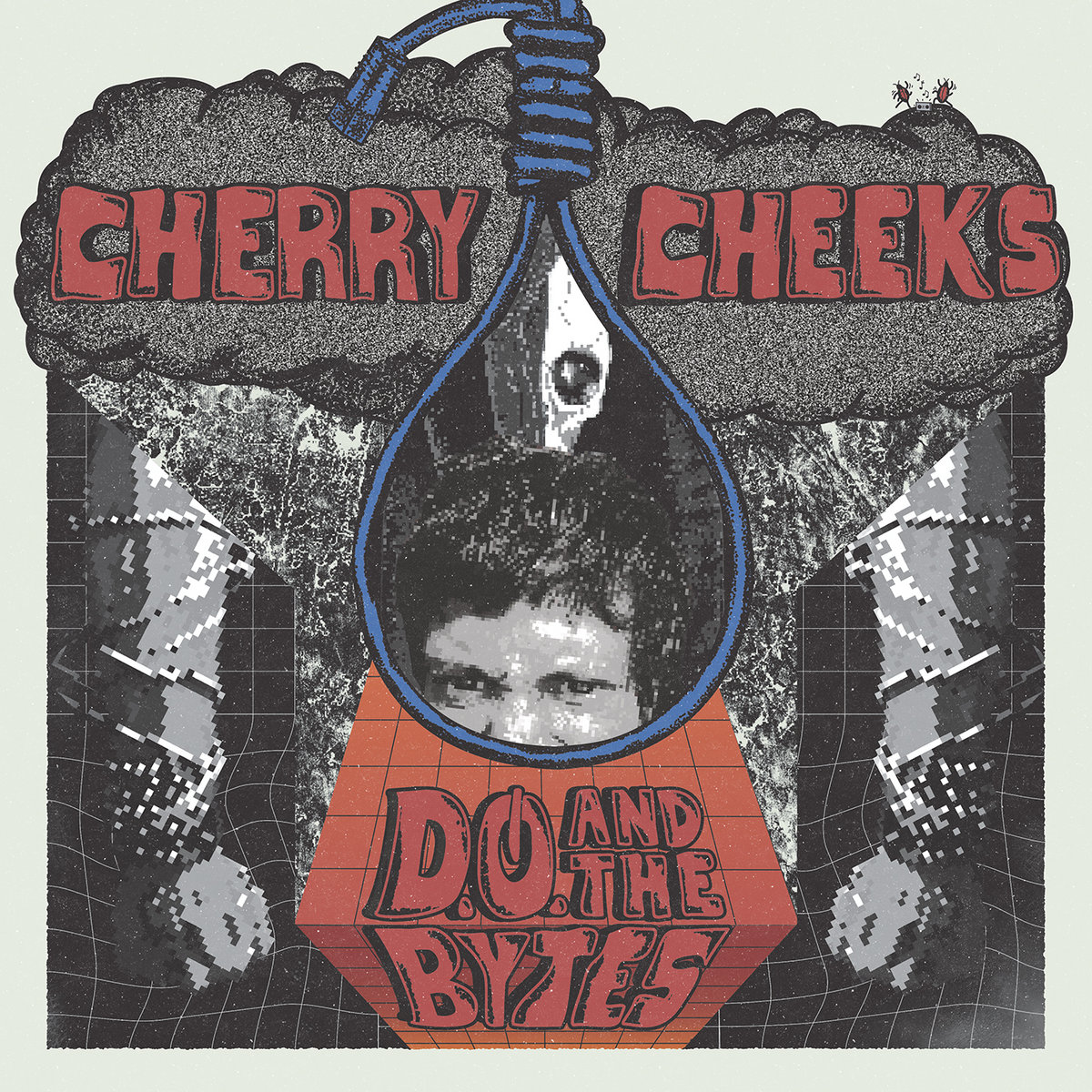
‘D.O. & The Bytes’ by Cherry Cheeks understands something that many concept records forget: a story does not need to become self-important simply because it has a plot. Across fourteen compact songs, Kyle Harms turns a tale of digital persecution, memory, identity, and resistance into a brightly colored punk-rock cartoon with enough melodic intelligence to keep its machinery running long after the joke has landed. The album follows D.O., a digital hero pursued by the sinister Reapers, whose mission is to erase his memory. That premise could easily have collapsed into novelty, but Harms gives the narrative genuine momentum, treating each song as another scene in a larger adventure while keeping the music immediate enough to work even when the listener is not following every detail.
“D.O. Theme” is an appropriately brisk introduction, establishing the record’s cartoonish sense of purpose without wasting time on elaborate exposition. At under two minutes, it feels like the opening credits to a Saturday morning serial: quick, memorable, and instantly aware of its own mythology. That economy becomes one of the album’s defining strengths. Harms rarely allows a song to linger simply because it can. Most tracks arrive, make their point, plant a hook, and disappear before their welcome has expired. “Dataset” moves the story deeper into its technological universe while retaining the straightforward propulsion of punk. The title sounds clinical, but Cherry Cheeks refuse to let the terminology become sterile. Harms understands that the vocabulary of computers can be made surprisingly colorful when placed inside a rock narrative. The album’s technology is not merely futuristic decoration; it becomes a way of examining memory, control, and individuality through exaggerated comic-book imagery.
“Intruder” sharpens the sense of pursuit. The song’s compact structure gives it the urgency of an interruption, as though some hostile presence has suddenly breached D.O.’s protected world. “Rust” follows with a different kind of deterioration, turning decay into another component of the album’s digital mythology. The contrast is telling. Harms is interested in technology, but he does not portray the digital world as pristine or immortal. Corrosion, obsolescence, vulnerability, and failure remain part of its landscape. “Cruel Bore” provides one of the album’s more mischievous moments, demonstrating how deliberately silly the concept can become without sacrificing musical conviction. That balance is crucial to the record’s personality. The humor never feels like an apology for the music. Instead, the jokes and absurd scenarios are embedded within songs that are constructed with enough care to stand independently. Harms understands that punk has always had room for exaggeration, satire, fantasy, and theatricality.
“D.O. Gets Hitched” pushes the narrative into another unexpected direction, giving the protagonist’s story a humanizing detour. It is precisely this willingness to make the plot ridiculous, affectionate, and unpredictable that keeps the concept alive. A lesser album might treat its fictional universe as an excuse for disconnected genre exercises. Cherry Cheeks instead build continuity from one miniature episode to the next. “Memories” brings the album’s central concern into sharper focus. If D.O.’s enemies want to erase his memory, then memory becomes more than a plot device; it becomes the foundation of identity. The song consequently gives greater significance to the record’s otherwise playful premise. What remains of a person when their history can be deleted? Can identity survive without continuity? The album never pretends to answer such questions philosophically, but it makes them entertaining enough to linger.
That idea flows naturally into “World Wide Web,” where the record’s comic-book technology becomes a broader image of connection and exposure. The web can unite people, but it can also become a mechanism of surveillance, vulnerability, and control. Cherry Cheeks approach these contradictions through punk’s familiar instinct for compression: rather than delivering an extended argument, Harms turns complicated anxieties into concise songs with memorable titles and forceful melodic shapes. “86 Years Old” is an especially intriguing title within the story because it disrupts the album’s otherwise overtly technological vocabulary. Its presence suggests that the world of D.O. contains more than machines and futuristic villains. Age, mortality, memory, and human experience remain embedded in the narrative. The song contributes to the record’s larger suggestion that technological progress does not erase the oldest questions about existence.
“Spying Eyes” makes surveillance explicit. The phrase immediately evokes the paranoia surrounding D.O.’s predicament, but the song also gives the album a contemporary resonance. Digital life has made the idea of being watched almost mundane, which makes the cartoon framing more effective rather than less. Cherry Cheeks can exaggerate the premise because the underlying fear is already familiar. The Reapers may be fictional antagonists, but the anxiety surrounding them is recognizable. “Reapers” is where the antagonists receive their fullest musical presence. By this point, the album has carefully established the stakes, allowing the title to carry more weight than it might have at the beginning. Harms keeps the track rooted in punk rather than turning it into theatrical rock, preserving the sense that this story is being told from within a basement, garage, rehearsal room, or imaginary Saturday morning broadcast.
“Computer Court” introduces another wonderfully absurd chapter, transforming technological anxiety into something resembling a bureaucratic nightmare. The title alone captures one of Harms’ sharpest instincts: taking the impersonal language of technology and giving it the absurdity of human institutions. D.O. is not merely fighting monsters; he is caught inside a system, and systems can be every bit as strange as villains. “Digital Hero” then brings the protagonist into clearer focus. Heroism here is deliberately uncomplicated. D.O. does not need to become a tortured antihero or a philosophically conflicted savior. He exists within the clean moral architecture of a cartoon, which allows Cherry Cheeks to reclaim a kind of innocence without sounding childish. Punk has always had an affinity for outsiders who refuse the terms imposed upon them, and D.O. belongs naturally to that tradition.
The penultimate “Bytes’ Ballad” provides an unexpectedly tender title for an album otherwise packed with technological threats, surveillance, pursuit, and comic-book danger. It offers a reminder that beneath the concept is a songwriter interested in melody. Harms’ ability to move between toughness and pop appeal is central to the album’s charm. The hooks are not decorative elements attached to a story; they are what make the story believable as music. That is also why ‘D.O. & The Bytes’ avoids the trap of novelty. Kyle Harms wrote, performed all the instruments, produced the record, and even handled its artwork, making the album an unusually concentrated artistic statement. Rather than sounding like an ensemble attempting to realize someone else’s elaborate concept, it has the focused personality of one musician building an entire fictional universe from the ground up. The DIY scale is part of its appeal, but so is the confidence with which Harms commits to the premise.
Cherry Cheeks have made a punk record that understands the value of spectacle without sacrificing songwriting. “D.O. Theme,” “Dataset,” “Memories,” “Spying Eyes,” and “Digital Hero” all contribute to a coherent narrative, yet none requires the listener to study a mythology beforehand. The songs work first as songs, then as chapters in a larger story. That order matters. ‘D.O. & The Bytes’ invites the listener to grab the cereal, tune into the cartoon, and surrender to its brightly rendered world of digital heroes and hostile Reapers. Beneath the fun, however, sits a surprisingly serious preoccupation with memory, technological control, and the struggle to preserve an individual identity. Harms understands that punk does not need to choose between intelligence and entertainment. It can be funny, melodic, concise, absurd, and politically alert without announcing its ambitions. Cherry Cheeks simply plug in, turn up the volume, and let D.O. fight for his memory one hook at a time.
Learn more links: