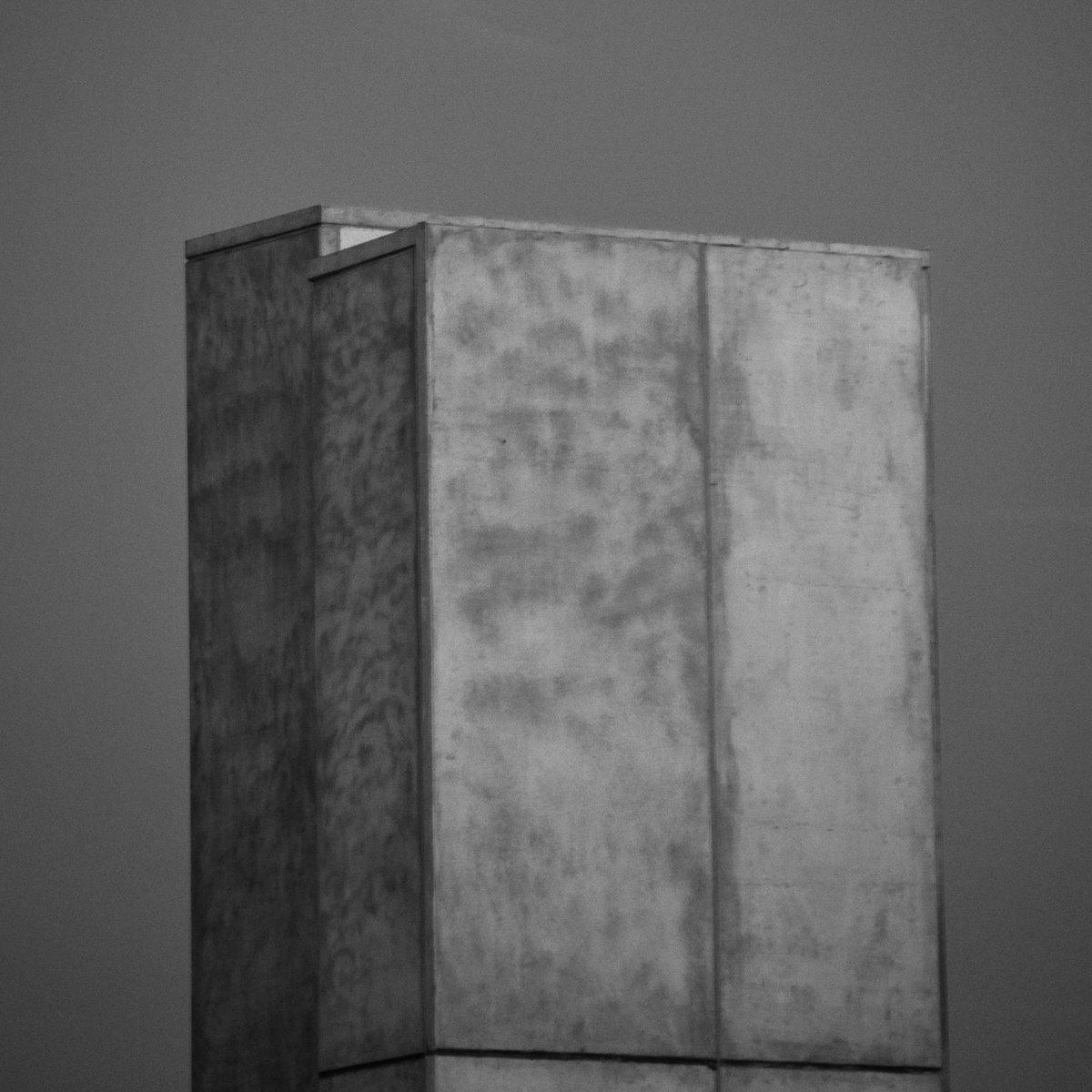
The architecture of memory and the physics of loss find a singular resonance in ‘Any Sense of Where We Were Gone,’ a profound improvisational framework by Conner Simmons. Captured during a live performance at Arnie Lawrence Hall, this recording operates as a fragile, breathing entity, obsessed with the infinite scale contained within the minute and the breakable. Drawing deep thematic water from the postmodern labyrinth of Julio Cortázar and the cold certainties of geometry, Simmons has crafted a suite for chamber ensemble, prepared piano, and electronics that feels less like a traditional composition and more like a collective act of sifting through the wreckage of the present moment.
The opening movement, “admission of a lack,” establishes a sonic environment of profound vulnerability. The title (a nod to the inherent reduction of any human action), is mirrored in the delicate layering of the ensemble. Talia Fuchs provides a vocal presence that is both haunting and grounded, floating over the woody resonance of Arjan Singh’s bass clarinet and the shimmering, metallic textures of Alana Amore Colvin’s guitar. As Leni Kreienberg weaves electronic shadows through the acoustic frame, the music suggests a protest against the inadequacy of time itself, moving with a deliberate, searching grace.
The record breathes through its transitions, specifically the two connective tissues: “interlude” and “interlude, elsewhere.” These pieces, composed later than the primary movements, act as portals between states of being. They allow the listener to dwell in the mercurial, where the strings of Sathvi Ramaseshan and Sunjay Jayaram on violin, Will Ruff on viola, and Ceridwen McCooey on cello create a spectral, undulating canopy. Within these spaces, Simmons’ own contributions on double bass and piano preparations offer a visceral, percussive grounding, reminding us of the physical reality of the instruments even as the electronics pull toward the ethereal.
In “explain it to itself as wind,” the ensemble achieves a remarkable state of cohesion through digression. The music mimics the invisible, shifting force of its title, where melodic fragments emerge and dissolve before they can be fully grasped. It is here that the improvisational spirit of the players gathered by Simmons is most evident; the performers seem to move as a single organism, navigating a landscape where every silence is as weighted as every note. The interplay between the traditional chamber quartet and the modern interventions of the electronics creates a sound that is both ancient and avant-garde.
The culmination arrives with “in all possible worlds,” a title that suggests a frantic, beautiful exploration of potentiality. This final movement gathers the threads of the previous sections into a dense, emotionally charged atmosphere. It serves as a reminder that every musical choice is an admission of what was left unplayed. Conner Simmons has managed to document a moment of genuine discovery, proving that even in the admission of a lack, there is an abundance of beauty to be found. This record is an essential document for anyone interested in the point where contemporary classical structure meets the wild, unpredictable heart of spontaneous creation.
Visit Sawyer Editions to learn more.