
Eddie Skuller’s “House Where Nobody Lives” begins with a place that has been emptied out. A cracked window, peeling paint, weeds at the door, birds in the chimney, an old chest of drawers left behind. These details give the song its visible shape, but the feeling moves past the house almost immediately. Originally written by Tom Waits for Mule Variations, “House Where Nobody Lives” is an emotional ballad about what happens when love is gone and ordinary things lose the warmth that once made them matter.
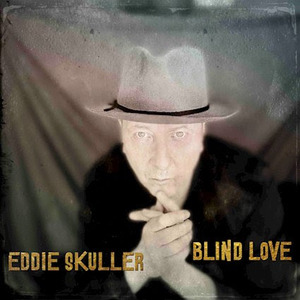
Skuller’s version, taken from his Blind Love EP, does not treat the song like an untouchable Waits artifact. It lets the material breathe through another temperament. Waits’ writing already carries its own shadow, grit, and moral weight, so Skuller does not need to force those qualities harder. His interpretation moves toward something softer and more melodic, with a sadness that feels bruised rather than theatrical. The result is tender without becoming polished flat.
That balance gives this version its pull. “House Where Nobody Lives” has the feeling of an old radio song heard in motion, familiar before it explains itself. It moves slowly, with the patience of roots music and the ache of a ballad that trusts its own plainness. The arrangement does not chase a dramatic peak. It lets the melody sit, lets the phrases return, and lets the feeling gather weight through repetition. Grief does not always become louder when it gets closer. Sometimes it becomes quieter and harder to avoid.
The lyric’s directness is part of its force. The song begins by looking at a neglected house, then gradually turns toward the human loss underneath it. Once there was laughter. Once there were dreams. Someone left, someone broke, someone failed to understand what was worth keeping. By the end, the details have opened into something plain and devastating: a house can have a roof, doors, wood, and rooms, but those materials alone cannot make it grand.
Recorded live to 2 inch tape with no vocal overdubs, the performance carries the slight exposure of something happening in real time. Too much polish would work against it. Producer Nick Kinsey gives the track room at The Chicken Shack Studio in upstate New York, keeping the recording warm without gloss and intimate without preciousness. It feels held together by musicians listening closely, leaving the song enough space to ache.
Skuller’s vocal sits at the centre of that intimacy. His delivery has a crooner’s sense of phrasing, loosened by air, age, and feeling. He does not push the song toward imitation, which is the more difficult choice in a cover this closely tied to Waits. Instead, he lets the words carry their own ache. The performance respects the original by refusing to dress itself up as reverence. It sounds like Skuller is singing from inside the feeling, not admiring the song from a distance.
The band keeps the same careful measure. Jack Skuller’s guitar, Jeremy Chatzky’s bass, Kinsey’s drums, percussion, and keyboards, and Ryder Cooley’s accordion give the track a worn, intimate warmth. The accordion is especially well placed, adding a faint drift without pulling attention away from the vocal. Everything stays close to the ground, leaving enough roughness for the song’s beauty to feel earned.
The lyric video stays secondary, which suits the track. Blurry footage of trees and buildings moves behind the words, giving the song atmosphere without turning it into a separate visual statement. The images remain indistinct enough to let the performance lead.
As the focus track from Blind Love, “House Where Nobody Lives” also clarifies Skuller’s relationship to Waits’ writing. The EP is a tribute, but this performance is strongest when it feels personal. Skuller is drawn to songs where darkness still leaves room for tenderness, where lost love can be mourned without being buried completely. Here, hope does not arrive as uplift. It arrives in the recognition that what was lost mattered.
That is what makes this version linger. Skuller does not make “House Where Nobody Lives” larger than it needs to be. He makes it human. The abandoned house remains cracked and cold, but the song’s real weight comes from the quiet ache behind the image. Skuller sings it as something downcast, beautiful, and plainspoken, a cover that understands the original by letting it hurt softly.
“House Where Nobody Lives” is out now, with Blind Love available digitally. Check out the full EP for Skuller’s wider tribute to Waits’ songwriting, including “Blind Love,” “Downtown Train,” and “You Can Never Hold Back Spring.”
House Where Nobody Lives video
Blind Love EP
Get the EP
Spotify
Apple Music
You Can Never Hold Back Spring video
Downtown Train
Eddie Skuller online:
Website
Bandcamp
Facebook
Instagram
YouTube
Spotify
Apple Music