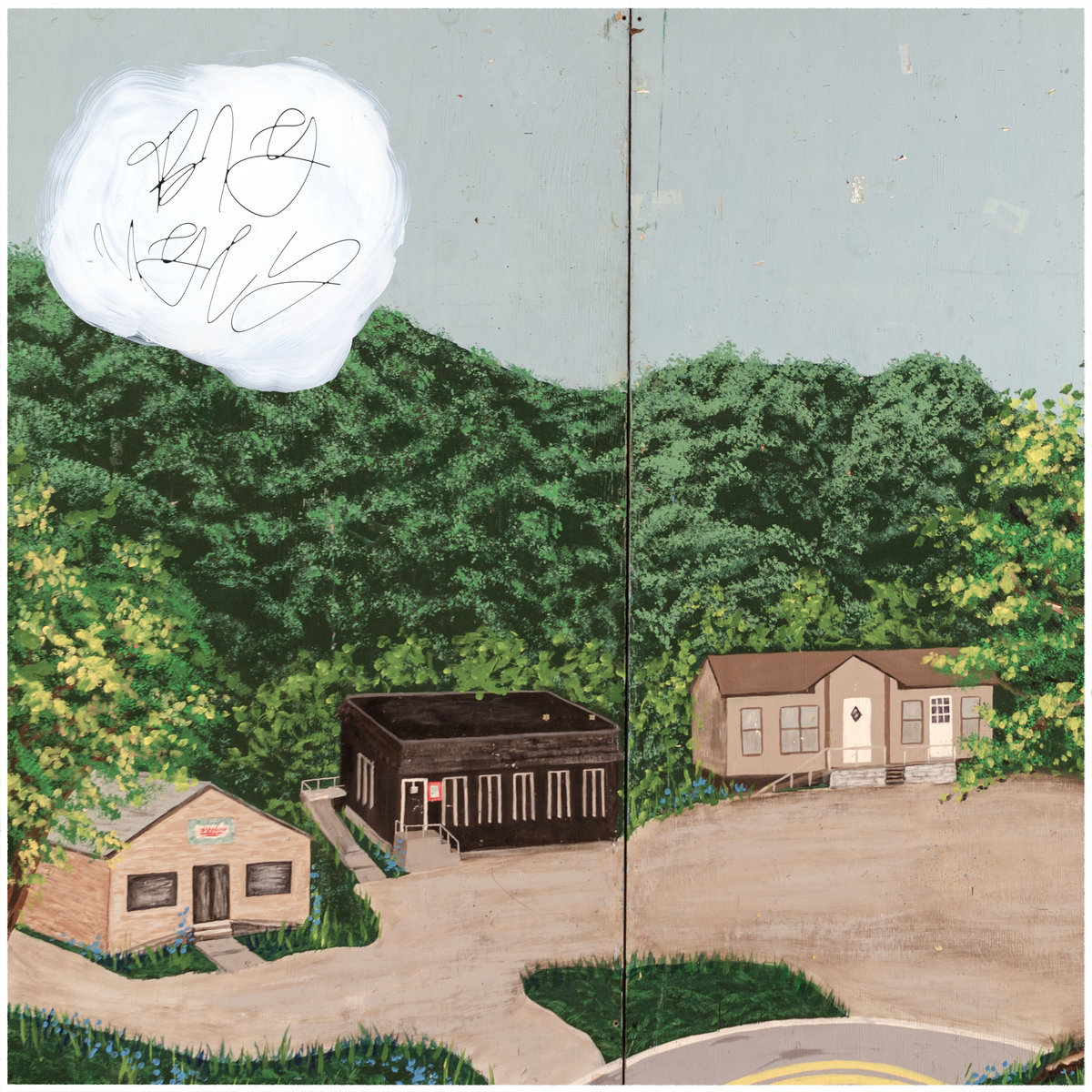
‘Big Ugly’ understands something fundamental about Southern stories: they don’t arrive polished, and they don’t resolve neatly. They accumulate. They seep. They linger the way humidity does, clinging to memory long after you’ve tried to escape the heat. On their third album, Fust, led by songwriter Aaron Dowdy, delivers a record that feels less like a collection of songs than a lived-in landscape, one shaped by erosion, devotion, and the stubborn love people carry for places that have hurt them.
Dowdy has always been an acute observer, but ‘Big Ugly’ sharpens his vision without sanding down its rough edges. The album opens with “Spangled,” a track that immediately announces its scale. Pedal steel, piano, and layered guitars create a surround-sound effect that feels architectural, as if the song were built from the remains of the demolished hospital it describes. Dowdy’s narrator wanders through decaying infrastructure and abandoned promises, circling the idea of heaven not as salvation but as a place that used to mean something. It’s a ghost story without specters, only absence, and it sets the tone for an album deeply concerned with what remains after belief, industry, or certainty have collapsed.
Where “Spangled” stares into the distance, “Gateleg” narrows its focus. Dowdy is especially gifted at making the small feel momentous, and here he finds meaning in a general store and the fragile hope of opting out of grinding labor to help a friend instead. The song’s easy jangle belies the tension underneath; even acts of kindness feel provisional, liable to break like an old car or a false dawn. This push and pull between warmth and precarity, comfort and threat, runs throughout ‘Big Ugly.’
Musically, the album is Fust’s biggest and most confident statement yet. Produced by Alex Farrar, the record balances grit and glow with remarkable ease. “Mountain Language” leans into grungy Southern rock, its guitar solo cutting through lyrics about limited options and shared struggle. What could have been a regional lament becomes something closer to solidarity: differences flatten when everyone has grown up speaking the same language of scarcity. Elsewhere, “Bleached” slows the pace, bathing Dowdy’s voice in synths and a swelling chorus that feels almost hymnal. Angels appear, as they often do in Southern music, but not as saviors, more like witnesses to an endurance that doesn’t ask for redemption.
The album’s emotional center arrives gradually. “Sister” is devastating in its restraint, lingering on ordinary objects; bread, light, silence, that become unbearable in the aftermath of loss. Dowdy’s writing here is plainspoken but exacting; grief doesn’t need metaphor so much as patience, and the song allows it space to breathe. By the time the record reaches its closing stretch, “Jody,” “Big Ugly,” and “Heart Song,” the themes of love and survival are fully entwined. “Jody” captures the grim bargain of drinking your way through a relationship that refuses to end, while the title track reckons with the inescapability of home. Loving a place like ‘Big Ugly’ isn’t about pride or denial; it’s about acceptance, about acknowledging the mud that runs through you and choosing not to scrub it away.
What makes ‘Big Ugly’ remarkable isn’t just its specificity, though the gas stations, highways, and first-name characters feel uncannily real, but its generosity. Dowdy writes from a position that is both insider and outsider, loving the South without mythologizing it, critiquing it without condescension. Like the best Southern storytellers, he understands that beauty and ugliness are not opposites but companions. This album doesn’t try to redeem the past or escape it. It preserves it, cracks and all, and in doing so offers something rare: a language for loving what’s broken without pretending it isn’t.
Learn more by visiting: Website | Bandcamp | Dear Life Records | Instagram