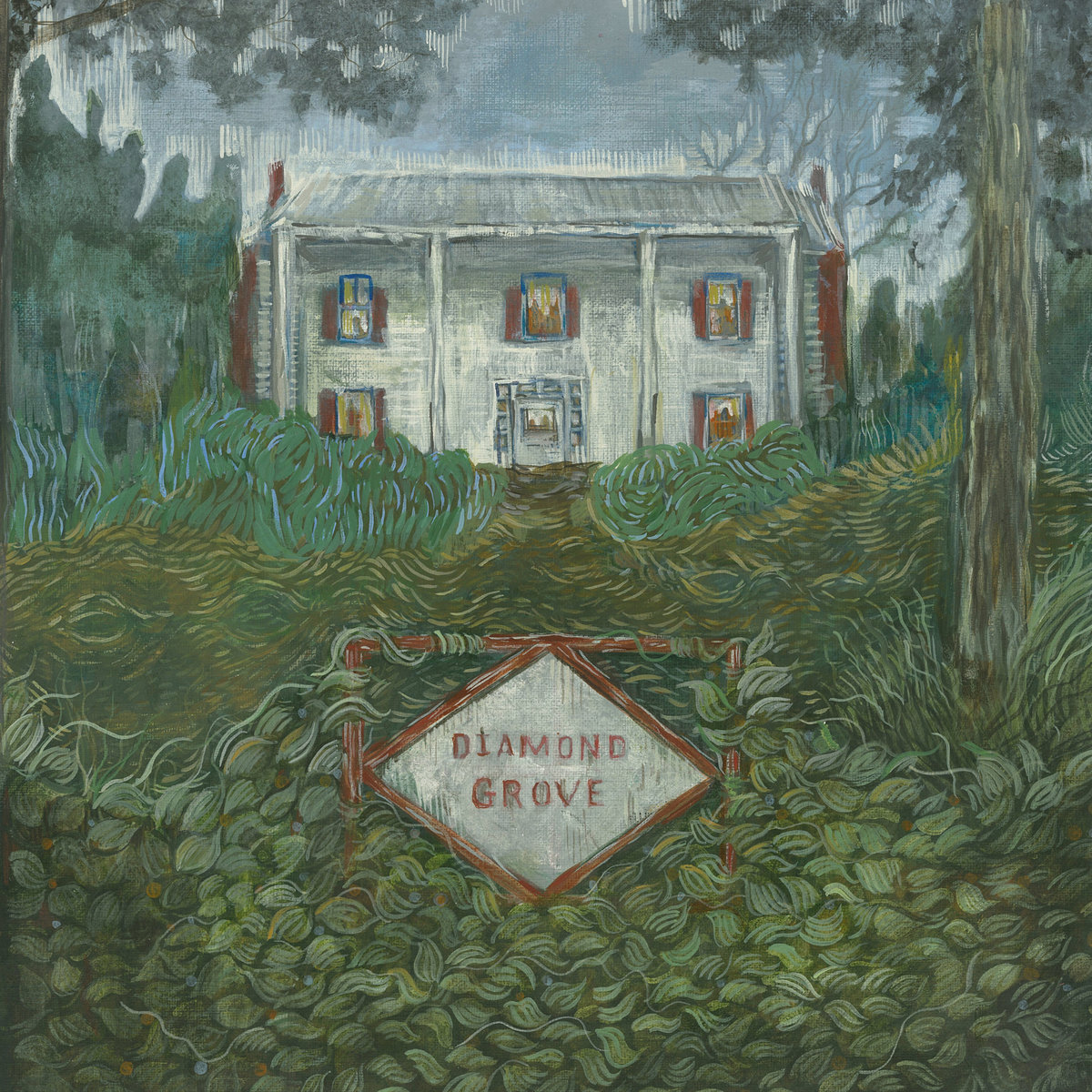
‘Diamond Grove’ unfolds like a place you don’t so much visit as remember. Weirs’ second album feels suspended between rooms, eras, and states of mind, as if folk music itself has been taken apart and allowed to drift before reassembling into something newly strange. The North Carolina collective treats tradition not as a script to be followed but as a set of materials to be touched, bent, and listened to closely. What emerges is neither revival nor rupture, but a living, breathing continuum where old songs learn how to speak in the present tense.
The album opens with “I Want to Die Easy,” a hushed, hymn-like invocation that establishes the record’s porous boundaries. Voices, drones, and room tone intermingle, as though the song is less performed than allowed to surface. Recorded on a former dairy farm in rural Virginia, the album absorbs its surroundings with unusual intimacy. Floors creak, insects murmur, and air seems to move between the microphones. These aren’t decorative details but structural ones: the space shapes the music as much as the musicians do. Pieces like “(A Still, Small Voice)” feel almost like moments of collective listening, where ambient sound and human presence blur into one. Diamond Grove doesn’t document a session so much as a gathering, capturing the sense of people inhabiting songs together rather than performing them at a distance.
At the center is Oliver Child-Lanning’s voice, a steady, human anchor amid shifting terrain. His singing carries the weight of familiarity without settling into comfort, guiding the listener through hymns and ballads that feel both ancient and unsettled. On “Lord Randall,” the traditional murder ballad unfolds slowly, its narrative stretched thin and suspended over droning textures that make time feel elastic. The sprawling “Lord Bateman” pushes this approach even further, allowing story to dissolve into atmosphere as strings, voices, and electronics circle one another in long, patient arcs. Traditional material is extended until its seams show: melodies linger, harmonies bloom and decay, and narrative gives way to sensation. When songs open into abstraction, it feels less like experimentation for its own sake and more like an honest response to time passing and meaning slipping.
The ensemble’s instrumentation reinforces this sense of permeability. Fiddles, dulcimers, banjos, organs, and layered voices merge into dense, glowing clusters, while electronics and subtle tape decay gently erode any sense of historical purity. Hymns like “Everlasting” and the brief, reverent “Doxology (I)” flicker between devotion and dissolution, their forms softened by processing and repetition. Even the stark tragedy of “Edward” is reframed through ambient shading, the familiar ballad rendered strangely weightless. The past isn’t preserved here, it’s mediated, distorted, and re-encountered, the way folk music actually survives: through misremembering, translation, and drift.
The album’s long-form pieces are especially striking in their patience. Weirs are unafraid to stay with a moment, allowing textures to unfold slowly and unpredictably. Extended drones and gradual transformations create a sense of breath, of music inhaling and exhaling over vast stretches of time. These passages don’t aim for catharsis so much as immersion, rewarding attention with subtle shifts and fleeting beauty.
What makes ‘Diamond Grove’ so compelling is its emotional clarity beneath the abstraction. Despite the layers of noise, processing, and conceptual weight, the record remains deeply grounded in human presence. It suggests a continuity between work and song, past and present, individual and collective. In Weirs’ hands, folk music becomes a site of encounter rather than nostalgia; a way of slowing the current just enough to hear what’s been carried along with it.
‘Diamond Grove’ is a demanding listen, but a generous one. It asks you to let go of linear expectations and settle into its strange, welcoming flow. In doing so, it offers something rare: a sense that the old songs aren’t behind us or ahead of us, but moving alongside us, altered by time and still capable of surprise.
Find out more by visiting: Bandcamp | Dear Life Records | Instagram