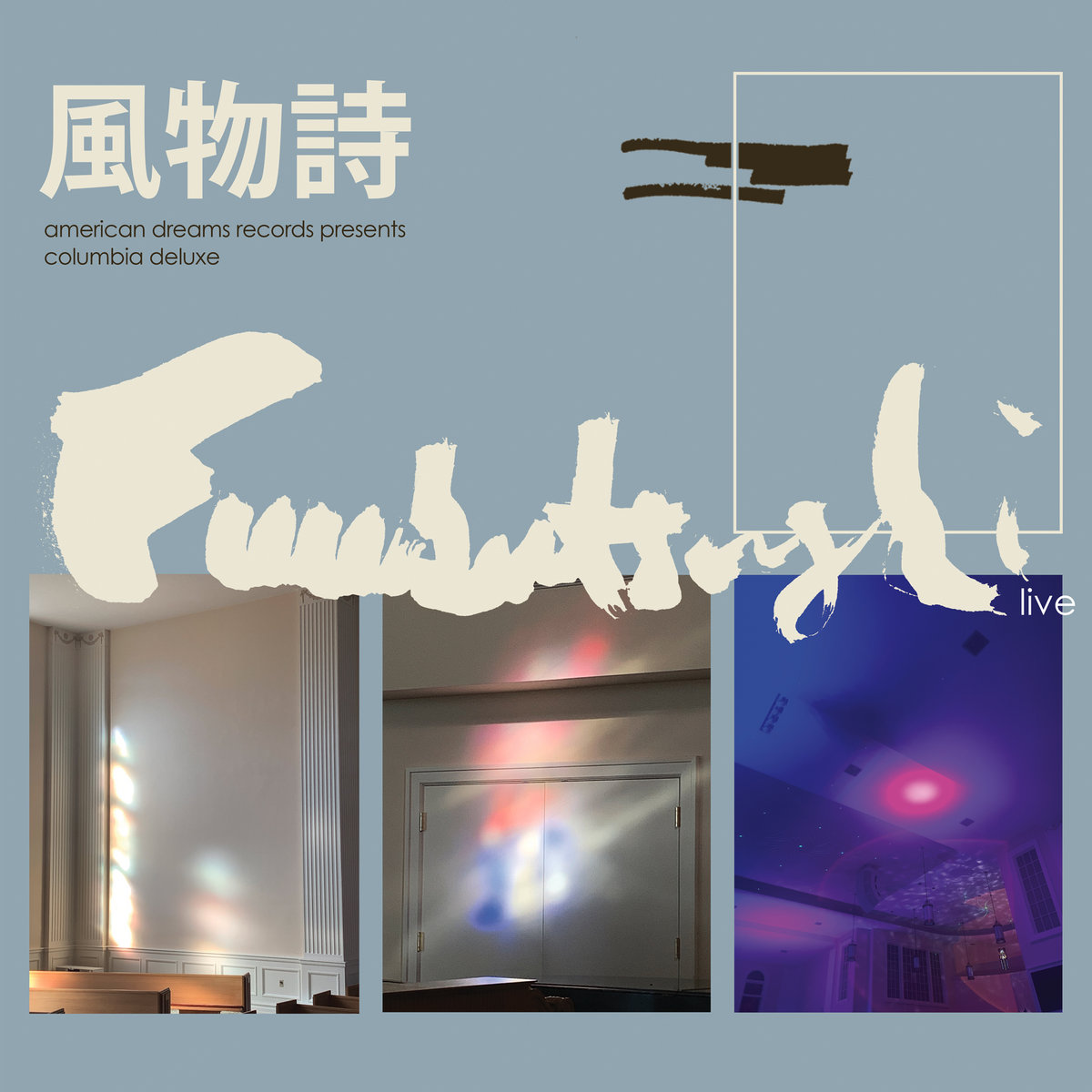
The transition from a remote, patchwork existence to a shared physical space is a metamorphosis that few recording projects survive with their intimacy intact. For Fuubutsushi, a quartet born of digital distance and domestic isolation, the performance captured at the Columbia Experimental Music Festival represents a vital crystallization of their seasonal experiments. The music is not merely a reproduction of previous themes but an expansion of the group’s collective breath, recorded within the resonant sanctuary of the First Baptist Church in Missouri. Across these movements, Patrick Shiroishi, Chris Jusell, Matthew Sage, and Chaz Prymek prove that their chemistry is as much a product of telepathic intuition as it is of careful arrangement.
The architecture of the church plays a primary role in the sonic identity of the record, acting as a fifth member of the ensemble. In “Bolted Orange,” the high ceilings and stone surfaces transform the interplay between Shiroishi’s saxophone and Jusell’s violin. Rather than competing for frequency space, the instruments utilize the natural reverb of the sanctuary to overlap in luminous, blurred layers. Shiroishi’s breathy woodwind textures are caught and sustained by the room’s long decay, providing a soft cushion for the violin’s more pointed, melodic inquiries. This acoustic environment allows the instruments to hang in the air, creating a shimmering weightlessness that defines “Loop Trail” and “Shepherd’s Stroll.”
Prymek’s guitar and bass work, alongside Sage’s piano and synthesizer, provide a grounding force that prevents the sound from becoming too ethereal. In “Mistral,” the group navigates the room’s natural resonance with a delicate touch, allowing the inclusion of bells and vocal fragments by Jusell and Sage to ring out with a liturgical clarity. The physical environment softens the edges of the performance, turning every note into a lingering conversation that feels deeply rooted in the present moment.
The emotional core of the set resides in “I Hold Dearly (for Miles),” where the transition from a file-sharing project to a tangible brotherhood is most audible. The musicians move in a unified swell, balancing the sharp clarity of the violin against the hazy, sun-drenched layers of electronics. The record eventually settles into “Light in the Annex,” a concluding statement that feels both celebratory and reflective. It is a rewarding end to a survey of musical landscapes that are as vast and varied as the continental time zones the members inhabit.
By translating their discography into a singular live event, Fuubutsushi has captured a rare moment of synchronization. This is music that rewards the listener who is willing to sit still and watch the shadows move across the pews. It is an articulate defense of the idea that distance can indeed foster a deeper kind of presence, and that some of the most meaningful connections are those forged in the quiet, echoing spaces between us.
Visit Bandcamp or American Dreams Records to learn more or to purchase.