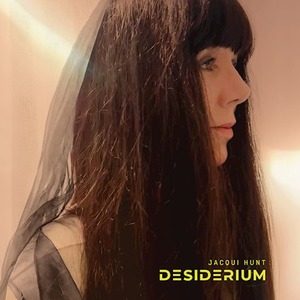
Jacqui Hunt’s history with Single Gun Theory and Delerium places her inside a long electronic and dream pop lineage, but “Cycles” strips that history down to piano, voice, and grief. On Desiderium, released through QUSP with musical collaborator and husband Brian Conolly, Hunt moves through broader electronic textures and intimate balladry, but this track is where the album becomes most still. It gives up the shimmer and leaves the feeling exposed at the piano.
“Cycles” is built around a simple emotional motion: the feeling comes back, leaves, and comes back again. The title tells you how the song works. The piano lands gently and cautiously, never pushing the track toward a dramatic peak. It keeps circling the same pressure, steady and difficult to escape, while Hunt’s voice stays low, clear, and conversational. She does not oversing the sadness. She leaves it in the space between the notes, which gives the track its quiet pull.
The lyrics are direct, plain in places, and that plainness suits the song’s restraint. “It goes in cycles and it comes in waves” gives the track its whole emotional logic immediately, and the rest of the song keeps returning to that same weather. The line “you can’t save me” works because it does not turn grief into something another person can solve. Even the tenderness of “if anyone could, you would be on the front line” keeps the song from becoming completely solitary. There is love here, but it stands beside the feeling instead of breaking it open. That is where “Cycles” becomes more than a piano ballad about sadness. It is about the limit between being held and being saved.
Musically, the song sits in an older piano storytelling tradition without sounding like it is chasing one reference too closely. There are traces of seventies piano balladry and soft rock melancholy in the way the chords carry the vocal, the kind of shape that makes Fleetwood Mac, Elton John, or Billy Joel feel nearby without turning the track into imitation. Hunt works in a familiar language, but she keeps the arrangement restrained. Laurence Pike’s drums enter with enough weight to warm the track without disturbing its stillness, and Conolly’s production leaves enough air around the piano for the vocal to feel exposed. The track would lose its force if it tried to prove how wounded it was.
The video gives the song a room to haunt. Directed and edited by Kade Stenders, it places Hunt inside winter light, saturated reds and blues, dark hair against pale surroundings, and a kind of storybook stillness that makes the piano feel ceremonial. The imagery has a Snow White quality in the contrast between brightness, darkness, and suspended memory, but the video does not explain the song as much as it gives the grief somewhere to live. A room, a face at the piano, a brightness that makes the memory feel colder, not easier. Since Hunt has described the track as connected to the life and death of her father, that visual restraint matters. The video understands that grief often arrives through setting before it arrives through language.
By the final stretch, when Hunt sings that the show is over but she wants to see it again, the loop becomes impossible to miss. It is about the mind wanting repetition, even when repetition hurts. The best moments come back because they cannot be held in the present, and the painful ones come back because they were never fully finished. “Cycles” works best when heard as that kind of return. It does not make grief grand. It lets it return quietly, with the same pressure, the same melody, and the same pull toward something already gone.
Desiderium is out digitally now, with CD and limited edition vinyl available via QUSP.
Jacqui Hunt, vocals, keys, production
Brian Conolly, synth, bass, guitar, production
Laurence Pike, drums on “Cecilia,” “Cycles,” “This Love,” and “Temple Of Illumination”
Daniel Denholm, zither and strings on “Cecilia,” cello solo on “Follow Me Here”
Lyrics by Jacqui Hunt, except “Planet,” lyrics by Brian Conolly
Music written by Jacqui Hunt and Brian Conolly, except “Cycles” and “This Love,” written by Jacqui Hunt, and “Cecilia,” written by Jacqui Hunt and Daniel Denholm
Recorded at QUSP Studios in Sydney, Australia
Engineered by Brian Conolly
Mixed by Daniel Denholm
Mastered by Michael Lynch
Cover artwork by QUSP Studios
Album released by QUSP
UPC 9324690436552
Copyright 2026 Qusp Pty Ltd
Publishing 2026 Sony/ATV
“Cycles” video directed and edited by Kade Stenders
Artist photos by Brian Conolly
Publicity by Shameless Promotion PR
Jacqui Hunt website
Shop
Desiderium digital download
Spotify
Apple Music
Soundcloud
Cycles video
Planet video
Facebook
Instagram
YouTube