
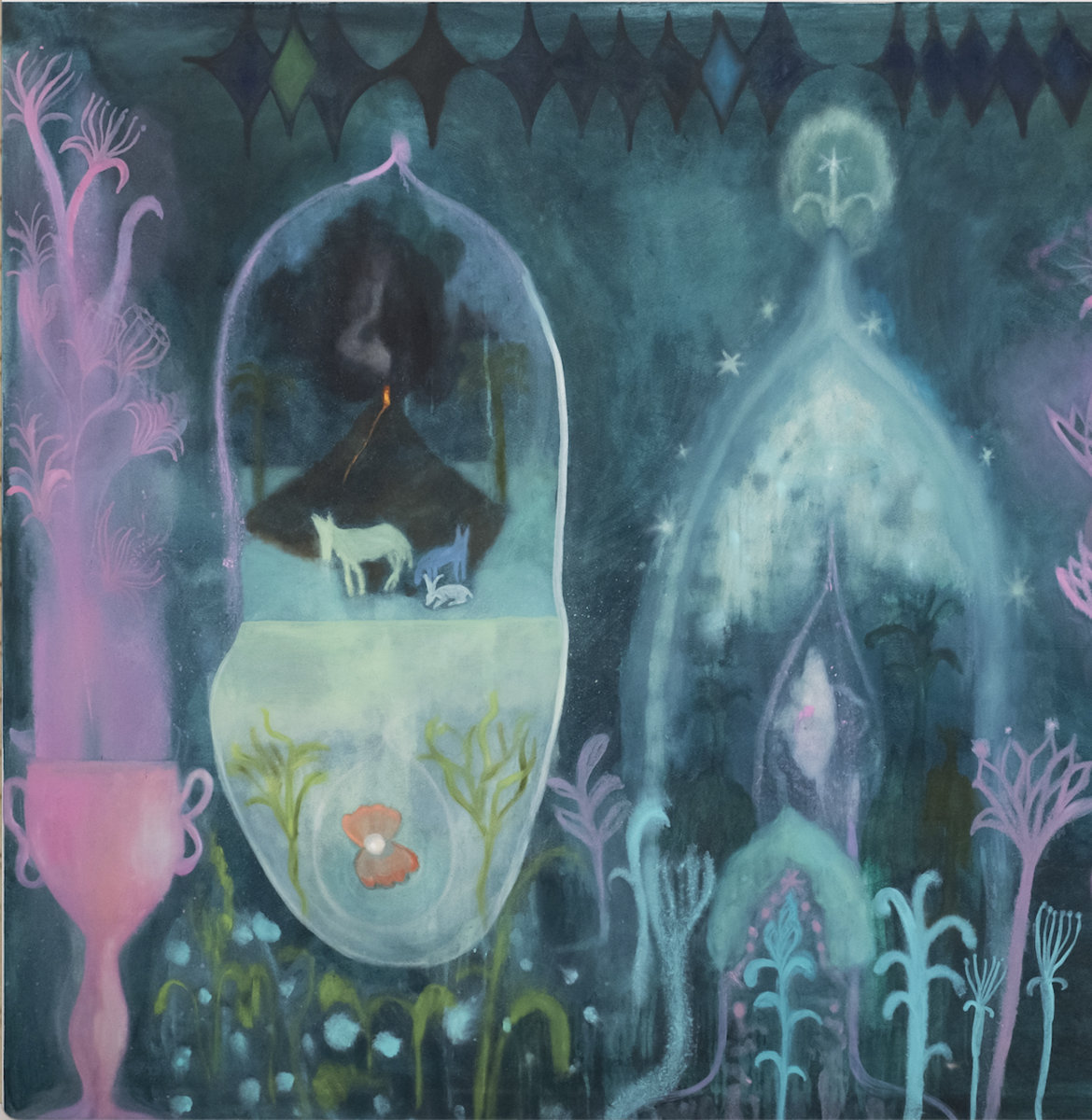
Josephine Foster has long occupied a rare artistic territory where antiquarian songcraft and private mysticism coexist without contradiction, but ‘Adormidera’ achieves something even more elusive: intimacy without fragility. Recorded in Níjar with Víctor Herrero accompanying her on Spanish guitar, the album carries the atmosphere of a dimly lit room where language, memory, and melody pass between two musicians with near-telepathic sensitivity. Foster does not approach Herrero’s compositions as material to reinterpret in the conventional sense. She inhabits them from within, reshaping their emotional weather through phrasing, restraint, and tonal coloration. The result is neither a folk record in the modern revivalist sense nor a classical exercise disguised as pastoral minimalism. It is chamber music for solitude, steeped in Iberian melancholy yet untethered from any strict tradition.
The title track establishes the album’s strange equilibrium immediately. Herrero’s guitar lines drift with the elegance of old Castilian song forms while Foster sings as though tracing the edges of a half-remembered dream. Her voice remains unmistakable: that airy mezzo-soprano capable of sounding simultaneously childlike and centuries old. Yet what distinguishes her performance here is the extraordinary patience of her delivery. Every syllable appears suspended in stillness before dissolving into the next phrase. Billy Steiger’s engineering understands this instinctively, preserving the space around the instruments rather than attempting to embellish them. Silence becomes part of the arrangement.
“Añil” deepens the record’s meditative character while introducing one of its most emotionally intricate performances. Foster approaches the melody with near-liturgical calm, but beneath the serenity lies an ache that never resolves into sentimentality. Herrero’s accompaniment is remarkable throughout the album for its refusal to dominate. His playing favors suggestion over flourish, allowing harmonic shadows to linger rather than announcing themselves directly. On “Añil,” especially, the guitar seems to move like reflected light across water, subtly changing the emotional temperature of each verse.
What makes ‘Adormidera’ so compelling is its resistance to theatricality. Contemporary folk records often mistake emotional exposure for depth, crowding songs with ornamentation or exaggerated vulnerability. Foster and Herrero pursue the opposite route. “Avellaneda” exemplifies this aesthetic beautifully. The composition carries echoes of Latin American nueva canción and European art song, yet the performance avoids nostalgia entirely. Foster sings with astonishing clarity but never seeks grandeur. Instead, she trusts the melodic architecture itself. The emotional force arrives indirectly, through repetition and tonal nuance, as if the song were revealing its meaning gradually even to the performers themselves.
“Communion” functions as the album’s spiritual center. The title suggests ritual, and the piece indeed possesses a devotional quality, though not one attached to any doctrine. Foster has always excelled at transforming songs into acts of invocation, and here she sounds almost disembodied, hovering just above Herrero’s carefully measured chords. The dialogue between voice and guitar becomes so finely calibrated that authorship begins to dissolve. One hears not accompaniment but mutual listening. Few collaborative records achieve this level of reciprocity.
“Hermana” introduces a subtle shift in mood. The song carries a darker undercurrent, not through dramatic gestures but through harmonic ambiguity. Foster’s phrasing becomes more conversational, almost secretive, while Herrero threads intricate classical motifs beneath her voice. The track recalls the emotional austerity of Amancio Prada while retaining the peculiar otherworldliness that has always defined Foster’s work. Her ability to merge Appalachian spectral folk with Iberian romanticism remains singular because she never treats either tradition as museum material. She treats song as living folklore, porous and migratory.
“Jilguero” is perhaps the album’s most deceptively simple composition. At first encounter it appears almost weightless, a brief and delicate pastoral reverie. Yet repeated attention reveals extraordinary structural precision. Foster’s melodic ascent during the song’s central passage carries the emotional gravity of an aria reduced to its barest emotional essence. Herrero responds with understated filigrees that evoke both flamenco and Renaissance guitar forms without settling fully into either language. The song seems suspended outside chronology, belonging equally to medieval Spain, rural America, and some imagined territory existing only within the collaborative imagination of these musicians.
By the time “La Mancha” closes the record, ‘Adormidera’ has established its own internal logic so completely that returning to ordinary sound feels almost abrupt. The final track possesses a windswept grandeur absent from the album’s earlier pieces, though even here Foster avoids climax in the conventional sense. Her voice recedes gradually into Herrero’s luminous guitar patterns, leaving the impression not of conclusion but of disappearance beyond the frame. Aidan Foley’s mastering preserves this vanishing quality beautifully, allowing the final moments to linger with ghostly softness.
Across twenty-five years of work, Josephine Foster has remained resistant to categorization precisely because she approaches music less as genre than as atmosphere, oral history, and emotional archaeology. What distinguishes ‘Adormidera’ within her discography is the degree of artistic trust at its center. Herrero’s compositions provide a foundation of exquisite delicacy, but Foster transforms them through interpretive intuition rather than reinvention. Their collaboration achieves a rare state of equilibrium where neither musician seeks prominence, and the songs themselves emerge as the primary presence. Many records aspire to timelessness by stripping away contemporary markers. ‘Adormidera’ reaches something more profound. It does not sound detached from time; it sounds adjacent to it, as though these songs had been quietly waiting for the precise conditions under which Foster and Herrero could finally give them voice.
Learn more by visiting Eiderdown Records | BlueSky | YouTube | Instagram