Rock ’n’ roll has always carried a particular promise: that a song can be immediate enough to feel like a personal encounter and unruly enough to make convention seem irrelevant. Julez and the Rollerz understand that promise intimately on ‘Dirty Little Rock ’N’ Roller’, a nine-song set that approaches guitar music with a healthy appetite for melody, swagger, sensuality, and noise. Recorded at Tiny Creatures Studios in Yucca Valley, California, and produced, engineered, and mixed by Alex Newport, the album has the confidence of a band that knows exactly how much information a song needs and, equally important, how much it can leave unsaid.
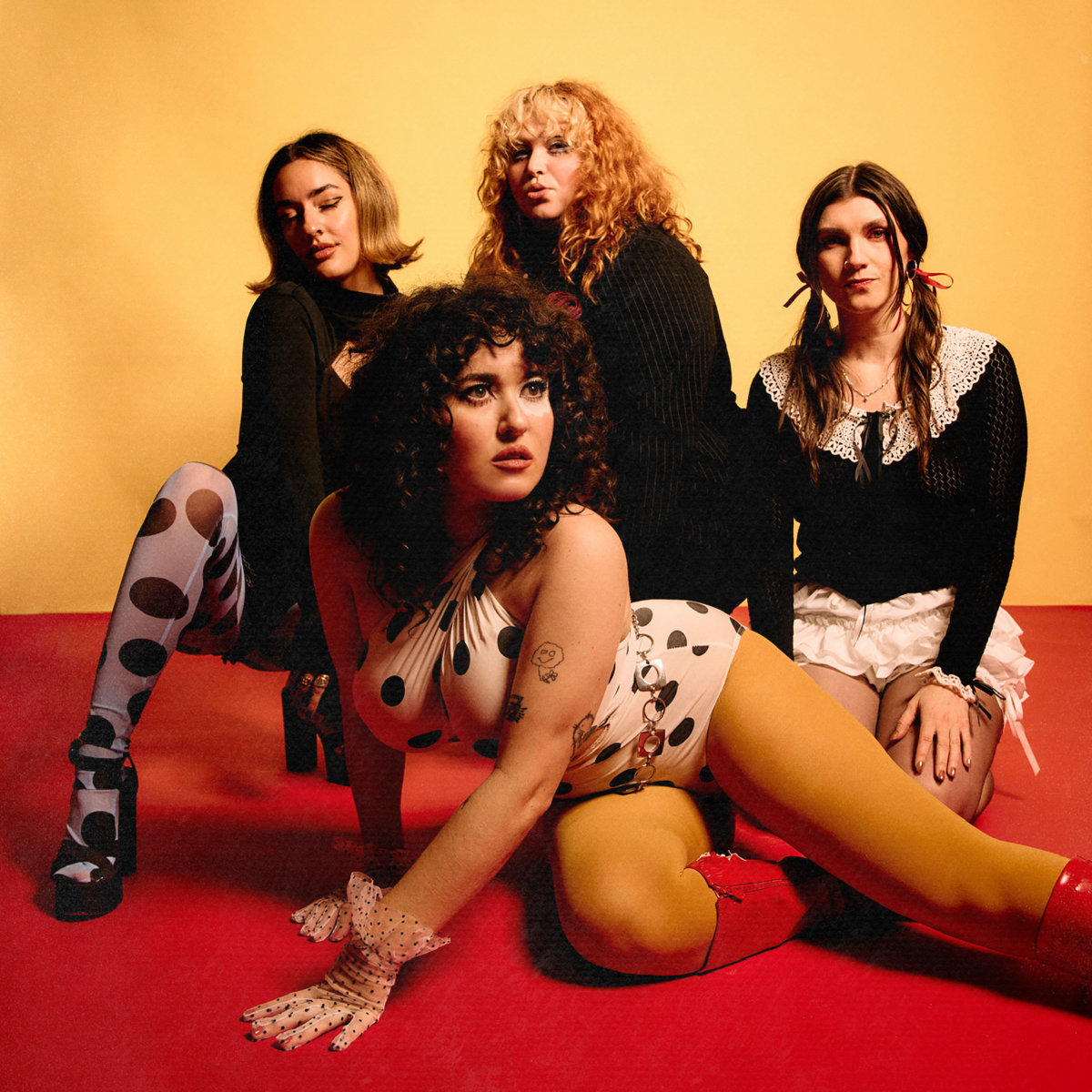
“Time” opens the record with a sense of forward motion that establishes the band’s fundamental character. Jules Batterman’s vocals and guitar sit at the center, delivering the songs with an unaffected directness, while Morgyn Payge’s bass and Joey Ponchetti’s drums provide the rhythmic foundation. Shea Carothers’ synth adds another shade to the palette, preventing the group’s rock framework from becoming overly predictable. The song’s central subject may be familiar, but Julez and the Rollerz treat familiarity as an opportunity rather than a limitation. Their strength comes from turning recognizable rock gestures into something lively and personal.
“Phaser” introduces Hannah Hughes on lead guitar, and her presence immediately enlarges the band’s sonic field. Hughes appears on four tracks across the album, and her playing provides an especially useful counterpoint to Batterman’s guitar. Rather than competing for dominance, the two guitars create a dialogue between melodic clarity and atmospheric coloration. The title itself hints at altered states and studio effects, but the song never disappears into abstraction. Its personality remains firmly rooted in the pleasures of a good riff and a strong chorus. “I Don’t Know You” brings a note of uncertainty into the album’s otherwise assured presentation. Batterman sings with an intimacy that makes the song’s emotional ambiguity convincing. The band does not overdramatize the subject, allowing the uncertainty to sit within the arrangement. Payge’s bass is especially important here, providing a melodic undercurrent beneath the guitars and giving the track a subtle sense of emotional movement.
“Call Me Up” shifts toward a more openly inviting mood. Hughes’ lead guitar adds a bright edge, while Carothers’ synth expands the track’s melodic dimensions. Julez and the Rollerz have a clear affection for the architecture of classic rock and pop-rock, but they are not attempting to recreate a particular decade. Their music borrows the confidence of older forms while remaining contemporary in its production and attitude. Alex Newport’s work behind the console keeps the instruments distinct, giving the album a clean but energetic profile. “I Need Love” is among the record’s most straightforward declarations, and its simplicity is part of its appeal. Rather than hiding the sentiment behind irony, Batterman lets the song say what it means. That candor can be surprisingly difficult to pull off in guitar music, where emotional vulnerability is often disguised as cool detachment. Here, the band trusts the melody enough to let the feeling stand in the open.
“Hot Take” adds a dose of humor and self-awareness. Its title suggests the accelerated discourse of contemporary culture, where every opinion seems to arrive prepackaged as a provocation, yet the song itself refuses to become disposable commentary. Julez and the Rollerz understand that rock has always been a vehicle for attitude, and they use that tradition without allowing personality to overwhelm musicianship. Ponchetti’s drumming is particularly effective in maintaining the song’s momentum. “Bring It On” is built around a more confrontational energy. Hughes returns on lead guitar, adding another layer of force to the arrangement, while Payge’s bass anchors the track beneath Batterman’s vocal. The band sounds particularly comfortable here, balancing aggression with melodic instincts. That balance runs through the album as a whole: Julez and the Rollerz want their music to hit hard, but they also want listeners to remember the songs afterward.
“Always Hard 4 U” gives that philosophy a more playful and provocative expression. The deliberately stylized title suits the band’s refusal to treat rock ’n’ roll with excessive solemnity. Yet beneath the cheekiness is careful construction. Hughes’ guitar provides one of the record’s sharper instrumental voices, while Carothers’ synth helps prevent the arrangement from becoming too conventional. Batterman’s vocal delivery maintains the necessary sense of mischief without turning the song into a novelty. The closing “Take It Back” provides an appropriately expansive finale. At nearly four minutes, it is one of the album’s longer pieces, allowing the band more space to develop its ideas. Rather than ending with a dramatic departure from everything that came before, Julez and the Rollerz consolidate their musical identity: guitars that carry both melody and attitude, a rhythm section that knows when to push and when to settle, and synth textures that give the arrangements additional depth.
The musicianship across ‘Dirty Little Rock ’N’ Roller’ is notable precisely because it never announces itself as a technical exercise. Batterman, Payge, Carothers, Hughes, and Ponchetti operate as a cohesive unit, each contributing a distinct element without cluttering the songs. Newport’s production reinforces that chemistry, preserving the immediacy of a band playing together while allowing the finer details of the arrangements to register. Julez and the Rollerz also understand something fundamental about rock ’n’ roll that can be easy to forget amid endless conversations about innovation: a great song does not need to justify its existence through novelty. It needs character. ‘Dirty Little Rock ’N’ Roller’ has plenty. It is flirtatious, earnest, confident, occasionally mischievous, and consistently committed to the pleasures of playing loud guitars in a room with other people.
The album’s greatest virtue is its lack of self-consciousness. Julez and the Rollerz do not seem embarrassed by melody, desire, swagger, or the simple physical appeal of rock music. They embrace those qualities and give them enough room to become expressive rather than nostalgic. ‘Dirty Little Rock ’N’ Roller’ arrives with its priorities in order: write the songs, play them with conviction, make them sound good, and let the personality take care of the rest. In a musical culture that can sometimes overthink the purpose of a guitar, Julez and the Rollerz offer a refreshing alternative. They plug in, turn up, and remember why the form remains so difficult to resist.
Learn more links:
Lolipop! Records
Julez and the Rollerz
Bandcamp
Instagram
Facebook
Twitter