
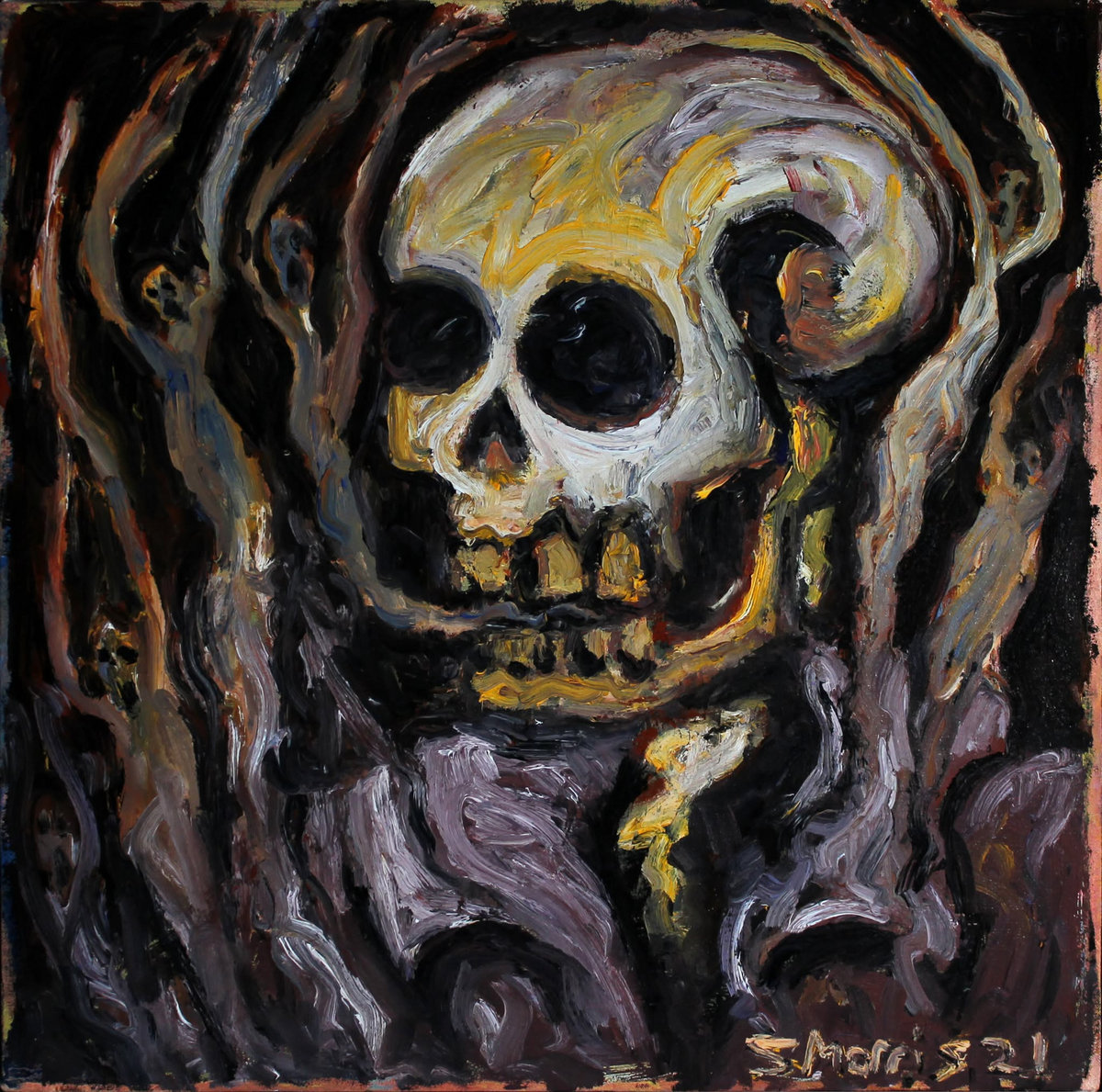
Los Costones’ music has that found-not-made feel, like it was already out there waiting for someone to pick it up. ‘Malos vicious (Expanded Edition)’ finds the Alicante four boiling garage rock, psych-pop, caveman beat music, and a very Mediterranean haze down into fourteen songs that make their case with barely a handful of ingredients. The guitars buzz and glimmer, the Farfisa casts a spooky glow, the drums keep things stripped to the bone, and the tunes are conveyed with a simplicity that almost catches you off guard. Formed in 2022 in the wetlands of Spain’s lower Segura River, Los Costones consist of Beloina on drums and vocals, Pájaro on guitar and Farfisa organ, Jesús Calambre on guitar, and Miguel Hernández on guitar. Their previous involvement with Los Deformes and Los Fusibeles gives the band a foundation in the underground garage tradition, but ‘Malos vicious’ reveals a group with a broader imagination. The music can sound skeletal and sweet in the same breath, capable of suggesting both a dimly lit club and a sun-baked landscape where the afternoon seems to last forever.
The album’s title track captures that balance immediately. The beat is so basic it sounds nearly primitive, and the guitars hang like a fog around the edges of the song. You can tell the band appreciates distortion, but the fuzz is never just an effect pasted on top. It works as melody, rounding off the corners and making well-worn chord patterns feel slippery. Beloina sings the Spanish lyrics with a cool, straight-ahead delivery that keeps things from getting too dramatic. “Megira” gets the record going with more room to roam and a psychedelic bent. The guitars orbit the rhythm rather than simply following it, and the Farfisa brings in something faintly menacing. Los Costones barely need anything to build a mood this strong. They get that repetition can be hypnotic when every pass leans a little differently.
“Esta Noche” brings the pop instincts closer to the surface. The tune lodges in your head fast, yet the band leaves the strange bits alone, and those bits are where the character lives. Think garage pop spoken after dark, with romance and trouble standing on the same street corner. The whole album plays both sides. Los Costones can make a song catchy without making it comfortable. “La Guerra” expands the palette into something darker and more deliberate. At more than five minutes, it has space to let its ideas linger, and the extended duration gives the guitars greater expressive weight. The band’s minimalist approach becomes especially effective here: instead of filling every opening, they allow the rhythm and harmonic repetition to establish a kind of trance. “La Playa,” by contrast, carries a more open and drifting quality, its title suggesting sunlight and escape while the music retains the slightly narcotic atmosphere that characterizes the album.
“Soy un Gusano” is one of the collection’s stranger pleasures. The worm makes for a wonderfully unglamorous point of view, and Los Costones pair it with music that sounds earthy without ever getting heavy. Their lyrics keep circling death, disappointment, lies, drugs, bad luck, and illicit parties, yet the band rarely treats the dark as a reason to be solemn. There’s mischief in their bleakness. A bad situation can still produce a memorable riff. “La Lluvia” continues that fascination with atmosphere. Rain is one of the oldest subjects in popular music, but Los Costones approach it through repetition and texture rather than sentimentality. Pájaro’s Farfisa is particularly important to the band’s sonic identity, giving the guitars an atmospheric counterweight. With three guitarists in the lineup, each guitar seems to occupy a particular emotional role that compliment and build on one another rather than simply adding more volume.
The expanded edition becomes especially interesting when it shifts into material from the band’s debut recording, ‘vol.1’. “La Negra” and “Dulce Jane” preserve the hypnotic garage-pop vocabulary of the main album while revealing an earlier stage in its development. “Camine con un Zombi” is a perfect example of Los Costones’ ability to turn macabre imagery into something inviting. The zombie is not presented as a grand horror-movie figure; it becomes another character wandering through the band’s strange, casually surreal universe. “Hecha de Madera” and “El Hombre” continue this procession of concise, memorable songs. Los Costones know how to leave a mark before a song wears out its welcome. The melodies are economical, the rhythms purposeful, and the arrangements rarely bother with extra decoration. “Coyote” adds a particularly vivid image to the album’s growing mythology, and “El Ladrón” wraps up the collection with one last burst of garage-pop energy.
The sequencing of the expanded edition gives the listener an opportunity to hear the relationship between the two recordings. The newer ‘Malos vicios’ material occupies the first half, while the eight selections from ‘vol.1’ provide a glimpse into the band’s earlier vocabulary. The sequencing doesn’t make the older recordings sound like rough sketches. If anything, it shows how fast Los Costones found a voice of their own. The essentials were already in place: distorted guitars, primitive rhythms, a psychedelic tint, straightforward melodies, and a willingness to let the songs stay a little strange.
Recording the material live in Beloina’s living room adds another layer of significance. A home environment seems entirely appropriate for music this committed to immediacy. The performances retain the sensation of people playing together in a physical space rather than assembling tracks from isolated studio fragments. Juan Ballester mastered the ‘Malos vicios’ side at Delta Estudio, while El Bola produced and mastered the ‘vol.1’ material at Monophonic Studio. Despite the different production histories, the two halves of the record fit together naturally. The band’s influences are broad but discernible: The Velvet Underground’s minimalist repetition, The Cramps’ lurid menace, Beat Happening’s economy, The Clean’s melodic clarity, and the raw eccentricity of obscure garage and psychedelic records all hover somewhere around the edges. Los Costones, however, do not sound trapped inside a museum of influences. Their Spanish-language songwriting and their peculiar sense of atmosphere give these familiar ingredients a different temperature.
What lingers after the fourteen songs is not any single stylistic reference but the band’s ability to make limitation feel liberating. Los Costones do not need elaborate arrangements or immaculate surfaces. They have guitars, drums, Farfisa, voices, and a remarkable instinct for repetition. From “Megira” and “Malos Vicios” through “La Lluvia,” “Camine con un Zombi,” and “El Ladrón,” they transform those modest resources into a vivid world of crooked romance, psychedelic drift, black humor, and irresistible melodies. ‘Malos vicious (Expanded Edition)’ is a wonderfully compact reminder that garage pop becomes most compelling when musicians understand exactly how little they need to make a song come alive.
Learn more links: Bandcamp | Instagram