
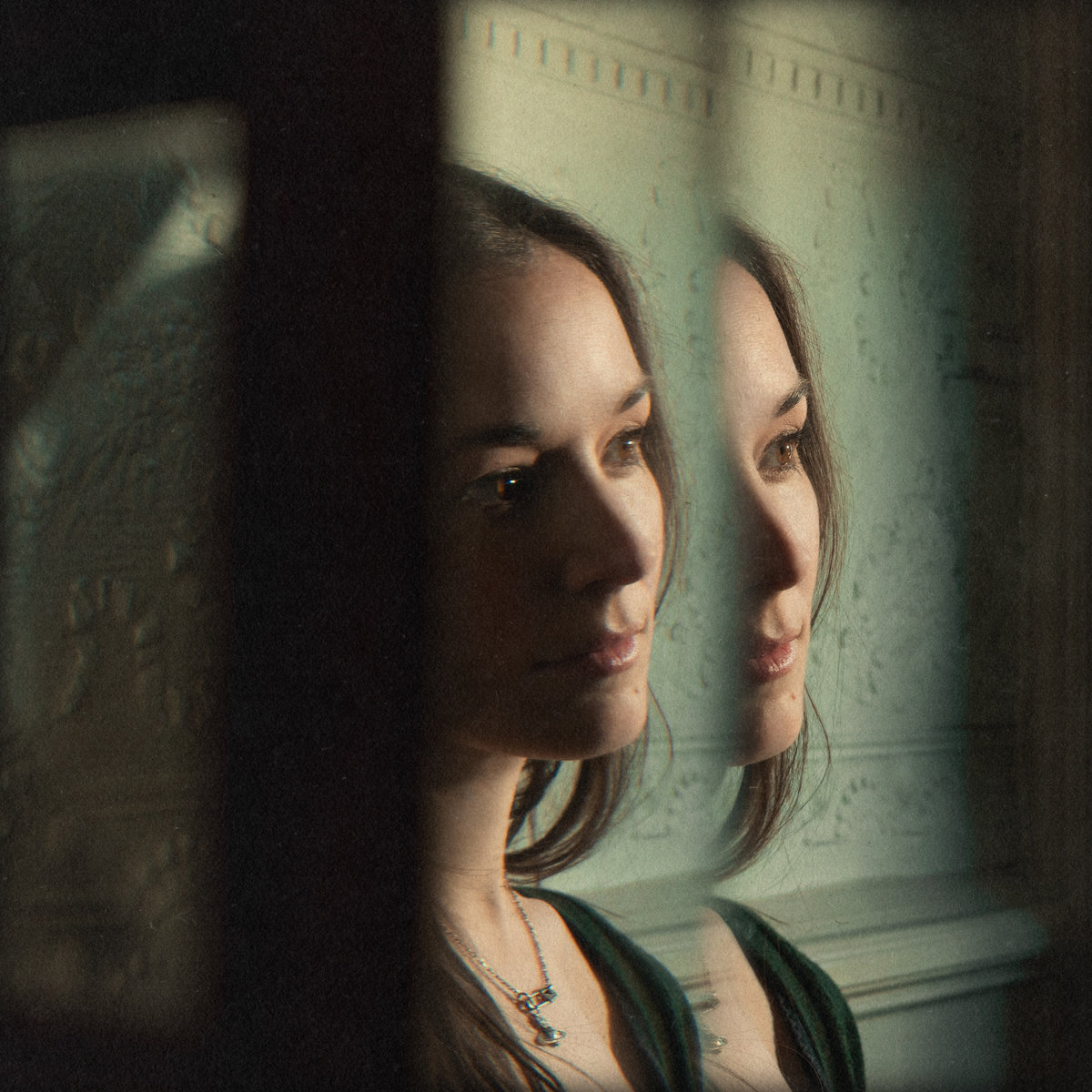
Margaret Glaspy has always written songs that resist easy categorization, but ‘I Am Both’ deepens that instinct into a compelling artistic philosophy. Its title suggests contradiction, duality and coexistence, and those ideas echo through every composition. Rather than searching for definitive answers, Glaspy embraces uncertainty as an enduring condition of modern life, exploring identity, memory, affection and social conscience with remarkable clarity. The album presents an artist whose confidence lies not in certainty but in her willingness to examine opposing impulses without forcing them into tidy conclusions.
Produced by Joe Henry at New York City’s Reservoir Studios, the record possesses an understated elegance that never overwhelms Glaspy’s songwriting. Henry recognizes that the songs derive their power from intimacy rather than spectacle, allowing each arrangement to develop naturally around her unmistakable voice and expressive guitar playing. Every instrumental decision serves the writing, reinforcing the emotional architecture without drawing unnecessary attention to itself. The accompanying musicians mirror this philosophy, responding with patience and precision instead of crowding the performances, creating an ensemble dynamic that gives every lyric room to resonate.
“Michigan” opens the album with quiet confidence, stretching beyond five minutes without ever appearing indulgent. Glaspy approaches the song with measured restraint, allowing its observations to gather significance through accumulation rather than dramatic proclamation. Her guitar work remains one of her defining strengths, balancing melodic elegance with rhythmic purpose, while the band shapes the surrounding atmosphere through carefully judged interplay. The performance establishes the album’s central concern with people caught between memory and motion, recognizing that geographical landscapes often become emotional ones.
“Reminder” sharpens the focus inward, presenting recollection not as nostalgia but as an active negotiation with the present. Glaspy avoids romanticizing the past, instead examining how experience lingers in subtle, often contradictory ways. Henry’s production captures these nuances beautifully, preserving the warmth of live performance while maintaining remarkable transparency across every instrument. “That Rose” reveals Glaspy’s gift for transforming seemingly ordinary images into emotionally complex narratives. Rather than relying on ornate language, she allows carefully chosen details to accumulate meaning through context. Her vocal delivery remains conversational without sacrificing musicality, creating the impression of thoughts arriving in real time. The supporting musicians understand precisely when to step forward and when to recede, reinforcing the song’s understated sophistication through disciplined ensemble playing.
One of the album’s finest achievements arrives with “I Thought She Was A Song,” a title that immediately blurs the boundary between person and art. Glaspy examines projection and idealization with uncommon subtlety, questioning the tendency to transform individuals into symbols that satisfy emotional needs. The arrangement mirrors this ambiguity, shifting gently between openness and density while her guitar traces elegant melodic lines that seem to search for answers just beyond reach. “Petty” demonstrates Glaspy’s willingness to confront less flattering aspects of human behavior without resorting to self-condemnation or irony. Rather than presenting moral certainty, she acknowledges the small resentments and insecurities that quietly shape relationships. This honesty gives the composition remarkable credibility, inviting reflection instead of judgement. The rhythm section supports the performance with remarkable sensitivity, maintaining forward momentum while preserving the conversational cadence that defines Glaspy’s writing.
“Common Ground” broadens the album’s perspective, considering connection in a world increasingly shaped by division. Glaspy never slips into didacticism, preferring observation over declaration. Her songwriting recognizes that empathy rarely emerges through grand statements but through attentive listening, and the arrangement reflects that philosophy by allowing every instrumental voice to participate in an ongoing dialogue rather than occupying rigid supporting roles. Narrative songwriting takes center stage in “James and Marie,” where Glaspy demonstrates her talent for sketching vivid characters without burdening them with excessive detail. She trusts listeners to inhabit the spaces between her carefully selected images, allowing individual experiences to enrich the story rather than limiting interpretation. Henry’s production reinforces that openness through an arrangement that remains beautifully balanced from beginning to end.
“Martin Luther King, Jr.” addresses history with remarkable restraint, resisting the temptation to monumentalize its subject. Instead, Glaspy considers the enduring relevance of moral courage and collective responsibility through a deeply personal lens. The song succeeds because it asks difficult questions rather than presenting simplified conclusions, allowing its reflections to resonate beyond the immediate context. “Sharp Knife” introduces sharper emotional contours without abandoning the album’s reflective character. Glaspy’s guitar assumes greater prominence here, its carefully articulated phrases complementing lyrics that examine vulnerability with striking honesty. The ensemble responds instinctively, shaping the music with subtle dynamic shifts that heighten the song’s emotional impact while preserving its intimacy.
“Wildest Dreams” offers one of the album’s most affecting meditations on aspiration and disappointment. Rather than treating dreams as fantasies awaiting fulfilment, Glaspy explores the complex relationship between expectation and reality. Her performance captures the quiet resilience required to continue imagining possibilities despite inevitable setbacks, while the accompanying musicians create an atmosphere that balances melancholy with quiet optimism. The title track, “I Am Both,” serves as the album’s philosophical culmination, embracing contradiction not as a problem demanding resolution but as an essential aspect of human existence. Glaspy articulates the simultaneous presence of confidence and doubt, independence and connection, certainty and ambiguity with extraordinary grace. The composition gathers many of the record’s recurring themes into a conclusion that remains deliberately open, affirming complexity instead of simplifying it.
Throughout ‘I Am Both’, Glaspy demonstrates an increasingly sophisticated understanding of economy. Every lyric, chord change and melodic phrase appears carefully considered, yet nothing sounds overworked or self-conscious. Joe Henry’s production amplifies that balance, capturing performances that retain their spontaneity while benefiting from meticulous craftsmanship. Equally important are the musicians accompanying Glaspy, whose nuanced performances provide depth, color and momentum without overshadowing the songs themselves.
With this fourth album, Margaret Glaspy confirms that her greatest strength lies in her refusal to separate intellect from feeling. ‘I Am Both’ is rich in memorable melodies, incisive writing and beautifully judged performances, but its lasting significance comes from its generosity of perspective. It recognizes that people rarely exist as singular, coherent narratives. Instead, they contain competing impulses, unfinished thoughts and evolving identities. Glaspy embraces that reality with uncommon wisdom, creating a record that is thoughtful without becoming academic, deeply personal without becoming insular, and quietly profound without ever announcing its own importance.
Learn more links: