
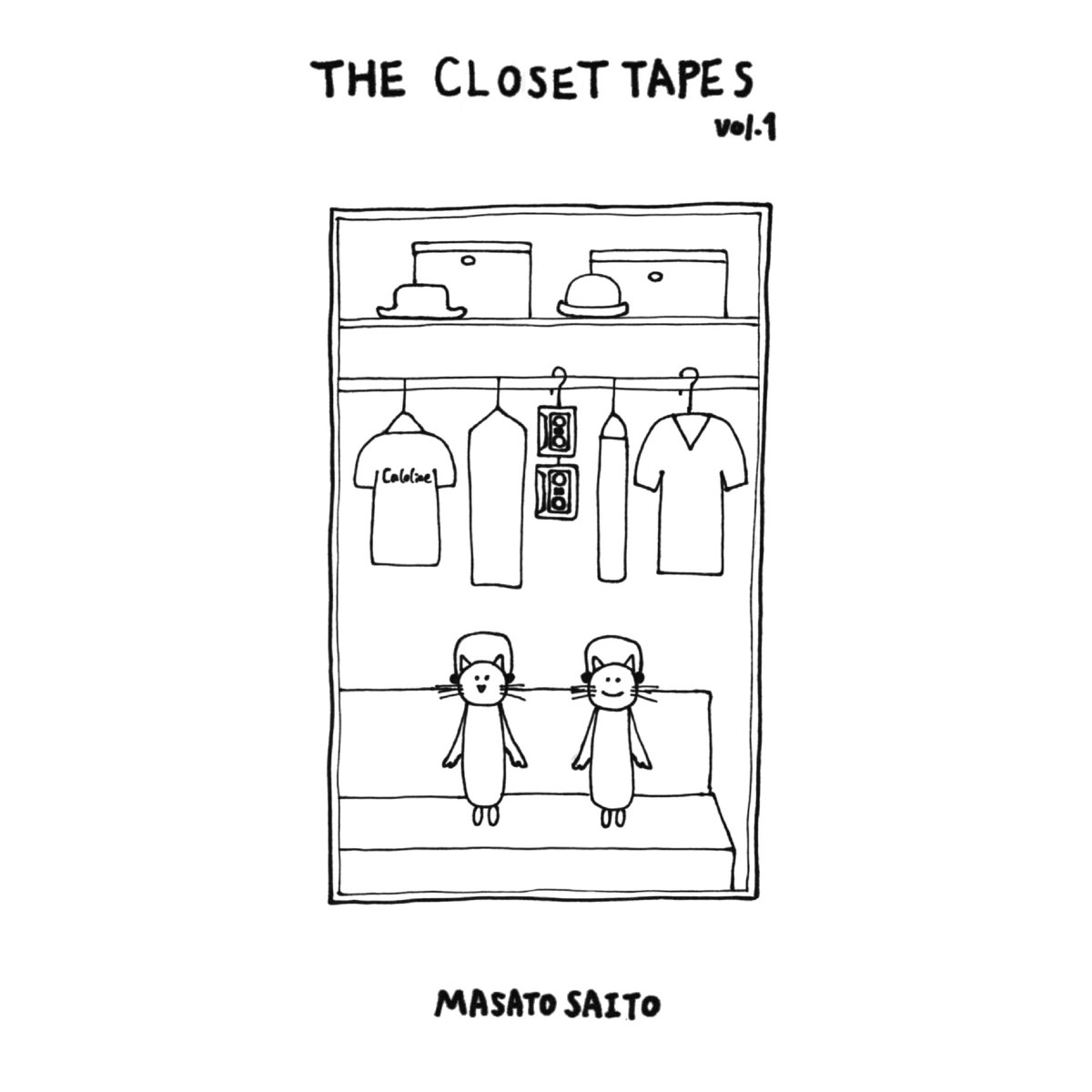
Excavated from a private archive and assembled with a curator’s restraint, Masato Saito’s ‘The Closet Tapes Vol. 1’ and ‘The Closet Tapes Vol. 2’ are retrospective compilations that act as alternate maps of an artist’s inner life. These recordings, some unfinished, some reworked, others preserved in near-original form, trace a creative practice that resists linear development. Instead of presenting a polished trajectory, Saito reveals a series of parallel paths, each one capturing a different approach to melody, arrangement, and emotional register.
Across ‘The Closet Tapes Vol. 1’, a sense of intimacy defines the listening experience. “Common Bird” opens with a delicate economy, its structure built from minimal gestures that carry disproportionate weight. Saito’s performance foregrounds subtle phrasing over technical display, allowing the song’s core idea to emerge gradually. “Cat Time Blues” shifts toward a more playful rhythm, its brevity reinforcing a sense of spontaneity, while “Shadows of Birds” revisits the avian imagery with a more reflective tone, suggesting a thematic thread that runs quietly through the record. “Here We Go Again” introduces a cyclical quality, its repetition functioning as both structure and commentary. That impulse continues into “Don’t Forget Me,” where memory becomes less a subject than a process embedded in the music itself. “Into The Cloud” expands the sonic palette, incorporating a more layered arrangement that hints at the collaborative dimension of the project, with contributions from musicians such as Michael Ramos (Tony Jay) and Ryoko Satori subtly enriching the texture without disrupting its cohesion.
The middle stretch of “Forgive Me,” “Hallelujah,” and “Don’t Believe Me” forms a loosely connected sequence that explores variations on doubt and reconciliation. Saito’s vocal delivery remains understated, allowing the surrounding instrumentation to shape the emotional contour. Miki Hirose’s involvement, particularly in textural elements, adds a distinct tonal color, while Yuji Usui’s contributions bring a quiet structural clarity. “Winter Night” closes the first volume with a sense of suspended resolution. Its pacing suggests stillness without stagnation, the arrangement carefully balanced between presence and absence. The track leaves an impression of incompletion that feels intentional, setting the stage for the second volume not as a continuation but as a reframing.
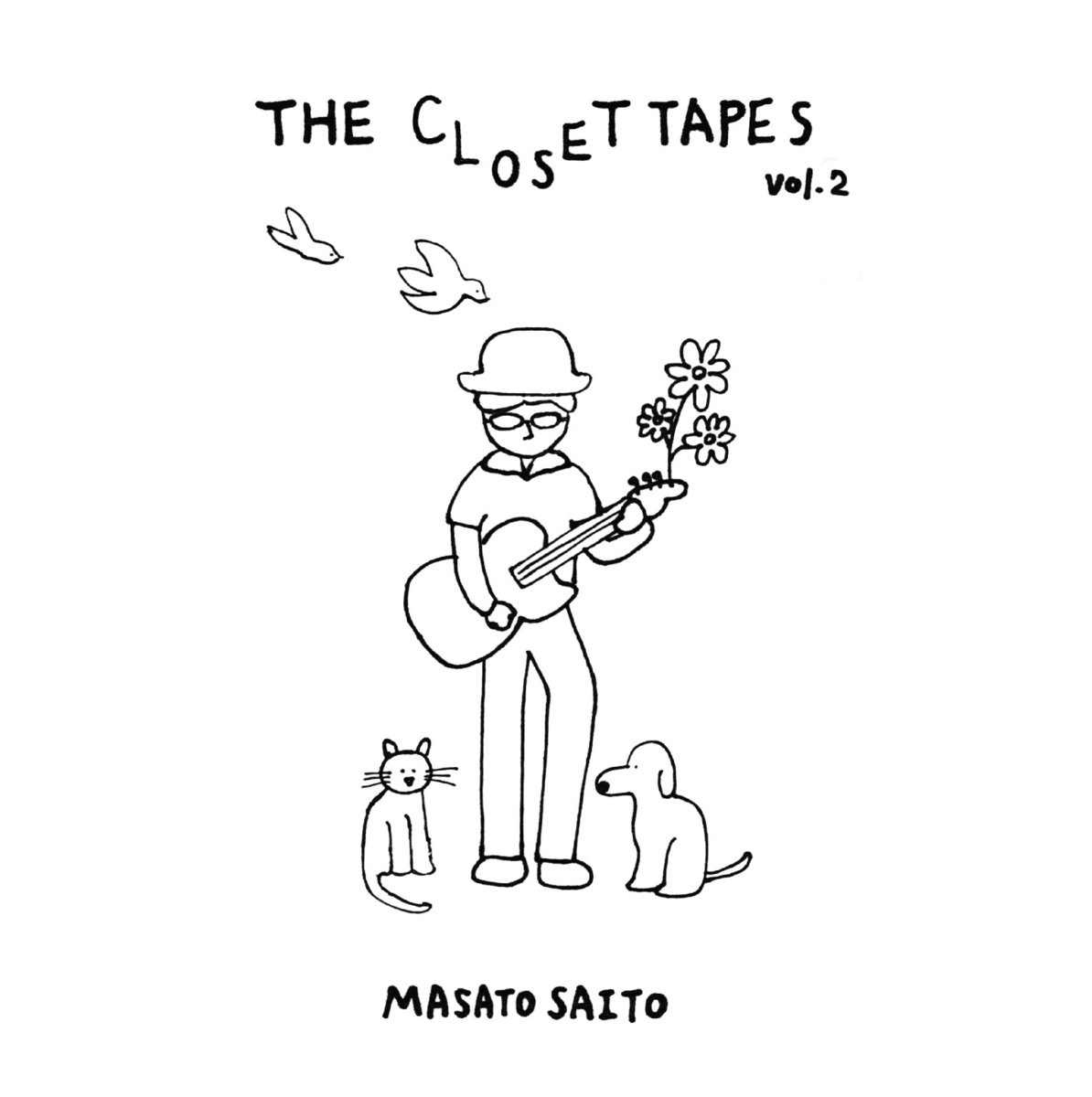
‘The Closet Tapes Vol. 2’ broadens the scope, introducing a slightly more outward-facing sensibility while retaining the introspective core. “Earl Grey Tea” opens with a measured warmth, its title evoking a domestic familiarity that the music both affirms and complicates. “Fade Away” and “Neon Lights” move in contrasting directions, the former leaning into gradual dissolution, the latter engaging with a more defined rhythmic pulse.
“Snufkin” stands out for its narrative suggestion, its structure hinting at movement without settling into a fixed destination. “What’s New” extends this exploratory approach, its longer runtime allowing Saito and collaborators, including Hiromu Yamada, to develop a more intricate interplay between melodic lines and underlying harmonies. The reappearance of “Hallelujah” in this volume, presented in an alternate form, underscores the project’s archival nature, emphasizing variation over finality. “Beloved Enemy” and “Well,well,well,well” introduce a sharper dynamic contrast, their arrangements more assertive yet still grounded in Saito’s restrained sensibility. “Tonight Get Away” carries a subtle sense of propulsion, while “Maybe Gone” closes the collection with a quiet ambiguity, its final moments resisting closure in favor of open-ended reflection.
Throughout both volumes, Saito’s role as both performer and producer is central. His mixing and mastering decisions preserve the immediacy of the original recordings while allowing each element to retain its distinct character. The contributions of Ramos, Satori, Usui, Hirose, and Yamada are integrated with care, enhancing the material without overshadowing its core identity. Even the visual component, shaped by Hirose’s illustrations, aligns with the music’s balance of intimacy and abstraction.
Taken together, ‘The Closet Tapes Vol. 1’ and ‘The Closet Tapes Vol. 2’ resist the conventional expectations of an archival release. Rather than consolidating a past body of work into a definitive statement, they present a living archive, one that acknowledges the provisional nature of creation and the value of preserving ideas in their most immediate form.
Find out more by visiting Bandcamp HERE and HERE | Galaxy Train | Facebook | Twitter.