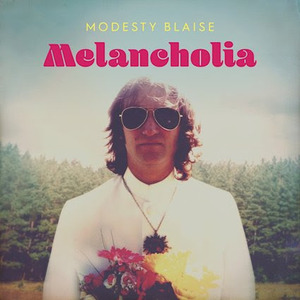
“Melancholia,” Modesty Blaise’s returning album, arrives in its 25th Anniversary remaster with its charm, detail, and strange confidence intact. Organ, guitar, bass, drums, harmonies, orchestral colour, and small melodic turns move through the record with an easy sense of purpose. The songs carry that fullness naturally, giving the remaster something solid to bring forward, the pleasure of hearing how much Modesty Blaise packed into the album while keeping the writing at the centre.
The remaster is strongest when it gives the album’s density more room. Jonny Collins’ comment about Modesty Blaise throwing in the kitchen sink, then breaking in next door and throwing that sink in too, makes sense as soon as you sit with the record. There is always another detail, another lift in the melody, another small instrumental piece moving through the background. But somehow it does not become clutter. The arrangements are full, sometimes almost overfilled, but the songs still know where they are going. That is the part that matters. The band can be ornate without becoming precious, and melancholic without making the record feel heavy for the sake of it.
What makes the album interesting now is how specific Modesty Blaise’s version of pop is. “Melancholia” sits close to baroque pop, indie pop, psych pop, and that clever British melodic tradition, but it does not feel like a record built only from references. It has its own personality. The album is charming, but not in a thin or decorative way. There is wit and warmth in it, with enough restraint to keep the prettiness from turning soft. The songs often sound bright on the surface, but there is usually something more private moving underneath.
“The Little Things You Do” shows that balance clearly. It has the sweetness and sweep of baroque pop, but the song does not collapse into nostalgia. It is lush, direct, and full of character, with the arrangement giving it colour without dragging it down. The melody stays clear, which is what makes all the extra detail feel earned. “Carol Mountain” sits in that same world, carrying the album’s quiet atmosphere without making the mood feel staged. Both tracks show what Modesty Blaise do well, they build songs that sound pretty at first, then slowly reveal how much is actually happening inside them.
The expanded three-disc edition gives the album a better frame without making the original feel lacking. The outtakes and singles are not just there to make the reissue look bigger. They help show the world around “Melancholia,” the choices the band was making, the amount of material circling this sound, and how clearly formed their instincts already were. You get more context, but the original album still stands on its own. That is a difficult balance, and this edition handles it well.
The best thing about the reissue is that it does not overcorrect the record. It does not try to make “Melancholia” sound modern in a way that would flatten what made it interesting. The updated audio brings out more texture, space, and detail, while keeping the warm, slightly odd character intact. You can hear the construction more clearly now, and that works in the album’s favour, because the construction is part of the pleasure. The record is built carefully, but it does not stiffen under that care.
Twenty-five years later, “Melancholia” still has a strange kind of confidence to it. It is busy without feeling crowded, nostalgic without being trapped there, pretty without becoming weak, and clever without getting smug about it. The remaster does what it should do, it gives the album more air, more detail, and more presence, while leaving the heart of it alone. That is why the record still works. Modesty Blaise made something full of charm, but the charm had structure behind it. This edition just makes that easier to hear.
Keep up with Modesty Blaise
Website | Bandcamp | Facebook | Twitter | Instagram | YouTube | Spotify | Apple Music | Press contact