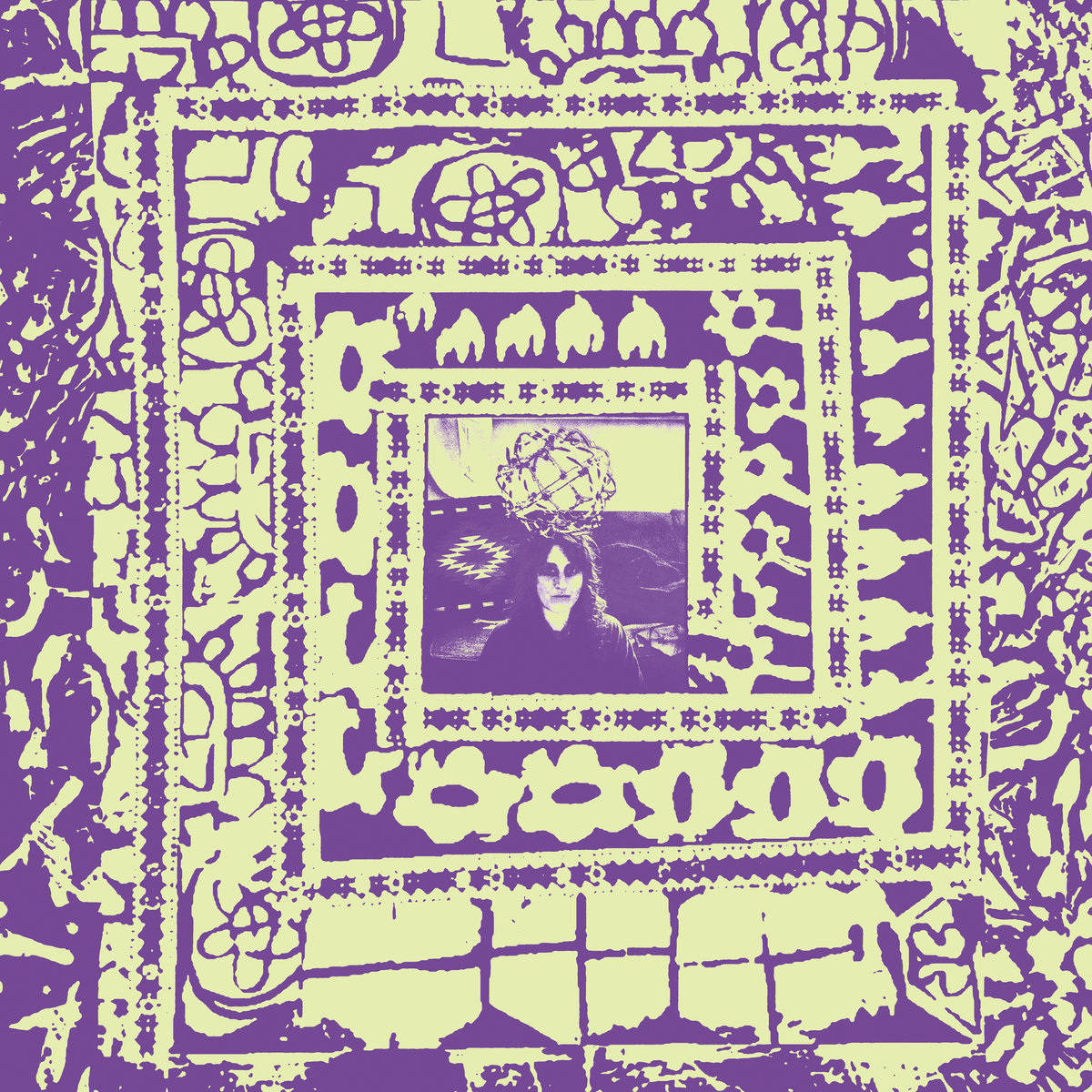
Lila Jarzombek writes songs to find out what they are, not to announce something already decided. As Nowhere Flower, her solo project, she works with small, cheap tools: inexpensive electronics, guitar, her voice, and homemade recording methods, where limits tend to turn into openings. ‘Peace Channel,’ her third full-length, pushes that further. She moves from digital recording to a Tascam 4-track and lets the quirks of analog home recording, including accidents, flaws and unexpected pairings, become part of the songs. It feels handmade in a real sense. It isn’t just lo-fi. You can hear a person listening closely to what the machine, the room and the songs are telling her.
Jarzombek plays everything, and the one-person setup gives the album a close, private feel. It never sounds sealed off, though. The sounds suggest a much bigger imagined world, where personal memory, landscape, grief, political catastrophe and private wonder sit together without one explanation tying them up. The fifteen tracks work like a collage. Some are barely sketches, others grow into detailed miniature environments, and several only make sense once a few incidental sounds have settled into place.
“Earliest Sound” is an elemental opener, introducing an album about beginnings, memory, and the thin line between noise and music. Jarzombek has a knack for sounds that seem to arrive from just outside her control. Warbling electronics and loose guitar figures make an atmosphere that’s intimate without being merely cozy, like someone laying pieces on a table and finding how they fit. “Behind Glass” builds on that and is one of the most memorable songs. It’s over fast, and that suits it, like a tune you can only partly recall. The Casiotone flutters around the slurred vocals and loose guitar, and the whole thing feels delicate while still knowing exactly where its melody is going. Bedroom pop doesn’t have to mean small ambition, and a tiny recording can suggest a huge emotional space.
The scale widens on “1,000 Acres,” whose title brings in the album’s recurring interest in geography and distance. The record often looks out from the bedroom toward places too big for a four-track. “Time II” turns to duration itself. The “II” hints at going back over things, since time rarely lines up neatly, and her music does the same, with older sounds lingering inside newer ones. Even the title pulls in two directions. A channel moves things along, while peace asks you to stay put, and the two words never quite settle their argument. Layered textures hold both, delicate but not passive, as if music could carry a little calm across a fractured landscape.
“Window” continues the album’s interest in thresholds. A window lets you see out without letting you through, and it divides and joins at the same time. Her arrangements keep giving you that sense of looking outward while staying aware of the room you’re in. “Center of 4 Corners” complicates it, suggesting one fixed point surrounded by competing directions. She can make physical space feel psychological. “In Ash” is one of the darker moments, bringing destruction into the album’s dreamlike vocabulary. She doesn’t turn catastrophe into spectacle. Devastation shows up as residue, what’s left after the event has passed. “Hollowed Out,” at under two minutes, packs that into a stark miniature, and its shortness deepens the sense of absence, like a song stripped down to what’s necessary.
Then comes “UR Picture,” one of the most affecting pieces and the clearest break from the electronic haze. Here the acoustic guitar steps up with a gentle, winding tune that feels like remembering. It’s an ode to Stevie Pohlman of Mope Grooves, and it gets at how strange it is to mourn someone who’s still around in memories, photos, recordings and the music they influenced. The playing is hesitant, feeling its way forward, and it lets the emotion build at its own pace rather than pushing it. It seems to know that grief tends to come in sideways, through small details that don’t look like much until the moment they flatten you.
“Inside the Wall” returns to enclosed spaces and treats confinement as another kind of imaginative territory. “Tarragon” is lighter and more whimsical, bringing eccentricity in without breaking the mood. These quick shifts are needed, because the album would get too solemn if every track weighed the same, and the oddities keep it from that. “Shared or Shattered” and “Formed by Water” make a strong pair. Both show her growing command of the 4-track, with layers piling up through improvisation and repetition. She doesn’t treat the machine as a neutral recorder. It’s an instrument for composing, and each overdub changes what the next decision can be. The songs seem to grow naturally, as if she’s building them while learning what they are.
“Wand” closes the record with a mysterious sense of possibility. After memory, geography, grief, destruction, intimacy and experiment, she leaves you with an object tied to transformation, which suits an album so interested in turning ordinary materials into new shapes. ‘Peace Channel’ belongs to the long tradition of home-recorded music, but Jarzombek doesn’t wear DIY as a costume. Her limits are productive because she listens to them. The hiss, the warble, the unstable electronics, the acoustic guitar, the vocal fragments and the analog layering all give the sense of music being discovered as it happens. That approach keeps the album remarkably grounded without shrinking its ambition.
Jarzombek doesn’t treat peace as the absence of noise or violence but as a fragile daily habit, the simple practice of paying attention. They listen closely to the world while leaving room for private reflection, setting enormous images of catastrophe beside small, creative acts of remembering. Her answer isn’t escape or grand statement. It’s making something small, strange, beautiful and deliberately alive. In that way, Nowhere Flower’s homemade music becomes a quiet form of resistance, a reminder that even in huge destruction, one person can still arrange fragments into something like hope.
Learn more links: Soft Abuse | Bandcamp | Twitter