
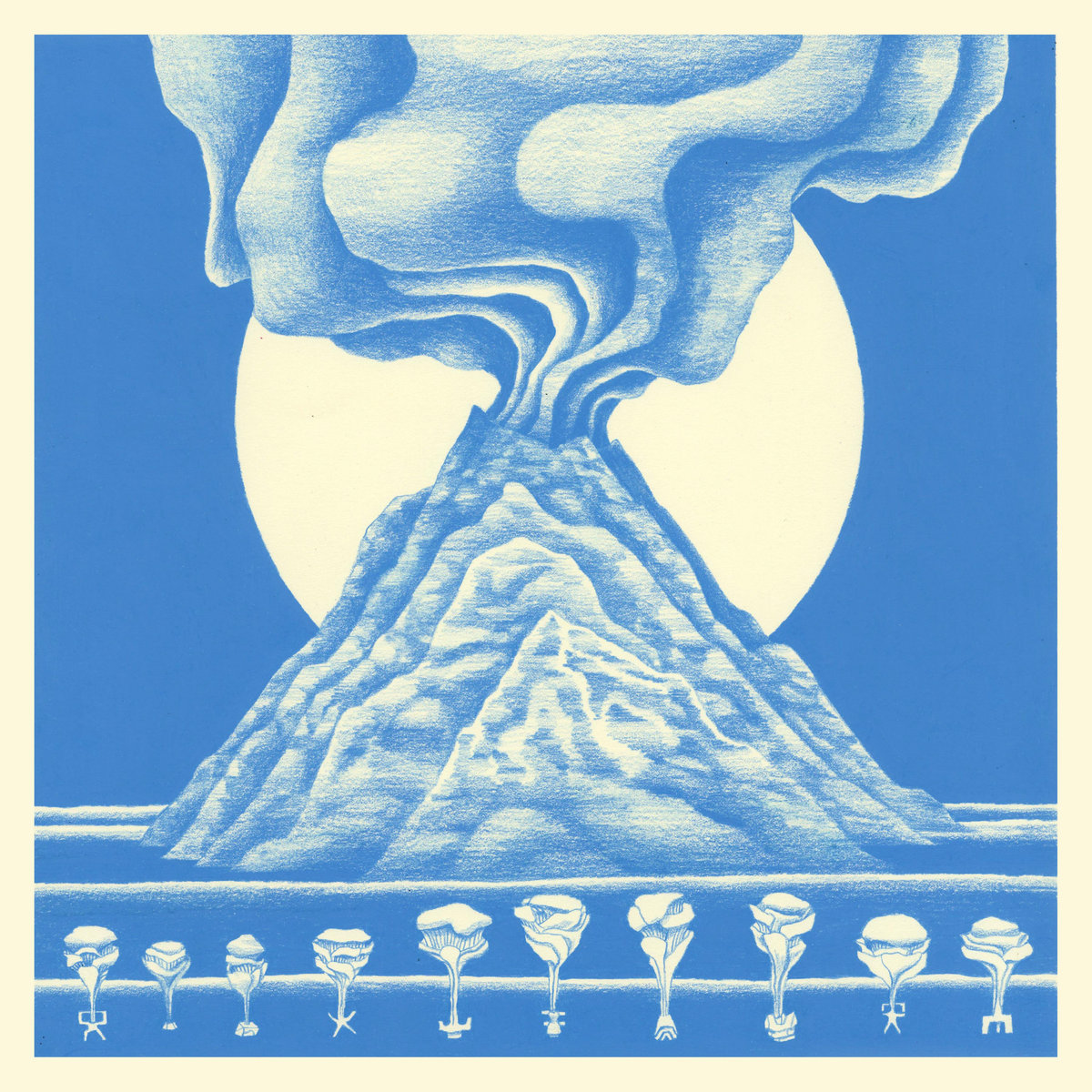
Patrick Shiroishi has long treated the saxophone as more than a melodic instrument. In his hands it becomes a voice capable of protest, remembrance, and spiritual inquiry, often all at once. ‘Forgetting Is Violent’ expands that language outward. Though billed as a solo record, it surrounds Shiroishi with a small but formidable circle of collaborators drawn from the outer edges of experimental rock and ambient composition. The result is a work that feels communal without sacrificing the intense focus that has defined his previous recordings. It is music that considers memory not as a static archive but as an active force, something that can bruise, illuminate, or compel action.
The opening piece, “To protect our family names,” establishes the album’s emotional terrain with startling clarity. Aaron Turner’s guitar arrives like a slow-moving weather system, thick and rumbling beneath Shiroishi’s horn. The saxophone doesn’t simply ride above the distortion; it presses into it, producing long, aching tones that seem to search for footing inside the mass of sound. Shiroishi’s use of pedals and looping techniques stretches the instrument into layered chords, suggesting a choir made from breath alone. The track unfolds deliberately, as if gathering the courage to speak.
From there, “Mountains that take wing” introduces a motif that recurs throughout the first half of the album. Shiroishi circles around a patient figure anchored near middle C, allowing each repetition to slightly mutate. Gemma Thompson and Turner add guitars that hover just outside harmonic resolution, creating a suspended atmosphere where nothing quite settles. As the piece gradually widens, Shiroishi’s voice emerges at a distance, singing softly in Japanese. The effect is intimate and disorienting at the same time, as though a personal memory has been broadcast across a vast landscape.
The album’s third track, “…what does anyone want but to feel a little more free?,” is its most direct confrontation with lived experience. Faith Coloccia threads electronics and subtle vocal textures through the piece while Shiroishi’s aunt, Jo Ann Shiroishi, speaks about her first encounter with racism. The music refuses melodrama; instead it holds space around the words, letting their weight settle naturally. The saxophone moves in slow arcs that feel less like commentary and more like a form of listening. When the ensemble swells near the end, the sound carries the accumulated gravity of history pressing against the present.
“There is no moment in my life in which this is not happening” closes the album’s first suite with a sense of uneasy clarity. Otay::onii contributes vocal layers that blur the line between lament and incantation, their timbre weaving through Shiroishi’s lines like smoke. The horns and voices build a collective murmur that seems to echo the persistence of the forces the record addresses. Racism, in Shiroishi’s framing, is not an isolated event but a continuous condition, and true to form, something that reverberates across generations.
The record’s second half pivots toward a more personal grief. Where the first draws strength from collaboration, the second often places Shiroishi alone with his instruments and voice. “One last walk with the wind of my past” feels almost ritualistic. A soft electronic drone provides the ground while the saxophone moves in careful, measured phrases. Each note appears with the deliberateness of someone choosing words at a memorial.
“Prayer for a trembling body” deepens that introspective mood. Shiroishi sings a simple wordless melody over a drifting bed of synth tones, the vulnerability of the human voice taking precedence over instrumental virtuosity. There is a fragile steadiness to the performance, as though the act of singing itself is a way of holding the world together.
The stark title “To become another being there has to be some kind of death” introduces the album’s most meditative passage. Here the saxophone returns in sparse, resonant tones that feel carved out of silence. Shiroishi’s looping techniques create ghostly harmonies that hover just beyond reach, reinforcing the sense that transformation always involves loss.
The closing track, “Trying to get to heaven before they close the door,” gathers the album’s themes into a final surge. Mathieu Ball’s guitar spills out sheets of static that mix with Shiroishi’s layered vocals, arranged almost like a small choir. The saxophone rises through the storm in raw, ecstatic bursts, refusing neat closure. Instead the piece ends suspended between mourning and transcendence, as if grief and hope were occupying the same breath.
What makes ‘Forgetting Is Violent’ so striking is its refusal to separate political memory from personal feeling. Shiroishi treats both as inseparable parts of the same emotional terrain. His collaborators provide contrasting textures, sometimes cooling the music’s intensity, sometimes amplifying it, but the center remains his patient, probing sensibility. Each track feels like an act of witness.
By the album’s end, the title reads less as a metaphor and more as a warning. Forgetting, Shiroishi suggests, erases the very experiences that shape us. Remembering, even when painful, becomes a form of resistance and connection. Through saxophone, voice, electronics, and the collective energy of his collaborators, he turns that idea into sound that lingers long after the final note fades.
Find out more by visiting Patrick Shiroishi | Bandcamp | American Dreams Records.