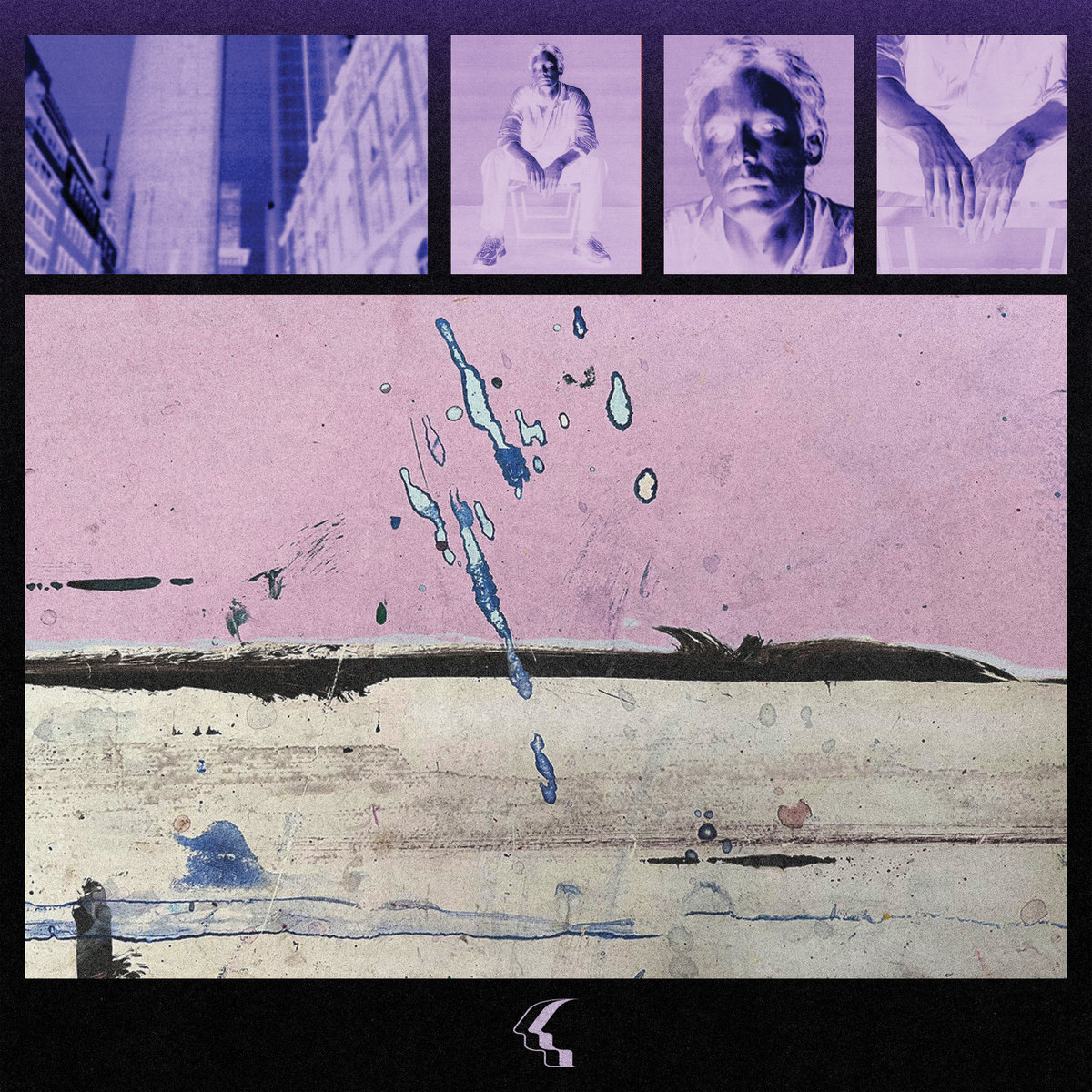
‘TRIO’ is a record about moving: between countries, instruments, musical languages, memories, and earlier versions of the self. Paul Janoschka wrote its nine compositions over several years and across two continents, and you’d never guess it from the listening. Nothing here plays like a scrapbook assembled after the fact. The trio of Janoschka, bassist Simón Willson, and drummer Jonas Esser makes this record feel like one place, and changing circumstances simply become part of how the music gets written. Piano trio is hardly new territory, yet they handle it as an open system that can soak up hip-hop, electronics, improvisation, and the odd acoustics of memory and still sound like itself. Janoschka’s roots are in hip-hop beats made in rural Germany, and even after his move toward jazz, the fondness for loops, groove, and saying more with less hasn’t gone anywhere. Harmonic ambiguity and improvisation draw him just as strongly. So, the music sidesteps the old choice between brainy and physical. It can be intricate and still feel good immediately, and its rhythmic smarts never crowd out the melody.
“Edits” states that balance with real confidence. Janoschka began it in Sibelius notation software, then spent hours at the piano reshaping it until something built on a screen could be played by hands. It’s a fitting origin for a musician who keeps negotiating between systems. The piece sounds composed without sounding stiff. Willson and Esser give it momentum, answering the piano instead of merely backing it, and enough room is left for the spontaneity of a living trio. “Some Wasabi” lasts barely a minute. It resets your sense of scale, and it shows that Janoschka thinks about sequencing as carefully as he thinks about individual pieces. Then “Another One” widens the frame. An easy, confident melody rides over a quick rhythmic dialogue. The Fender Rhodes adds another hue, tying acoustic warmth to the electric vocabulary of soul, fusion, hip-hop, and electronic production.
“101 West 85th Street” carries the strongest sense of place. He wrote it on a cheap keyboard in a dark New York apartment during the COVID quarantine, and the intimacy of that moment is all over it, though it never turns into a pandemic diary. The keyboard’s limits become part of the personality. A flawed instrument, it seems, can give a lot to someone who listens closely enough. A street address turns into a kind of mental geography, and confinement becomes room to invent.
“2 30” was written at his parents’ house in Germany, and the perspective flips. Where the New York piece suggests an unfamiliar city under strange conditions, this one hints at going home. Janoschka doesn’t lean on nostalgia, though. He’s too curious for that. The piece seems more interested in what it means to walk back into a familiar place as someone changed. Memory runs through “Jonas & Sofia” too, tied to his current life in Frankfurt. The title is personal, but the music steers clear of the syrupy turn that kind of specificity can invite. Esser matters enormously here. He and Janoschka go back to their jazz studies in Mannheim and on to New York in 2021, where friendship, shared listening, and endless practice shaped them both. You hear that history in how easily the rhythm section anticipates and redirects his ideas.
Willson is just as conversational on bass. He does far more than mark the chord changes. He answers Janoschka’s phrasing with a melodic mind of his own while staying locked in with Esser. The trio works less like a chain of command with piano at the top and more like responsibility passed around the room. “CMD” shows the chemistry best. A cryptic title, an inviting piece: sophisticated harmony over a firm rhythmic foundation. Janoschka shifts quickly between precise figures and hazier, impressionistic ones, and Willson and Esser stay grounded without turning predictable. Their restraint counts as much as their chops. Not a single note sounds placed to show off.
“My Friend Jojo” is warmer and more personal, and again nothing is overstated. The feeling sits in the phrasing and the shared sound. You can hear real relationships living in the music rather than personal references pinned on afterward. The closing “Outro” points straight back to Janoschka’s start as a young hip-hop producer. It’s short, loop-based, and free of any conventional solo, recalling the beats he made before jazz became his main language. As the closer, it gives the album a satisfying symmetry: a musician steeped in jazz composition and improvisation returns, briefly, to the pleasure of building a beat. It’s no retreat. Hip-hop still shapes his sense of form, and his jazz carries the logic of repetition and sampling even without a sample, since a loop can generate endless variation through subtle shifts in emphasis, harmony, and texture. It also explains why the improvised stretches never feel cut off from the composed material. For Janoschka, improvising isn’t an escape from structure. It’s another way of living inside it.
Markus Born recorded the album at kleine audiowelt Sandhausen in Germany in April 2024, and the sound gives these relationships room to register. Christian Bethge’s mastering keeps the space between the instruments while preserving the physical weight of the rhythm section. Piano, Fender Rhodes, bass, and drums each hold their own ground, and the album never sounds boxed in.
So ‘TRIO’ is more than nine pieces written in different places. It’s a record about how place gets into music without becoming the subject. New York, Frankfurt, quarantine apartments, family homes, rehearsal rooms, friendships, and teenage beat-making all end up as pieces of one larger musical identity. Janoschka doesn’t try to smooth the differences away. He gives them a shared language, and that is where the album’s real achievement sits. Its intelligence can’t be separated from its groove, nor its polish from its warmth, nor its discipline from its willingness to improvise. Janoschka, Willson, and Esser play with the assurance of musicians who know jazz stays most alive when it can absorb outside influences and still surprise you. ‘TRIO’ sounds like the work of someone who has spent years crossing borders and has finally realized the borders were never all that necessary.
Learn more links: