Widowspeak’s seventh album, ‘Roses’ arrives with the confidence of a band that has spent years refining not only its sound but its understanding of what emotional storytelling can accomplish when stripped of unnecessary dramatics. Rather than presenting romance as spectacle, Molly Hamilton and Robert Earl Thomas focus on its quieter manifestations: habits, routines, private rituals, fleeting observations, and the subtle negotiations that define shared lives. The result is an album that examines love not as fantasy but as a force embedded in ordinary existence, illuminating both its comforts and its contradictions.
From the opening moments of “The Hook,” the record establishes its distinctive atmosphere. The song moves with an easy, expansive gait, its guitars stretching toward distant horizons while Hamilton’s voice remains grounded and intimate. It functions as both invitation and statement of purpose. Widowspeak are in no hurry to arrive anywhere. Their music values patience, allowing moods to settle and details to reveal themselves gradually. The performance feels remarkably assured, reflecting a band comfortable with silence, space, and understatement. That confidence carries into “No Driver,” one of the album’s most perceptive explorations of dependency and self-direction. Using automobiles as metaphor without becoming trapped by the device, the song considers what happens when movement continues but agency becomes uncertain. The arrangement mirrors the lyrical ambiguity, gliding forward with a hypnotic steadiness that suggests momentum without certainty of destination.
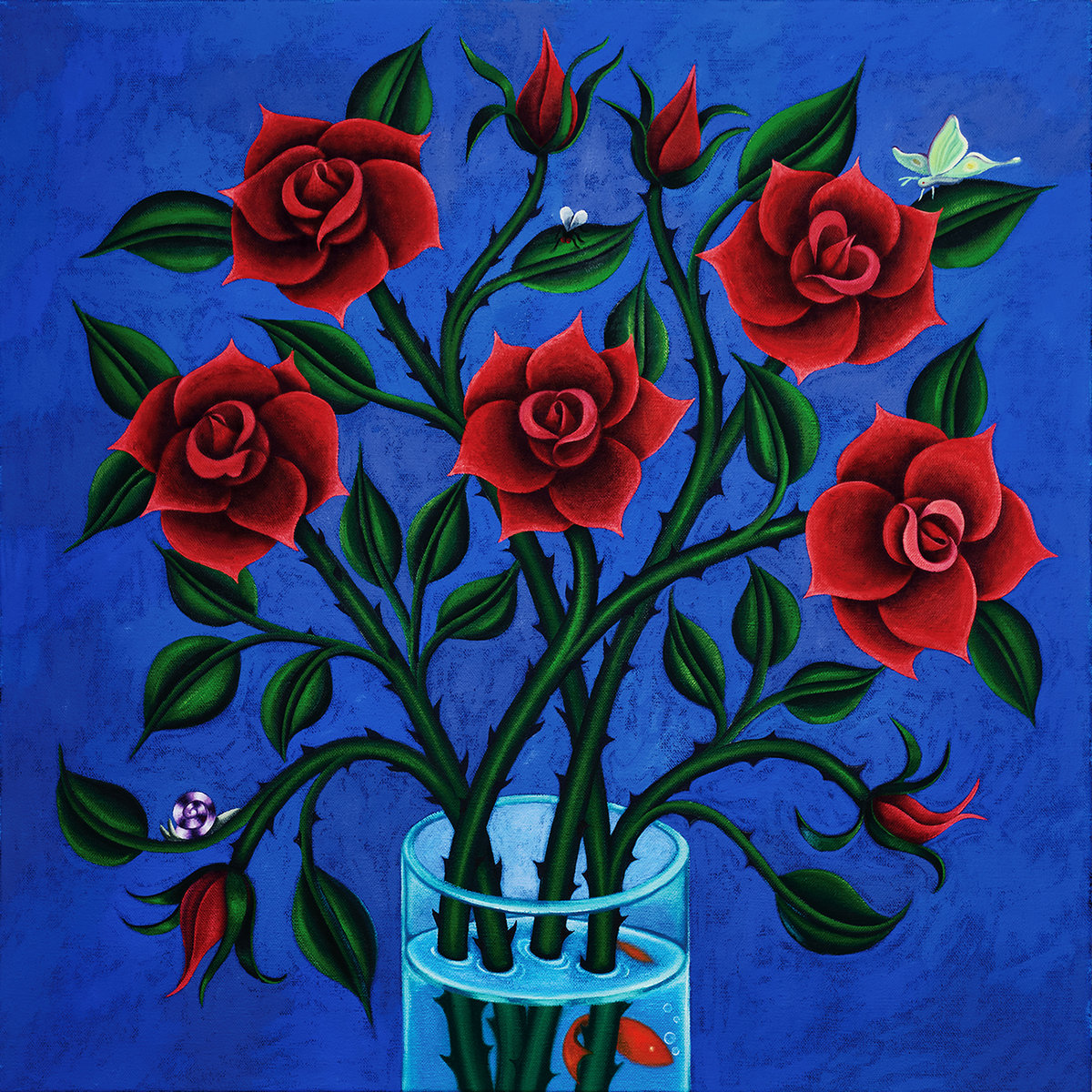
The title track distills many of the album’s central concerns into under three minutes. “Roses” confronts the lingering marks left by past attachments, acknowledging that emotional wounds can shape future choices long after the original pain has faded. Yet the song avoids cynicism. Instead, it examines vulnerability as an unavoidable component of connection. Hamilton delivers its reflections with remarkable restraint, allowing the emotional weight of the lyrics to emerge through implication rather than emphasis. “If You Change” occupies a fascinating middle ground between devotion and doubt. The song asks difficult questions about transformation within relationships: how much adaptation is healthy, how much compromises identity, and whether love survives because people change or despite it. The arrangement’s gentle propulsion prevents these questions from becoming heavy-handed, preserving the album’s characteristic balance between contemplation and accessibility.
Throughout ‘Roses,’ Widowspeak display an exceptional ability to construct vivid scenes from seemingly minor details. “Wondering” exemplifies this strength. Its observations feel pulled directly from the rhythms of everyday life, yet they accumulate into something larger, capturing the restless mental drift that often accompanies modern existence. The song’s beauty lies in its refusal to separate profound questions from mundane experiences. Daydreams, doubts, and hopes coexist naturally within the same emotional landscape. “Angel Number” introduces a subtle fascination with signs and meanings, exploring humanity’s tendency to search for patterns that might offer reassurance or direction. Rather than embracing mysticism outright, the song inhabits the uncertain space between coincidence and faith. The result is one of the album’s most intriguing emotional studies, examining the desire to believe that life’s scattered details might form a coherent narrative.
The warmth at the heart of ‘Roses’ becomes especially apparent in “Soft Cover.” Here, affection is portrayed not through grand declarations but through familiarity and endurance. The song understands that intimacy often derives from wear rather than novelty, from the gradual accumulation of shared experiences. Its imagery transforms emotional comfort into something tangible, creating one of the album’s most affecting moments. “Heaven Is Waiting” offers a brief but memorable meditation on longing and expectation. Its compact structure gives it the quality of a fleeting thought that lingers long after it has passed. The song demonstrates Widowspeak’s skill at economy; nothing feels rushed, yet every gesture serves a purpose.
One of the album’s emotional peaks arrives with “Actor,” which examines the uneasy sensation of performing a role within one’s own life. The song’s title becomes a lens through which questions of authenticity, self-perception, and social expectation are explored. Hamilton’s understated vocal delivery proves particularly effective here, communicating uncertainty without resorting to theatricality. The song’s measured pacing allows its themes to resonate with increasing depth. Closing track “Hourglass” serves as an elegant summation of the album’s broader concerns. Its reflections on impermanence extend beyond romantic relationships toward a consideration of life itself. Time emerges as both gift and adversary, granting meaning precisely because it limits duration. The song leaves the listener with a sense of fragile appreciation rather than melancholy, emphasizing the value of transient experiences rather than lamenting their brevity.
A significant part of the album’s success lies in the chemistry between Hamilton and Thomas. Their artistic partnership remains the defining element of Widowspeak’s identity. Hamilton’s voice possesses an extraordinary ability to sound detached and deeply invested at the same time, creating emotional complexity from even the simplest phrases. Thomas complements her with guitar work that favors atmosphere, melody, and instinct over technical exhibition. Together, they create songs that feel lived-in rather than manufactured.
The supporting musicians contribute substantially to the album’s richness. Longtime collaborators Willy Muse, John Andrews, and Noah Bond provide performances that enhance the material without overwhelming it. Their playing reinforces the collective nature of the record, lending depth and nuance to arrangements that prioritize mood and cohesion over individual display. The setting in which ‘Roses’ was recorded seems inseparable from its character. Captured at the Old Carpet Factory on the Greek island of Hydra and later refined with a light touch before being mixed by Alex Farrar and mastered by Greg Obis, the album possesses an uncommon sense of openness. Every instrument appears positioned with care, yet nothing feels overly polished. The production preserves spontaneity and imperfection, allowing the songs to retain their humanity.
What distinguishes ‘Roses’ from many contemporary examinations of romance is its commitment to realism. Hamilton and Thomas understand that meaningful relationships are constructed from repetitive actions, small kindnesses, recurring frustrations, and shared routines. The album finds beauty in these overlooked dimensions of life without romanticizing them beyond recognition. It acknowledges uncertainty, disappointment, and vulnerability while continuing to argue for connection as one of life’s most worthwhile pursuits. After sixteen years of recording together, Widowspeak sound neither nostalgic nor concerned with reinvention for its own sake. Instead, ‘Roses’ captures a band deepening its existing strengths and discovering new emotional shades within a familiar palette. The album’s achievement lies not in dramatic transformation but in the precision with which it articulates complicated feelings through deceptively simple songs. It is a record of remarkable maturity, one that understands love as both solace and challenge, fleeting and enduring, ordinary and profound all at once.
Learn more by visiting Captured Tracks | Widowspeak | Bandcamp | Instagram | Facebook